 Sudden Valley Siding
 Barkley's Siding Wears Differently Than Siding Inland
Homes in Barkley sit close enough to Lake Whatcom and the broader Sudden Valley area to catch a specific combination of weather: humid air off the water, driving rain that comes in sideways during winter storms, and a moss season that can run six months or longer under the tree cover common to this part of Whatcom County. None of that is unusual for western Washington, but it adds up faster than most homeowners expect. Siding here doesn't fail because it's old — it fails because moisture found a way in and stayed there.
Salt-tinged, moisture-heavy air also accelerates corrosion on fasteners and trim hardware that would last decades in a drier climate. When we look at a tear-off on a Barkley home, the damage almost always traces back to one of three things: a water-resistive barrier that was cut short, flashing that was skipped or installed backward, or a siding material that simply couldn't shed water as fast as this climate delivers it.
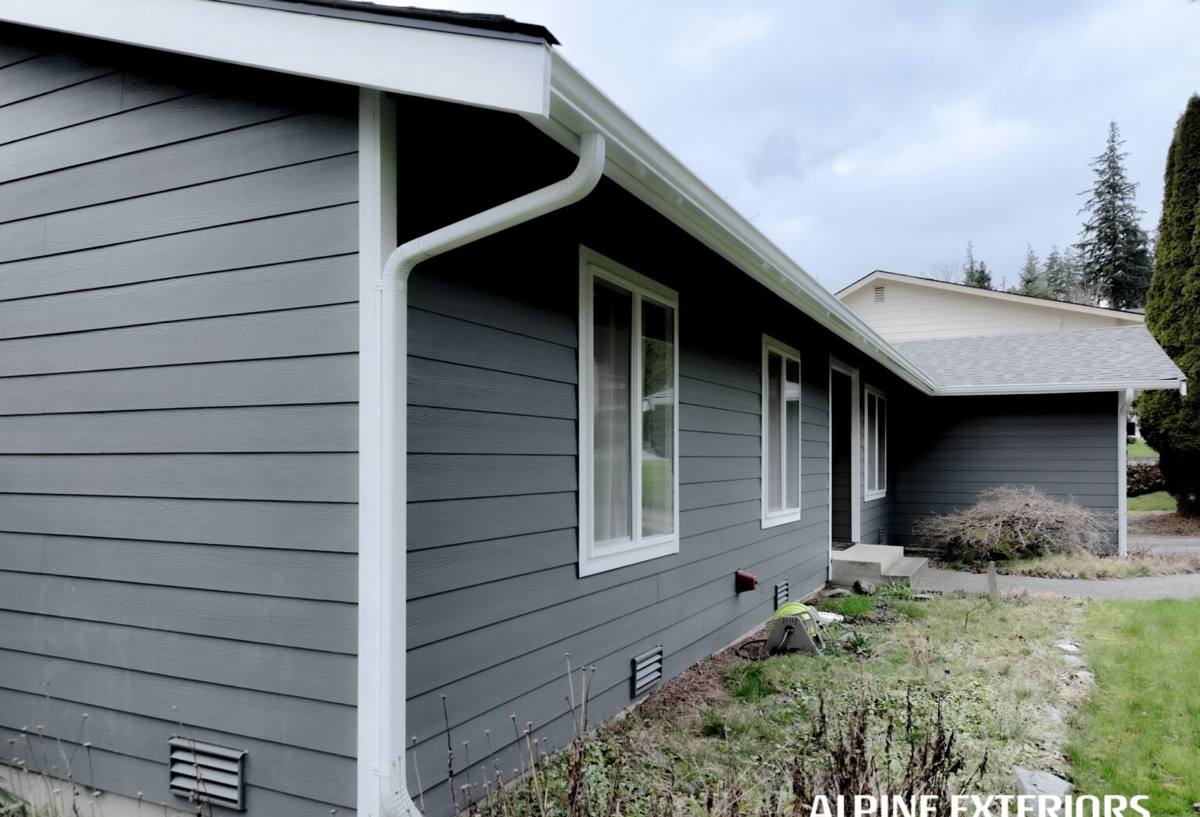
Signs a Barkley Home Needs Replacement, Not Another Repair
Repair makes sense when the problem is isolated — a cracked panel, a damaged corner, a spot where a tree limb came down. Replacement becomes the honest answer once the damage is systemic, meaning it shows up in more than one place or keeps coming back after repairs.
- Soft or spongy spots when you press on the siding, especially near the bottom courses and around window trim
- Persistent moss or black-green streaking that returns within a season of cleaning
- Paint that's bubbling, peeling, or won't hold more than a couple of years between coats
- Visible warping, cupping, or gaps opening between boards or panels
- Rising energy bills with no other explanation — a sign the siding and the wall assembly behind it are no longer doing their job
- Interior signs like musty smells or discoloration on interior walls that share an exterior wall with damaged siding
If you're seeing two or more of these, it's worth having someone look at the wall assembly itself, not just the surface.
What a Correct Siding Replacement Job Actually Involves
A siding replacement is a wall system replacement, not a cosmetic swap. Skipping steps here is exactly how a home ends up needing this same work again in twelve or fifteen years instead of forty.
Tear-Off and What's Underneath
Once the old siding comes off, that's the only time anyone will see the sheathing and framing without opening up the wall. We inspect for rot, soft sheathing, and any signs that water has been getting behind the old material — which, in a lot of older Barkley homes, it has. Damaged sheathing gets replaced before anything new goes back up. This is also the point where we catch problems that repairs alone would never have found.
The Water-Resistive Barrier and Flashing Details That Matter Here
Given how much wind-driven rain this area sees, the water-resistive barrier (WRB) and flashing details matter more here than they would in a drier climate. Every window, door, and penetration needs flashing that's lapped correctly — shingle-style, so water always drains down and out, never into a seam. Weep screeds at the base of walls and drainage gaps behind the siding give any moisture that does get in a way back out instead of a place to sit. This is the step that's invisible once the job is done and the step most likely to be shortcut on a rushed install.
Fastening and Installing to Manufacturer Spec
Fiber cement siding has specific fastening requirements — nail placement, spacing, and depth all affect how the panels perform over time and whether the manufacturer's warranty stays valid. Corrosion-resistant fasteners are non-negotiable in this climate; the wrong fastener can rust and stain the siding from the inside out within a few years.
Why We Install Only James Hardie Fiber Cement
We don't install vinyl, LP SmartSide, Cemplank, Allura, primed spruce, or cedar, and that's a deliberate standard, not a limitation we work around. Every one of those products can be installed correctly and can perform fine in the right setting. But given what Barkley and the rest of Sudden Valley throw at exterior walls — sustained moisture exposure and a moss season that keeps surfaces damp for months — we standardized on one product line because it holds up to that specific combination better than the alternatives, provided it's installed correctly.
James Hardie fiber cement is non-combustible, which matters increasingly in western Washington. It's engineered in HZ product lines specifically for climates like ours, with moisture and freeze-thaw performance built into the formulation rather than added after the fact. The ColorPlus factory finish is baked on under controlled conditions, which gives it a more consistent, longer-lasting bond than field-applied paint — a real advantage in a climate where paint failure is one of the most common complaints we hear about older siding. It also carries a strong transferable warranty, which matters to homeowners who may sell before the siding's functional lifespan is up.
None of that guarantees a good outcome by itself. Hardie siding installed wrong will fail like anything else installed wrong. The material is half the equation; correct installation is the other half.
Cost Factors for Siding Replacement in Barkley
Every home is different, but the same handful of variables drive most of the cost difference between projects in this area. We won't quote a number without seeing the home, but this is what tends to move the price up or down.
| Factor | Why It Matters |
|---|---|
| Extent of hidden damage | Rotted sheathing or framing found during tear-off adds repair work that can't be scoped until the old siding is off |
| Home size and wall complexity | More corners, dormers, and trim detail mean more cutting, fitting, and flashing work |
| Siding profile and accessories | Lap siding, shingle-style panels, and trim/soffit packages carry different material and labor costs |
| Site access | Steep lots, limited driveway access, or tight setbacks near trees and slopes common around Sudden Valley can affect staging and scaffolding time |
| Existing paint or coating removal | Some older siding systems require extra prep or disposal steps before tear-off can begin |
Our Process, Start to Finish
We keep the process straightforward because homeowners deserve to know what's happening to their house and why.
- Walkthrough and assessment — we look at the current siding, check for moisture damage where visible, and talk through what you're seeing and what you want out of the project.
- Written estimate — a clear scope of work and price, with product and color options discussed up front.
- Scheduling around the weather — we plan tear-off and dry-in around forecast windows rather than starting a wall opening ahead of incoming rain.
- Tear-off and inspection — old siding comes off, sheathing is inspected, and any necessary repairs are identified and priced before we move forward.
- WRB, flashing, and dry-in — the wall gets sealed and protected before any new siding goes up.
- Installation to spec — Hardie panels installed per manufacturer fastening and clearance requirements.
- Final walkthrough — we go over the finished work with you before calling the job done.
Why a Crew That Already Works Barkley and Sudden Valley Matters
A crew that's worked this specific area knows what to expect before the first panel comes off: which wall orientations take the worst of the driving rain, where moss and algae growth tends to be worst, and how long a given siding system typically lasts before this climate starts winning. That experience shows up in small decisions — where to add extra flashing attention, which details are worth the extra time — that a crew unfamiliar with the area might not think twice about.
Many established communities in this part of Whatcom County, including private and planned neighborhoods, also have their own design review or architectural guidelines for exterior changes. A local crew is used to working within that kind of process and can help you plan around it instead of finding out about it mid-project.
Questions Worth Asking Before You Hire
- Will you inspect the sheathing before quoting a final price, or is the estimate final regardless of what's found underneath?
- What water-resistive barrier and flashing approach do you use, and why?
- Are your installers factory-trained on the specific siding product being installed?
- What does the manufacturer's warranty actually cover, and is it transferable if you sell the home?
- How do you handle scheduling around rain, and what happens if weather interrupts a job mid-tear-off?
- Can you walk me through what happens to the old siding and any debris?
If your Barkley home's siding is showing its age or you just want an honest look at what's underneath it, we're happy to come take a look. The estimate is free, there's no pressure to move forward, and you'll walk away knowing exactly what condition your siding is really in.