 Sudden Valley Siding
 Installation Decides Whether Siding Lasts Here
Most of what separates siding that lasts thirty years from siding that starts failing in five isn't the product on the wall — it's how it went up. That's true anywhere, but it carries more weight in Sehome than in a lot of inland Whatcom County towns. Salt-tinged air, rain that arrives sideways more often than it falls straight down, and a moss season that can run most of the year all put installation shortcuts under pressure faster than a drier, more sheltered climate would. A fastener driven slightly wrong, a clearance skipped at grade, a cut edge left unsealed — none of that shows up on the day the crew packs up. It shows up two or three winters later, as soft trim, dark staining, or a warranty claim that gets denied because the install didn't follow spec.
This page is specifically about siding installation in Sehome — new work and full re-siding, not spot repair — and what separates a correct job from one that just looks finished on install day. We're a Sudden Valley-based crew, and Sehome is inside our regular Whatcom County service area. We install James Hardie fiber cement exclusively, and everything below assumes that system, since it's the only one we install to spec.
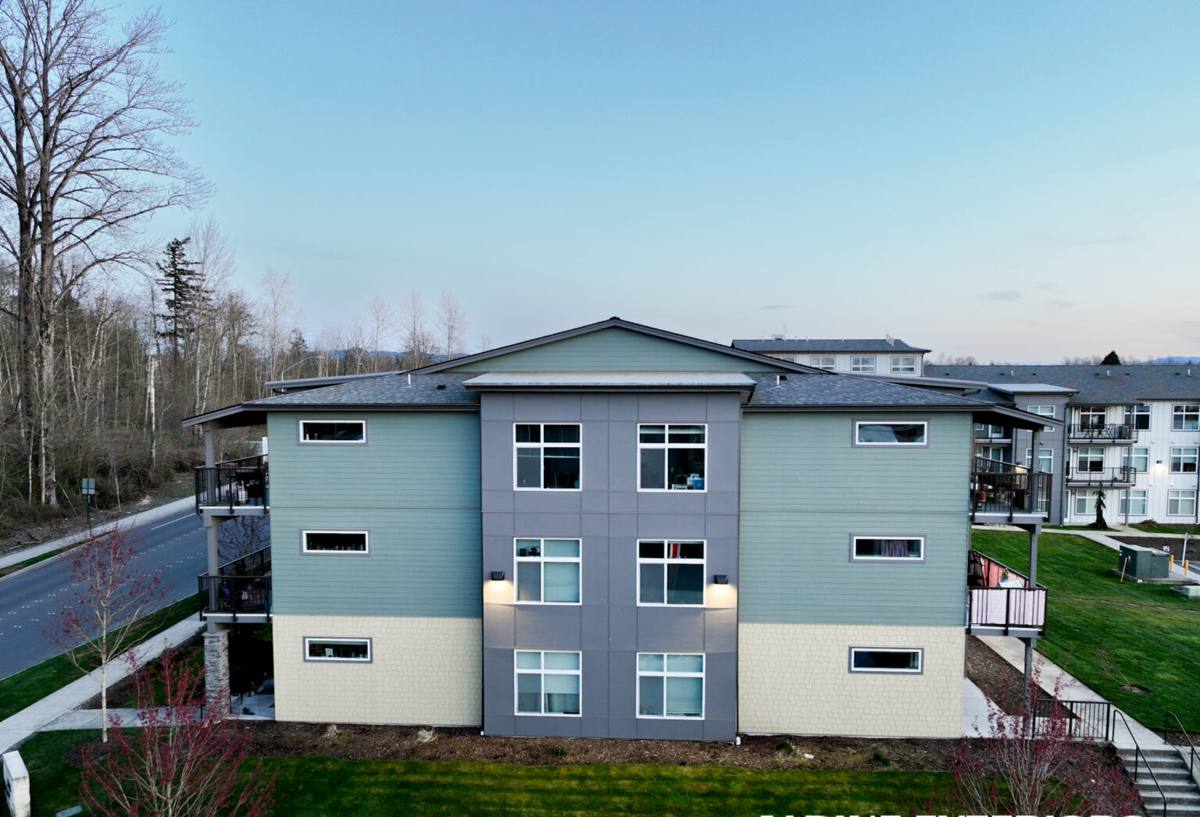
What This Climate Actually Asks of an Installation
Salt Air and Hardware Choices
Homes in Sehome sit close enough to the water and the broader marine air pattern that salt exposure is a routine, background condition rather than an occasional event tied to a single storm. That kind of exposure works slowly on fasteners, flashing, and trim hardware. An installation that uses standard-grade hardware because it's cheaper or easier to source is a decision that shows up later as rust streaking at nail heads and loosened trim well before it would on a home in a drier, more inland market.
Wind-Driven Rain and the Barrier Behind the Siding
Rain that arrives with real wind behind it doesn't run down a wall in a straight sheet — it gets forced sideways into lap joints, trim seams, and any wall penetration where the detailing isn't tight. The water-resistive barrier underneath the siding, and how carefully it's lapped and taped at every seam, matters at least as much as the siding material itself. A correctly installed barrier sheds wind-driven water before it reaches the sheathing; a rushed one just gives water a path in that stays hidden for years.
A Moss Season That Rewards Airflow
Mild temperatures and steady dampness mean any wall that stays wet long enough eventually becomes a growth surface, and Sehome's mature tree cover and shaded lots make that a longer season here than in more open, sun-exposed parts of the county. Installation detail affects that more than most homeowners expect — proper clearance at the bottom of the wall, a working drainage plane behind the siding, and boards that aren't installed tight against trim or flashing all give a wall the chance to actually dry out between wet spells instead of staying damp continuously.
What a Correct James Hardie Installation Involves
Fastening and Spacing
James Hardie publishes exact fastener type, spacing, and placement requirements, and they vary by product line and by how exposed a wall is. Following that spec — not an abbreviated version of it — is what keeps panels secured through wind loads off the water and what keeps the manufacturer's warranty valid if a problem ever surfaces.
Clearances Above Grade and Rooflines
Hardie specifies minimum clearance between the bottom of the siding and grade, roofing, decks, and other horizontal surfaces. Those clearances exist to keep the lowest edge of the siding out of standing water or splash-back, which is a common failure point on lots where soil has built up over the years, or where a deck or patio was added after the original siding went in.
Flashing and Sealant at Every Penetration
Windows, doors, hose bibs, vents, and light fixtures all interrupt the siding plane, and each interruption is a place water can work its way behind the cladding if it's flashed or sealed incorrectly. This is the slowest, least visible part of an installation, and it's the part that decides whether a wall stays dry behind the siding for decades or starts trapping moisture within a few seasons.
Field-Cut Edges
Any time a board gets cut on site — around a window, at a corner, at the end of a run — that cut edge needs to be sealed per Hardie's specification before it goes up. An unsealed cut edge is one of the more common places fiber cement actually takes on water, not because the material is flawed, but because the field cut was never finished correctly.
Installation Shortcuts That Fail Fastest in This Climate
| Shortcut | What it looks like on install day | How it shows up later on a Sehome home |
|---|---|---|
| Standard fasteners instead of corrosion-resistant hardware | No visible difference | Rust streaking and loosened boards within a few winters |
| Skipped clearance at grade or deck ledger | Siding looks flush and tidy | Wicking, softness, and paint failure at the bottom courses |
| Rushed or taped-over window flashing | Looks sealed from outside | Hidden moisture intrusion, often not visible until interior staining shows up |
| Unsealed field-cut edges | Cuts look clean and painted | Localized swelling or delamination at the cut |
| Boards installed tight against trim with no drainage gap | Appears well-fitted | Trapped moisture and persistent moss on shaded walls |
How We Handle an Installation, Step by Step
Site and Exposure Assessment
Before we price anything, we look at how each wall of the house is actually exposed — which faces take direct wind and moisture, which sit in shade or under tree cover most of the day, and whether existing moss buildup or soft trim points to a chronic moisture pattern rather than a one-time issue.
Tear-Off and Sheathing Check
Old siding comes off and the sheathing underneath gets inspected before any new material goes up. Installing new siding over damaged sheathing just buries the problem for a few years; we'd rather find and address rot or soft spots at this stage, even if it adds a step to the schedule.
Weather Barrier Installation
The water-resistive barrier goes on with proper overlap and taped seams at every joint and penetration, before flashing and siding go over it. This layer does most of the real work of keeping wind-driven rain out of the wall assembly, and it's completely hidden once the job is finished — which is exactly why it has to be done right the first time.
Siding Installation to Manufacturer Spec
Boards go up following Hardie's fastening, spacing, and clearance requirements as the baseline, not as an option to skip when the schedule gets tight. Field cuts are sealed as they're made, not batched and finished at the end of the day.
Final Walkthrough
We walk the completed job with the homeowner, confirm the work matches what was estimated, and go over what basic maintenance looks like given the exposure of the specific walls we just finished.
New Construction vs. Re-Siding an Existing Home
Installing siding on new construction and re-siding an older Sehome home are related jobs with real differences. New construction means building onto fresh sheathing and a new water-resistive barrier, with no unknowns underneath — the installation sequence still matters, but there's no guesswork about what's hiding behind the wall. Re-siding an existing home means tear-off first, an honest look at what the original construction and any past repairs left behind, and sometimes correcting older detailing — inadequate clearances, missing flashing, a barrier that was never installed properly — before new siding goes up. Both require the same attention to spec; re-siding just adds a discovery phase that new construction skips.
Why We Only Install James Hardie
We don't carry a lineup of siding brands and let price sort out the decision on a job site. We install James Hardie fiber cement, and only James Hardie, because of what years of installs and repair calls in this specific stretch of Whatcom County have shown us. It's non-combustible, it doesn't swell or warp with repeated wet-season moisture cycling the way an engineered-wood product can, and its factory-applied ColorPlus finish holds color and resists chalking better against salt air and UV than a field-applied paint job. Hardie's HZ5 formulation is engineered for regions with sustained moisture and freeze-thaw cycling, which is a closer match to this climate than a generic national spec.
We don't install LP SmartSide, vinyl siding, Cemplank, Allura, primed spruce, or cedar. Those are legitimate products, and other contractors install them competently. We made a professional call that standing fully behind one system we understand completely serves Sehome homeowners better than offering a lower-cost option that quietly shifts maintenance risk onto them a few years down the road. Vinyl's lapped, unsealed seams aren't built for wind-driven rain arriving from this many directions. Engineered wood performs fine as long as every cut edge and fastener penetration stays sealed for decades, which is a lot to ask in a climate where wet weather is the default. Cedar and primed spruce are genuinely attractive, but they're organic and combustible, and they depend on a paint or stain schedule that has to hold up in a climate that stays damp most of the year — moss finds an organic surface especially easy to take hold on.
Timeline and Cost Factors for a Sehome Installation
Every estimate is specific to the house, but a handful of factors consistently drive both timeline and price on installation projects in this area:
| Factor | Why it matters |
|---|---|
| Square footage and number of stories | More area and height mean more labor and, on taller walls, more staging and access equipment |
| Trim and roofline complexity | Homes with more windows, dormers, and roof intersections need more flashing and cutting work |
| Sheathing condition underneath old siding | Rot or water damage found during tear-off adds repair scope before new siding can go up |
| Tree cover and shade exposure | Shaded, damp walls typically warrant closer attention to drainage and clearance detail |
| Product line and finish selection | James Hardie offers multiple board styles, textures, and ColorPlus colors at different price points |
Weather windows also affect scheduling here more directly than in drier parts of the state — a stretch of driving rain can pause safe panel handling and staging on days that would otherwise be workable, so we build some flexibility into project timelines rather than promising a fixed date that a bad-weather week is likely to break.
A Checklist for a Correct Installation
Whether you're evaluating our work or getting a second opinion from another contractor, these are reasonable things to confirm before a siding installation is considered finished:
- Fasteners and hardware rated for marine or coastal exposure, not standard-grade material
- Documented clearance between the bottom of the siding and grade, decks, and roofing
- Flashing visible and properly lapped at every window, door, and wall penetration before siding covers it
- All field-cut edges sealed per manufacturer spec, not left raw
- A continuous, properly lapped water-resistive barrier underneath the siding
- Installation that follows the manufacturer's published fastening and spacing requirements, not a generalized approach
- A final walkthrough where the contractor explains what was done, not just a final invoice
Why a Crew That Already Works Sehome Matters
Installation quality on paper and installation quality in practice aren't always the same thing, and the gap shows up fastest in a climate that stays wet and salty most of the year. A crew based right here in Sudden Valley and working Sehome regularly makes different judgment calls than one installing here occasionally between jobs elsewhere in the region — where extra flashing attention is worth the time, which walls dry out slowest and need more drainage detail, and which corners genuinely can't be cut regardless of schedule pressure. That judgment comes from doing this work repeatedly on homes facing this exact combination of salt air, driving rain, and a long moss season, not from a generic checklist applied the same way everywhere in Whatcom County.
If you're planning new siding for a Sehome home, or want a straightforward second opinion on whether an existing installation was done correctly, we're glad to come take a look. Reach out using the form below to schedule a free, no-pressure estimate.