 Sudden Valley Siding
 Why Sehome Homes Need More Than "Any Siding"
Sehome sits close enough to Bellingham Bay that salt-laden air is a fact of life, and Whatcom County's weather pattern layers on driving rain for much of the year plus a moss season that can stretch from fall through spring. That combination is hard on a home's exterior in ways that don't show up right away. Paint chalks and fades faster near salt air. Wood-based products absorb moisture at seams and cut edges. Moss and algae take hold on anything that stays damp and shaded, and once established they hold water against the wall longer than the wall was ever designed to tolerate.
None of this means siding is doomed in Sehome — it means the material and the installation both have to be matched to the conditions. That's the whole reason we standardized on James Hardie fiber cement and don't install anything else. It's also why this page exists as its own thing rather than a generic rundown of Hardie products: what a correct Hardie job looks like on a Sehome home is not identical to what it looks like somewhere dry and inland.
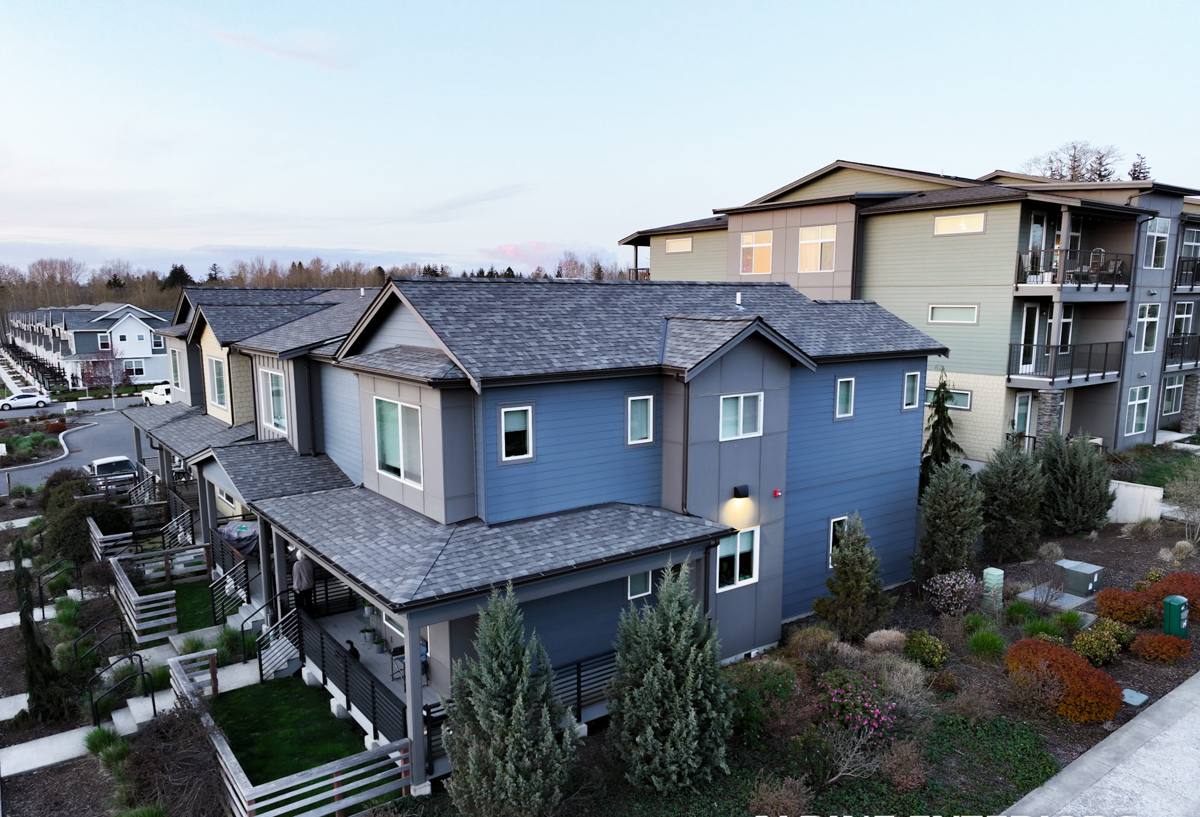
What Salt Air, Rain, and Moss Actually Do to a Wall
Salt Air
Airborne salt is corrosive to metal fasteners, flashing, and trim, and it accelerates the breakdown of lower-grade paint films. Siding that isn't factory-finished to resist it will show fading, chalking, and edge wear noticeably sooner near the water than it would a few miles inland.
Driving Rain
Wind-driven rain doesn't just fall on a wall, it gets pushed sideways into laps, seams, and butt joints. A siding system is only as good as its weakest joint — caulking that's the wrong type, fasteners in the wrong spot, or a missing piece of flashing turns a small gap into a path for water to get behind the cladding.
Long Moss Season
Moss and algae need shade, moisture, and a surface to grip. North-facing walls, areas under tree cover, and anywhere the siding stays damp longer than it should are the first places it shows up. Once it's established it holds moisture against the wall surface, which is a problem for any substrate but especially for products that swell or degrade when they stay wet.
Why We Only Install James Hardie in This Neighborhood
James Hardie fiber cement is engineered from cement, sand, and cellulose fiber — it doesn't absorb water the way wood-based sidings do, and it isn't a petroleum product that softens or expands and contracts the way vinyl does in temperature swings off the water. For a coastal Whatcom County location, that translates into three practical advantages:
- It holds up to repeated wet-dry cycling without swelling, delaminating, or rotting at cut edges.
- The factory-applied ColorPlus finish is baked on under controlled conditions, so it resists fading and chalking from salt air and UV far longer than field-applied paint.
- It's non-combustible, which matters less for moisture directly but is part of why it's the only product we're willing to put our name behind long-term.
We get asked why we don't also offer vinyl, LP SmartSide, or cedar. The honest answer is maintenance burden and moisture behavior in exactly this kind of climate. Vinyl can work loose or warp with temperature swings and doesn't stop water at the seams the way a properly lapped Hardie board does. Engineered wood products and cedar are wood at their core — well-treated, but still wood, and wood plus a long wet season plus salt air is a maintenance commitment we don't think most homeowners actually want to sign up for. We'd rather install one product correctly than offer four and let the climate sort out which one fails first.
Choosing the Right Hardie Line for a Coastal Whatcom County Home
James Hardie makes climate-specific formulations, and for this part of the Pacific Northwest that means the HZ5 line, engineered for regions with significant moisture exposure and freeze-thaw cycling. Within HZ5, the choice of profile is mostly about the look you want and the age/style of the home:
| Product | Best Fit | Coastal Consideration |
|---|---|---|
| HardiePlank lap siding | Most homes; traditional or modern look | Correct lap exposure and fastener placement are critical near driving rain |
| HardiePanel vertical siding | Accent walls, gables, modern designs | Needs properly detailed battens and flashing at every seam |
| HardieShingle | Craftsman/cottage style, accent gables | More laps and edges to detail correctly, more labor-sensitive |
| HardieTrim boards | Corners, window/door trim, fascia | Same non-combustible, moisture-stable benefits as the field siding |
The product itself is only half the equation. HZ5 board installed with the wrong fastener pattern, without a proper weather-resistive barrier, or without back-priming and sealing field-cut edges will still let water in over time. That's an installation problem, not a product problem, and it's the single most common thing we see when we're asked to look at a failing Hardie job someone else installed.
What a Correct Installation Involves Here
Drainage Plane and Rain Screen
In a driving-rain climate, siding should never be the only thing standing between the weather and the wall sheathing. A correctly detailed water-resistive barrier, properly lapped and taped, plus a drainage gap behind the siding gives any water that does get past the cladding somewhere to go besides straight into the wall assembly.
Flashing at Every Transition
Windows, doors, roof lines, and deck ledgers are where most water intrusion actually starts. Flashing has to be integrated with the barrier system in the right order — not caulked on as an afterthought — so water sheds down and out rather than behind the siding.
Fastening and Fastener Choice
Near salt air, fastener corrosion resistance matters more than it does inland. We use fasteners rated for the exposure and follow Hardie's nailing pattern specifications, because under- or over-driven fasteners are one of the most common causes of premature cracking and water paths at the board.
Cut Edges and Field Touch-Up
Every field cut exposes raw fiber cement that isn't factory-sealed. Those edges get primed and painted with Hardie-approved products before installation continues, especially at miters and butt joints, so the factory finish's protection isn't undermined at exactly the spots most exposed to wind-driven rain.
Our Process for Sehome Projects
- On-site assessment of the current siding, moisture history, and problem areas specific to the home's orientation and shade pattern.
- Product and color selection from the HZ5 lineup based on style, budget, and exposure.
- Removal of old siding and inspection/repair of sheathing before anything new goes on — this step is where hidden moisture damage gets caught.
- Installation of the weather-resistive barrier, flashing, and rain screen detailing before a single piece of Hardie goes up.
- Siding installation to manufacturer fastening specs, with field-cut edges sealed as we go.
- Final walkthrough covering caulking points, trim details, and what routine maintenance to expect given the local climate.
Living With Moss and Salt Air After Installation
Correct installation gets a home most of the way there, but no siding is entirely maintenance-free in this climate. The good news with James Hardie is that the maintenance is mostly cosmetic and occasional rather than structural.
- Rinse siding annually (a garden hose is usually enough) to clear salt residue and loose debris before it builds up.
- Trim back vegetation and tree cover near shaded, north-facing walls to cut down on the moisture and shade that let moss take hold.
- Check caulking at trim, window, and door joints every year or two — caulk is a wear item on any siding system and driving rain finds any gap that opens up.
- Address moss or algae growth with a gentle wash rather than pressure washing directly into laps and seams, which can force water where it shouldn't go.
- Watch gutters and downspouts near siding runs — overflow during heavy rain is a common source of localized staining and moisture exposure.
What This Actually Costs
Every Sehome home is different in size, current siding condition, and how much trim and detail work is involved, so we won't quote a number without seeing the job. In general terms, the factors that move the price are the same ones that determine how well the job holds up:
| Factor | Why It Matters |
|---|---|
| Removal and sheathing repair | Hidden moisture damage under old siding adds labor and material before new siding can go on |
| Home size and complexity | More corners, gables, and trim details mean more labor-sensitive flashing and cutting |
| Product line and profile | Lap siding, panel, and shingle profiles differ in material and labor cost |
| ColorPlus vs. field paint | Factory finish costs more up front but removes a recurring repaint cycle |
| Access and site conditions | Slope, landscaping, and clearance around the home affect labor time |
James Hardie's product warranty is transferable to a subsequent owner within its terms, which is worth factoring into the cost conversation if resale is ever a consideration — it's one more reason buyers in this area look for Hardie specifically rather than a mixed bag of siding materials.
Why Hiring a Crew That Already Works Sehome Matters
Fiber cement installation is detail work, and the details that matter change with the climate. A crew that mostly installs in dry inland conditions may not default to the same flashing sequence, fastener spec, or rain screen detailing that a coastal, high-moisture location actually calls for. A crew that regularly works Sehome and the surrounding Whatcom County area already knows which walls take the worst of the driving rain, how much moss pressure to expect on shaded elevations, and what the salt air does to fasteners and finishes over time. That familiarity shows up as fewer callbacks and a siding system that's actually built for the conditions it has to survive, not just installed to a generic spec sheet.
If you're weighing a siding replacement or want a second opinion on an existing installation, we're glad to take a look and give you a straightforward assessment. Reach out for a free, no-pressure estimate using the form below.