 Sudden Valley Siding
 Lake Whatcom Roofs Take a Different Kind of Beating
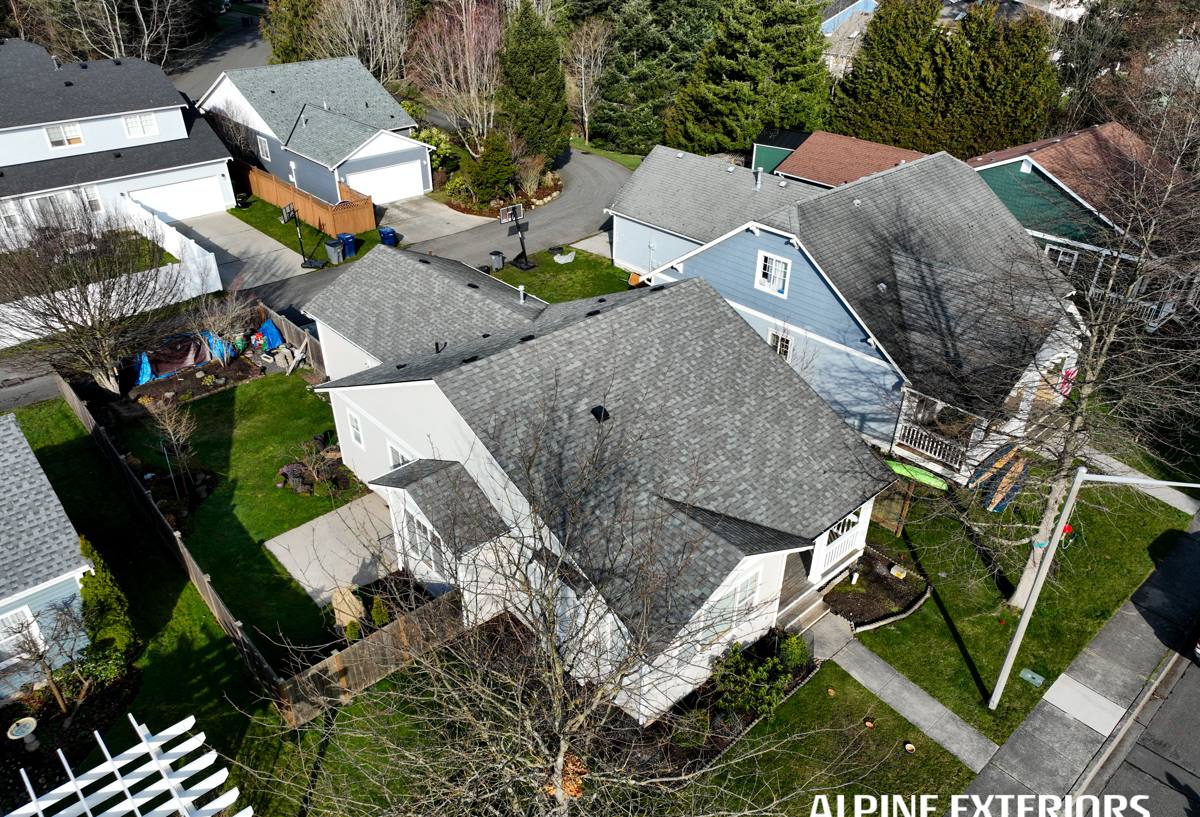
Homes around Lake Whatcom and throughout Sudden Valley sit in a pocket of Whatcom County that gets more shade, more standing moisture, and more wind-driven weather than a typical open lot. The ridges and tree cover around the lake hold humidity close to the roof deck long after a storm has passed, and marine air moving inland off Bellingham Bay and the Salish Sea carries a fine load of salt that speeds up corrosion on anything metal — flashing, fasteners, vent caps. Add in driving rain that comes sideways during fall and winter systems, and a moss season that barely lets up because so many roofs here never get a full day of direct sun, and you have a roof that ages faster than the shingle warranty assumes. Roof repair in this specific pocket of the county isn't the same job as roof repair on a sunny, open lot ten miles away, and it shouldn't be priced or performed like it is.
Signs a Lake Whatcom Roof Needs Repair, Not Just a Look
Some of the damage that shows up on lake-area roofs is easy to miss from the ground, especially on the shaded slopes that face away from the water. Before you decide a roof only needs another cleaning, check for these:
- Granules collecting in gutters or at the base of downspouts — a sign shingles are wearing thin
- Thick moss along ridge lines, valleys, or the north-facing slope
- Shingle edges that are curling, cupping, or visibly lifting
- Rust streaks or corrosion on flashing around chimneys, skylights, and vent pipes
- Ceiling stains or discoloration that appear after a wind-driven rain event, not just heavy rain
- A soft or spongy feel underfoot in specific spots when walking the roof
- Daylight visible through the roof deck from inside the attic
- Sagging along a valley or where two roof planes meet
Any one of these on its own might be a minor fix. Two or three together usually mean water has been getting past the surface layer for a while.
What a Correct Roof Repair Actually Involves
Finding where the water really enters
Water rarely drips straight down from where it enters. It travels along the underlayment, follows a rafter, and shows up on the ceiling feet away from the actual failure point. A repair that just patches the spot over the stain, without opening up the surrounding area, is a repair that comes back.
Flashing comes first
Most leaks on lake-area homes trace back to flashing, not shingles — around chimneys, skylights, dormers, and where a roof plane meets a wall. Flashing has to be lapped correctly with the surrounding roofing material so water sheds over it, not behind it. Reusing old, corroded flashing to save time is one of the most common shortcuts that leads to a repeat call a season or two later.
Underlayment and decking condition
Once shingles are pulled back, the underlayment and the decking underneath tell the real story. Underlayment that's brittle or torn needs to be replaced, not resealed. Decking that's soft, delaminating, or stained black from sustained moisture has to be cut out and replaced before anything goes back on top — shingling over compromised decking just hides the problem until it resurfaces somewhere else.
Ventilation, not just the surface
Many of the wood-lot homes around the lake have tight overhangs and limited soffit venting, which traps warm, moist attic air against the underside of the deck. That trapped moisture causes rot from below at the same time weather is working the roof from above. A repair that only addresses the visible surface and ignores attic ventilation is solving half the problem at best.
Common Repair Calls We See Around the Lake
The repair calls in this specific area follow a pattern shaped by the terrain and the tree cover more than by the age of the neighborhood:
- Moss-driven granule loss and shingle lift on shaded, north-facing slopes
- Valley leaks where debris — needles, cones, leaf litter — collects and holds moisture against the shingles
- Chimney and skylight flashing that's failed or was never properly step-flashed to begin with
- Gutters that back up during heavy rain and push water up under the first course of shingles
- Corroded fasteners and flashing on older roofs, accelerated by marine air that reaches this far inland
Repair or Replace? Weighing the Real Factors
Not every leak means a new roof, and not every roof worth saving is obvious from a single visit. These are the factors that actually decide it:
| Factor | Leans Toward Repair | Leans Toward Replacement |
|---|---|---|
| Roof age | Under 12–15 years | At or past the shingle's rated service life |
| Moss/algae damage | Surface growth, granules mostly intact | Granule loss and shingle lift over large areas |
| Repair history | First or second repair call | Repeat leaks showing up in different spots each year |
| Decking condition | Solid, dry decking found during inspection | Soft, delaminated, or repeatedly wet decking |
| Plans for the home | Need a stable roof for a few more years | Planning to stay long-term or sell soon |
What changes the price of a repair
An honest estimate should walk through why the number is what it is, not just hand you a total. The things that move a repair bid the most:
- How long the leak has been active. A leak from one storm season costs less to fix than one that's been quietly rotting decking for two or three years before anyone noticed a stain.
- Roof pitch and access. Steep slopes above a walkout level, or a roof shaded tightly by trees, take longer to work safely — that labor time is reflected in the bid.
- Matching existing material. Finding a shingle color and style that blends with a roof that's a decade or more old is harder than it sounds, and sometimes means widening the repair area slightly so the patch doesn't stand out.
- Timing. Emergency tarping after a storm costs more than a scheduled repair booked during a dry stretch, because of how the work has to be sequenced around the rain.
How Our Roof Repair Process Works
- Inspection, inside and out. We check the attic for moisture and rot as carefully as we check the shingles, because the two are connected.
- A written scope that explains the cause. You get to see what actually failed and why, not just a list of materials and a total.
- Remove and replace what's actually damaged. Compromised decking, underlayment, and flashing come out — patching over bad material isn't part of how we work.
- Correct the flashing and water path. Every flashing detail gets lapped and sealed to shed water the way it was designed to, not just re-caulked over a gap.
- Clean up moss and organic debris. We clear what's contributing to the problem now and talk through options to slow regrowth going forward.
- Walk-through and documentation. Before we leave, we show you the completed work and put the warranty terms in writing.
Materials and Methods We Use
Underlayment matters more in this climate
Standard felt underlayment is fine on a lot of roofs, but valleys, eaves, and any area prone to wind-driven rain benefit from a self-adhered membrane underneath the shingles. Given how often rain here arrives at an angle instead of falling straight down, that extra layer at the vulnerable spots is one of the more cost-effective ways to add years of protection during a repair.
Flashing material choice
Galvanized steel flashing is common and inexpensive, but it corrodes faster in air carrying salt this far inland than aluminum or properly coated steel does. On a repair, we look at what actually failed before recommending a like-for-like replacement versus a longer-lasting material — especially on chimneys and other spots that are expensive to access a second time.
Shingle matching takes judgment, not guesswork
Sun-faded or algae-streaked shingles rarely match a fresh bundle straight off the shelf. On a visible slope, we'll talk through whether a partial slope replacement makes more sense visually than a small patch that stands out for the next several years — that's a call worth making with you, not for you.
Moss, Algae, and Long-Term Roof Care
Because so many roofs around Lake Whatcom sit under tree cover, moss control is part of ownership here, not a one-time fix. There are a few standard approaches, each with trade-offs worth understanding before you commit to one:
| Approach | What It Does | Trade-off |
|---|---|---|
| Manual removal and rinse | Clears existing growth without chemicals | Needs repeating; risk of granule loss if done too aggressively |
| Zinc or copper strips | Metal ions inhibit regrowth as rain washes over them | Slower acting; works best as prevention, not a cure for heavy existing growth |
| Chemical moss treatments | Kills existing growth faster than manual methods alone | Needs correct dilution and timing; runoff has to be managed responsibly |
| Selective tree trimming | Addresses the root cause — shade and standing moisture | Not always possible or wanted on a wooded lot |
Our standard is to combine the least invasive method that actually works for the slope in question, rather than defaulting to the most aggressive treatment on every roof we touch.
Why Local Experience on These Roofs Matters
A crew that only shows up in this part of Whatcom County once or twice a year is guessing at things a crew working here regularly already knows: which slopes on a given lot lose sun first and hold moss longest, how far the marine air reaches and what it does to unprotected metal over a decade, and how to time repair work around the wet stretches so materials go on dry and seal the way they're supposed to. Many homes in Sudden Valley are also part of the community association, so it's worth checking whether there are architectural guidelines on roofing colors or materials before work starts — a crew that's worked in the neighborhood before is more likely to already know to ask. None of that is complicated, but it's the kind of detail that separates a repair that holds up through a few more wet seasons from one that's back on the schedule again next fall.
If you're seeing moss buildup, a stain on a ceiling, or you just want an honest read on how much life is left in your roof, we're happy to take a look. The estimate is free, there's no pressure to sign anything on the spot, and you'll get a straight answer about whether you need a repair, a bigger fix, or nothing at all right now.