 Sudden Valley Siding
 Building New in Acme? Get the Windows Right the First Time
When you're framing a new home in Acme, windows get installed once, then sided over, trimmed, and forgotten for the next 20-plus years. There's no easy do-over once the siding crew has flashed and wrapped around them. That's a different job than swapping out an old window in a house that's already standing — and it demands a different level of attention to sequencing, flashing, and product selection. In a Whatcom County climate that delivers driving rain, moisture-laden air moving inland off the Salish Sea, and a moss season that seems to run most of the year, a new-construction window opening either gets built to shed water correctly or it starts causing problems within a few winters.
We install new-construction windows on builds in and around Acme regularly, working alongside general contractors, framers, and siding crews rather than as an isolated trade showing up once and leaving. That coordination matters more here than the window brand on the label.
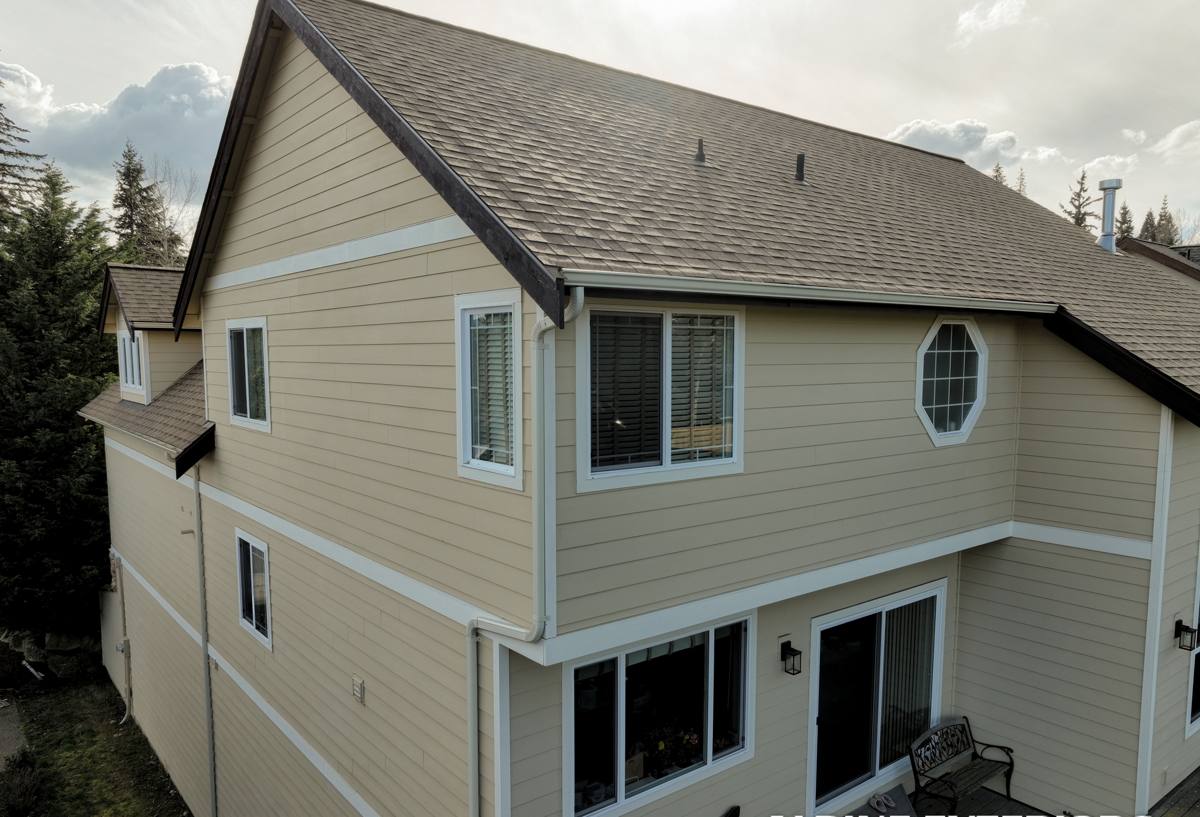
What Acme's Climate Actually Asks of a New Window Opening
Driving Rain, Not Just Rain
Whatcom County doesn't just get a lot of rain — it gets a lot of wind-driven rain, the kind that pushes water sideways into wall assemblies rather than letting it run straight down the siding. A new-construction window opening has to be built assuming water will reach the flashing at some point, and the flashing has to be layered correctly so that water is directed back out, never trapped behind the window or diverted into the framing.
A Long, Damp Moss Season
The extended stretch of cool, wet weather that fuels moss growth on roofs and north-facing siding does the same thing to window sills and trim that aren't detailed to dry out between storms. Sills that sit flat instead of sloping, or trim that traps moisture against the wall, stay damp for weeks at a stretch during moss season — long enough for rot to start in untreated wood trim or for finish coatings to fail early.
Moisture Moving in from the Salish Sea
Acme sits inland from Bellingham Bay, but the marine air that moves through Whatcom County's valleys still carries more moisture than a drier inland climate would. That constant low-grade humidity is part of why sealed glass units, weatherstripping quality, and proper drainage at the sill matter more here than they would in a dry climate — everything stays damp longer, so any weak point in the installation has more time to do damage.
New-Construction Windows vs. Replacement Windows — Why the Install Method Matters
The window unit itself is only part of the job. How it's set into the rough opening determines whether the surrounding wall stays dry for the life of the house. New-construction windows use a nailing flange that gets integrated directly into the home's water-resistive barrier and flashing system before siding goes on — very different from a replacement window, which gets inserted into an existing frame with no access to that layered flashing.
| Method | How Water Is Managed | Best Suited For |
|---|---|---|
| New-construction (nail-fin) | Flange integrates with house wrap and flashing tape in layered, shingle-style laps | New builds and full wall-opening remodels — the standard for an Acme new build |
| Pocket / insert (replacement) | Relies on existing frame and old flashing, sealant at the interface | Existing homes where wall isn't being opened up |
| Full-frame replacement | Old frame removed, new flashing installed similar to new-construction | Older homes with failed flashing or rot found during a remodel |
On a new build in Acme, there's no excuse to use anything but a proper new-construction install with full flashing integration — the wall is open, the sequencing is possible, and skipping steps here only shows up later as a stain on the drywall or soft trim outside.
Choosing Window Products for This Climate
Frame Material Trade-offs
We don't push one frame material as the only right answer — each comes with a different maintenance conversation for a damp climate like this one:
- Vinyl — low maintenance, good moisture resistance, budget-friendly; frame color and size options are more limited than fiberglass.
- Fiberglass — dimensionally stable in temperature and moisture swings, holds paint well, higher upfront cost.
- Wood (clad or unclad) — best look for certain architectural styles, but bare wood exposed to Whatcom County's damp season needs disciplined maintenance or a durable exterior cladding to avoid early rot.
- Aluminum — strong and slim-profile, but a poor insulator unless thermally broken, and prone to condensation in a humid climate if that break is missing.
Glass Packages Worth Paying For Here
Double-pane, low-E glass with an argon or krypton fill is the baseline we'd recommend on any new build in this area — it's less about chasing the highest-rated package on paper and more about keeping interior glass surfaces warm enough that condensation doesn't collect on the inside during cold, damp stretches. Condensation on the room side of the glass isn't a window defect; it's a sign of interior humidity meeting a cold surface, and a warmer glass surface reduces how often that happens.
How We Sequence a New-Construction Window Install
Coordinating with the Build Schedule
Windows go in after the house wrap or weather-resistive barrier is installed but before siding starts — that order isn't negotiable if the flashing is going to work the way it's designed to. We coordinate directly with the framer or GC on an Acme build so window delivery and rough openings line up, rather than showing up to find openings out of square or the wrap already covered.
Flashing Sequence Checklist
This is the part of the job that decides whether the wall stays dry. A correct sequence, every time, looks like this:
- Rough opening checked for square, level, and correct size before the window arrives
- Sill pan flashing installed first, sloped to drain water outward, not into the wall
- Window set and shimmed level and plumb, fastened per manufacturer spec
- Side flashing installed over the nailing flange, lapped correctly with the sill pan
- Head flashing installed last, lapped over the house wrap above the window
- Backer rod and sealant applied at the interior and exterior trim joints, not as a substitute for flashing
- Final check for level operation and smooth latching before trim and siding proceed
Mistakes We Regularly Find and Fix on New Builds
Some of these come from crews rushing to keep a build schedule; some come from skipping steps that don't show up as a problem until the first hard winter:
- Flashing installed in the wrong order — head flashing under the wrap instead of over it, which sends water behind the barrier instead of out over it
- No sill pan, or a flat sill pan that doesn't slope water back outside
- Sealant used as the primary water barrier instead of as a secondary seal over proper flashing
- Rough openings cut oversized "to make it easier," leaving gaps that get stuffed with insulation instead of shimmed and flashed correctly
None of these are visible once trim and siding go on — which is exactly why they need to be caught during the install, not discovered as a stain five years later.
What Drives Cost on a New-Construction Window Job in Acme
| Factor | Why It Matters Here |
|---|---|
| Number and size of openings | More openings mean more flashing details and labor, not just more units |
| Frame material and glass package | Fiberglass and upgraded glass cost more upfront but reduce long-term maintenance in a wet climate |
| Wall height and access | Second-story and vaulted openings take longer to flash correctly and safely |
| Coordination with siding material | Certain siding profiles need specific trim details around the window flange |
| Scheduling with the build timeline | Working around a GC's schedule on a new build is different than a standalone replacement job |
We'll walk an Acme site plan or set of house plans with you and give straight numbers based on the actual opening count and product choices — not a rough per-window guess that changes once we see the job.
Why It Matters That We Already Work in Acme
A crew that's worked new builds in Acme and the wider Sudden Valley area knows what this specific stretch of Whatcom County throws at a house — the direction the driving rain tends to come from, how long moss season keeps things damp, and how the marine moisture moving through these valleys behaves differently than it would twenty miles inland or right on the water. That's not something you get from a spec sheet. It shows up in small decisions: how much slope to build into a sill pan, which flashing tape holds up over a full wet season, and how to sequence work with a GC who's trying to keep a build on schedule without cutting corners on the wall assembly.
If you're framing a new home in Acme or planning one, we'll walk the plans with you, talk through window and glass options that make sense for this climate, and give you a straightforward, no-pressure estimate — no invented urgency, just what the job actually needs.