 Sudden Valley Siding
 Why Deming Roofs Wear Differently Than You'd Expect
Deming sits in a part of Whatcom County where three things gang up on a roof at once: moisture that never really stops for long, moss that treats a north-facing slope like a greenhouse, and a steady drift of salt-laden air working its way up from the Sound and the Nooksack river valley. None of these are dramatic on their own. Together, over ten or fifteen years, they're what separates a roof that ages gracefully from one that starts leaking at the flashings while the shingles still "look fine" from the driveway.
Metal roofing handles this combination better than most alternatives, but only when it's specified and installed for this specific climate — not just any metal roof pulled off a general spec sheet. That's the distinction this page is about: what a metal roof actually needs to do here, and what a correct install looks like for a Deming home.
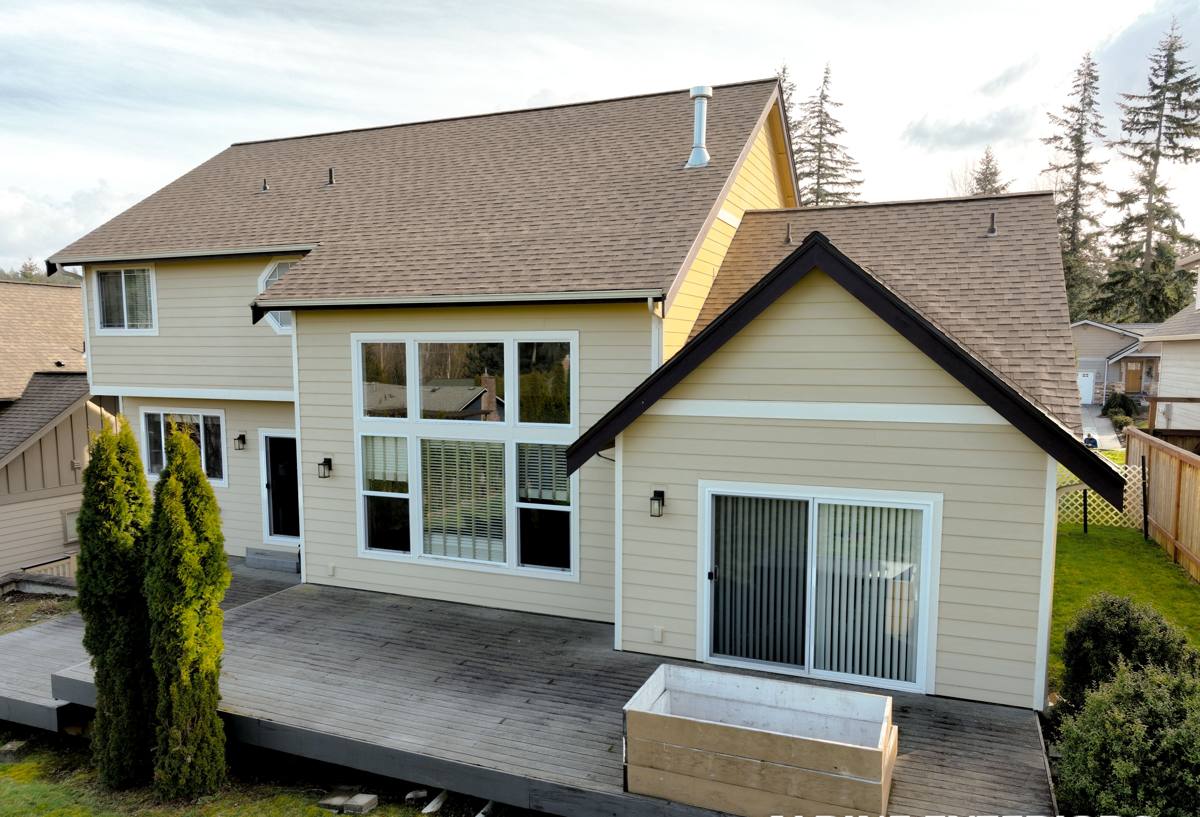
What the Local Climate Actually Does to a Roof
Driving Rain, Not Just Rain
Whatcom County doesn't just get a lot of rain — it gets wind-driven rain that hits roof planes at an angle instead of falling straight down. That matters because it pushes water sideways under laps, into fastener penetrations, and behind poorly sealed flashing. A roofing system rated for "average rainfall" isn't the same as one detailed for driving rain. Lap spacing, underlayment choice, and flashing overlap all need to account for wind-pushed water, not just gravity.
A Long Moss Season
Shaded, moisture-retentive roof surfaces here support moss growth for a large part of the year, not just a few winter months. Moss doesn't just look bad — it holds water against the roof surface, works into seams, and on organic roofing materials it can lift edges and accelerate rot. Metal roofing gives moss almost nothing to hold onto, which is one of the practical reasons it performs so well in this specific valley.
Salt-Laden Air
Proximity to Puget Sound and the tidal reaches of the Nooksack means the air carrying moisture inland also carries fine salt content. That's a slow, quiet threat — it doesn't cause a leak next winter, but it accelerates corrosion on unprotected or poorly coated metal fasteners, flashing, and panel edges over years. This is exactly why fastener and coating specification matters more here than it would somewhere further from the coast.
What "Correct" Metal Roofing Looks Like Here
A metal roof is a system, not a product. The panel is the visible part, but the roof's actual performance comes from the layers and details underneath it. For a Deming home, that means:
- An underlayment rated for high-moisture, long-exposure conditions — not the minimum-grade felt some installers still default to
- Fasteners and flashing metal matched to the panel material to avoid galvanic corrosion between dissimilar metals
- Closed or properly vented ridge details so wind-driven rain can't work its way in at the highest point of the roof
- Panel seams and laps detailed for the prevailing wind direction on the specific roof, not a generic layout
- Valley and penetration flashing sized generously, since these are the highest-failure points on any roof in this climate
- Attention to ventilation and moisture control in the attic, since a tight metal roof without airflow underneath can trap condensation just as easily as it keeps rain out
Skip any one of these and you can still end up with a roof that looks like a quality metal roof for the first few years, then starts showing the same problems — rust streaking, lifted seams, leaks at penetrations — that a poorly installed roof of any material would show.
Panel and Coating Options, and the Honest Trade-Offs
There's no single "best" metal roofing product — there's a best fit for a given roof, budget, and how long the owner plans to stay in the house. Here's how the common options actually compare for a home in this area:
| Option | Typical Lifespan Here | Best For | Trade-Off |
|---|---|---|---|
| Standing seam steel | 40–60+ years | Long-term owners, exposed or high-wind roof planes | Higher upfront cost, requires precise install |
| Exposed-fastener metal panels | 25–40 years | Budget-conscious projects, outbuildings, simpler rooflines | Fasteners need periodic inspection and eventual resealing |
| Metal shingle/shake profiles | 35–50 years | Homes wanting a traditional look with metal performance | More seams and detail work than standing seam |
| Galvalume vs. painted steel finish | Varies by coating | Galvalume for cost efficiency; painted for color match and added corrosion resistance | Painted finishes need coating warranty review, especially given salt exposure |
For most Deming homes with real coastal-influenced moisture and salt exposure, we lean toward standing seam or a quality painted finish with a corrosion-resistant coating system, because the concealed fasteners and continuous seams give the driving rain fewer places to get in. Exposed-fastener panels aren't a bad product — they're a legitimate lower-cost option for the right project — but we're upfront that they carry more long-term maintenance in this specific climate, not less.
Our Process on a Deming Metal Roof
1. Roof and Site Assessment
We walk the roof, check the existing structure, look at ventilation, and note anything specific to the site — tree cover, shading, roof pitch, and how the wind typically hits the house. This is where moss patterns and existing moisture damage usually show up first.
2. Tear-Off and Deck Inspection
Metal goes down over a sound, dry deck. If years of moss and moisture have caused any rot or soft spots in the sheathing, we address that before a single panel goes up — covering a compromised deck with a new roof just delays the problem and hides it.
3. Underlayment and Flashing First
This is the layer that actually keeps a home dry if anything ever gets past the panels — high-quality synthetic or self-adhered underlayment, properly lapped, with flashing detailed at every valley, wall intersection, and penetration before the panels are installed.
4. Panel Installation
Panels are laid out and fastened according to the manufacturer's specification for the pitch, wind exposure, and panel type, with seams oriented to shed wind-driven rain rather than collect it.
5. Final Detailing and Walkthrough
Ridge caps, trim, and penetration boots go in last, and we walk the finished roof with the homeowner so they know what to expect and what routine maintenance, if any, looks like going forward.
Why Local Experience on This Specific Job Matters
A metal roofing crew that's never worked in Whatcom County can still cut and fasten panels correctly — that part isn't the risk. The risk is in the judgment calls: how much flashing overlap is enough for this wind pattern, whether this particular roof plane needs extra underlayment because of the shade and moss history, which fastener and flashing metal combination avoids galvanic corrosion given the salt exposure here. Those calls come from having done this exact kind of roof, in this exact kind of weather, more than once.
Working regularly in and around Sudden Valley and the surrounding Whatcom County communities also means we're not guessing at permitting requirements, typical roof structures for homes built in this area, or how a given roofline tends to perform once winter storms roll through. That familiarity shows up in fewer surprises during the project and a roof that performs the way it's supposed to for years afterward.
Maintenance: What a Metal Roof Actually Needs
One of the real advantages of metal roofing here is how little ongoing maintenance it demands compared to organic roofing materials — but "little" isn't "none." A simple annual check goes a long way:
- Clear debris and needle buildup from valleys and gutter lines, especially after fall storms
- Check for any moss or algae starting at shaded edges and address it early rather than letting it establish
- Look at penetration boots and sealant points around vents and chimneys for early signs of wear
- Confirm fasteners on exposed-fastener systems are still snug and unsealed spots haven't opened up
- Watch for any coating scratches or bare metal spots that could become corrosion points given the salt air
None of this is heavy work, and it's a fraction of what a moss-prone shingle or shake roof demands in this same climate.
Cost Factors Worth Understanding Up Front
Metal roofing costs more upfront than asphalt shingles, and homeowners deserve a straight explanation of why, and what actually drives the number on their specific home:
| Factor | How It Affects Cost |
|---|---|
| Roof complexity (valleys, dormers, penetrations) | More cuts and flashing details mean more labor |
| Panel type | Standing seam costs more than exposed-fastener panels |
| Deck condition | Rot or moisture damage found during tear-off adds repair cost |
| Coating and finish | Higher-grade corrosion-resistant coatings cost more but matter more here given salt exposure |
| Roof pitch and access | Steep or hard-to-access roofs take longer and cost more to work safely |
We don't quote a project until we've actually looked at the roof, because any number given without that assessment is a guess — and guesses aren't useful when you're deciding how to budget for a roof that needs to last decades in this weather.
Let's Look at Your Roof
If you're weighing a metal roof for a home in Deming, the most useful next step is a straightforward, no-pressure look at your actual roof — not a generic estimate based on square footage alone. We'll walk it, talk through what your roof specifically needs given its exposure and condition, and give you honest options. Reach out through the form below to schedule a free estimate.