 Sudden Valley Siding
 Why Lake Whatcom Roofs Wear Differently Than Roofs Elsewhere in the County
A roof over a home on Lake Whatcom does a different job than a roof three miles away in open sun. Sudden Valley sits inside a forested basin along the lake's south shore, and that setting changes how a roof ages. Mature tree canopy keeps large sections of most roofs in shade for much of the day, which slows drying after every rain. Whatcom County gets a lot of rain, spread across many months rather than a few hard storms, and a shaded, slow-drying roof holds onto that moisture far longer than a roof out in the open. That's the core problem we're solving here: not one big weather event, but a long, damp season that gives moss, algae, and trapped moisture time to work into a roof system.
We also get asked about salt air, since it's a real factor in parts of Whatcom County closer to Bellingham Bay and the Sound. Lake Whatcom itself is inland fresh water, so homes here don't see the direct salt exposure that waterfront property nearer the coast deals with. What Lake Whatcom homes do get is the same marine weather pattern moving through — persistent humidity, driving rain that comes in at an angle under eaves and around flashing, and long stretches where a roof simply doesn't get a chance to fully dry out. That distinction matters when you're choosing materials and fasteners, and we'll walk through why below.
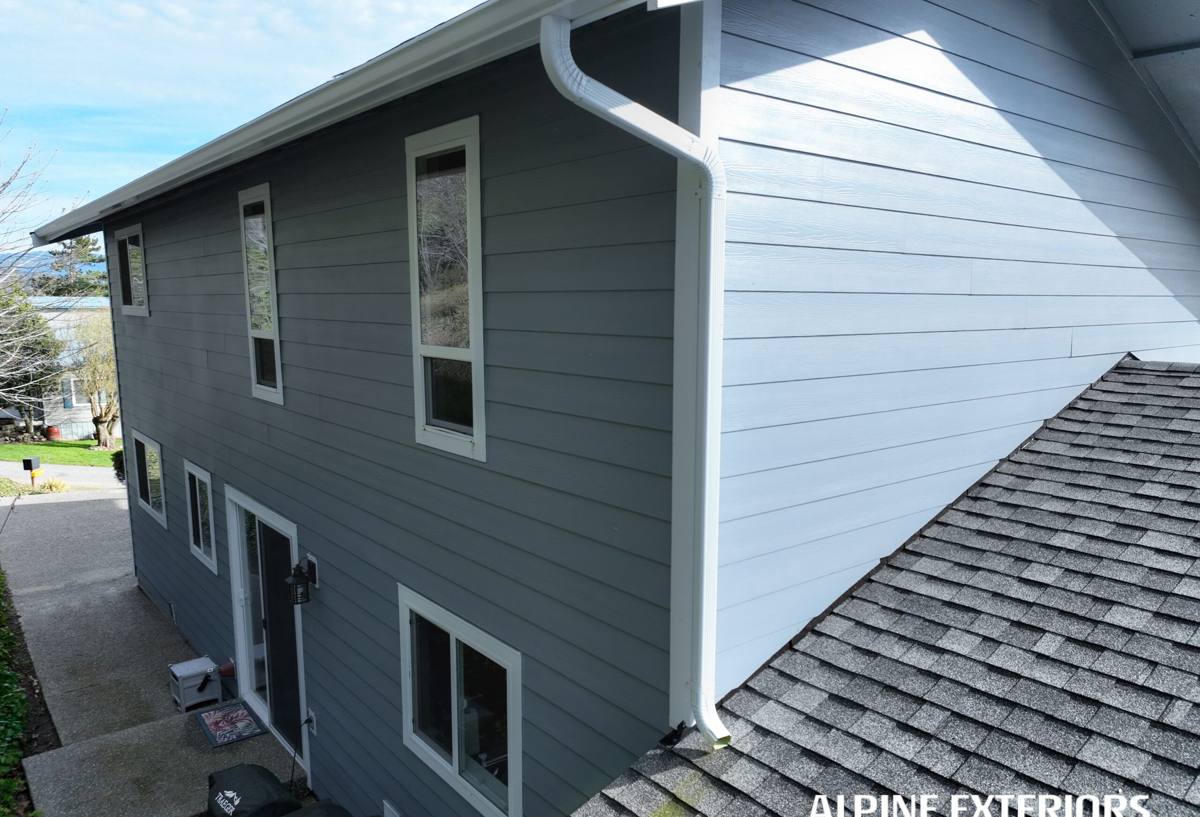
The Local Conditions That Actually Shape a Roof Replacement Here
Shade and Moss Season
Moss and roof algae need shade and moisture, and a tree-covered lake community provides both for a good part of the year. Once moss establishes on a roof, it holds water against the surface, works into shingle laps and granule layers, and lifts edges over time. By the time moss is visible from the ground, it's often already affecting the roof underneath it.
Driving Rain and Wind Off the Lake
Lakefront and lake-view lots often sit more exposed to wind funneling across open water than homes tucked deeper into the trees. That wind-driven rain finds any weak point in flashing, valleys, or fastening — which is why detail work at those transitions matters more here than the field of the roof itself.
Debris Load
Needles, cones, and leaf litter from the surrounding forest accumulate in valleys and gutters faster than on a roof in an open subdivision. Left alone, that debris holds moisture against the roofing material and blocks water from draining the way it's designed to.
Signs a Lake Whatcom Home Needs a Roof Replacement, Not Another Repair
Not every issue calls for a full tear-off, but a few signs tell us a repair would just be delaying the inevitable:
- Moss or algae covering more than isolated patches, especially on north-facing or shaded slopes
- Granules collecting in gutters or at downspout outlets in noticeable amounts
- Shingles that are cupping, curling, or cracking rather than lying flat
- Soft spots, sagging, or visible deflection when walking the roof or viewing it from a ladder
- Daylight visible through the roof deck from inside the attic
- Staining on interior ceilings or walls that tracks back to roof penetrations or valleys
- A roof approaching or past the manufacturer's expected service life for its material and exposure
- Repeated repairs to the same area over the past few years
If you're only seeing one or two of these, a repair may still make sense. If you're seeing several together, that's usually the roof telling you it's done protecting the deck underneath it.
What a Correct Roof Replacement Actually Involves
Full Tear-Off and Deck Inspection
We don't install new roofing over old material. A full tear-off is the only way to see the deck itself, and on a lake property with a long moss history, that's exactly where problems hide. Trapped moisture under aging shingles can soften plywood or plank decking without showing any sign from the outside. Any soft or delaminated decking gets replaced before anything new goes down — skipping this step is the single most common shortcut that leads to a roof failing early.
Underlayment and Flashing
Given how much rain this area sees, underlayment isn't a place to cut corners. We use synthetic or self-adhering underlayment at valleys, eaves, and other vulnerable areas to give the deck a second line of defense if wind-driven rain ever gets past the roofing material itself. Flashing around chimneys, skylights, and roof-to-wall transitions gets replaced, not reused — old flashing is a common source of hidden leaks that show up years later as interior damage.
Ventilation
A shaded, humid roof needs somewhere for moisture to escape from the attic side, not just the outside. Balanced intake and exhaust ventilation keeps the underside of the deck drier, which extends the life of the new roofing material and reduces the conditions moss needs to take hold again.
Choosing a Roofing Material for This Microclimate
There's no single "best" roofing material for every home — it depends on your budget, roof pitch, tree exposure, and how much upkeep you want to do. Here's how the common options actually perform on a shaded, moss-prone lake property:
| Material | Moss/Algae Resistance | Maintenance | Typical Lifespan |
|---|---|---|---|
| Architectural (dimensional) asphalt shingle | Good with algae-resistant granules; still needs periodic cleaning in heavy shade | Low to moderate | 25–30 years |
| 3-tab asphalt shingle | Lower — thinner profile sheds debris less effectively | Moderate | 15–20 years |
| Standing seam metal | Very good — smooth surface and steep-shed profile discourage moss growth | Low | 40–50+ years |
| Cedar shake | Requires the most attention — moisture and shade are the main threats to untreated wood | High — regular treatment and cleaning needed | 20–30 years with upkeep |
On heavily shaded lake lots, we lean toward steeper-shed profiles and algae-resistant products more than we would on an open, sunny site, because the material has to fight moss on its own for longer stretches between good drying weather. Cedar shake can look great on the right lake home, but it's an honest trade-off: it demands ongoing maintenance in exactly the conditions Sudden Valley has plenty of, and we'll say so upfront rather than sell a product that fights the site it's on.
What Drives the Cost of a Roof Replacement Here
| Cost Factor | Why It Matters on a Lake Whatcom Property |
|---|---|
| Roof access and staging | Wooded lots, sloped driveways, and tree cover can limit where a dumpster or material lift can sit |
| Deck condition | Hidden moisture damage found during tear-off adds material and labor to replace bad decking |
| Roof complexity | Valleys, dormers, and multiple roof planes take more flashing and labor than a simple gable roof |
| Material choice | Asphalt, metal, and shake carry different material and labor costs, as shown above |
| Tree removal/trim needs | Overhanging limbs sometimes need trimming for safe work access and to reduce future moss and debris |
We'd rather walk your roof and give you real numbers than quote a broad range that doesn't mean much for your specific home. Access alone can shift a project's cost more on a wooded lake lot than it would on a flat, open one.
Our Process, Start to Finish
- On-site inspection of the roof, deck access points from the attic, and gutter/valley condition
- A written estimate that spells out material options, scope, and what we found during inspection
- Material selection based on your roof's exposure, pitch, and your budget and maintenance preferences
- Scheduling that accounts for site access and, where needed, coordination for material staging on a wooded lot
- Full tear-off, deck inspection and repair, underlayment, flashing, and new roofing installation
- Site cleanup, including magnetic sweep for stray fasteners and hauling of old material and debris
- A final walkthrough so you know exactly what was done and what to watch for going forward
Why Hiring a Crew That Already Works Lake Whatcom Matters
Sudden Valley is a private, HOA-governed community, and many homes here have their own guidelines around exterior work, material appearance, and site access. A crew that's worked here before knows to check for those requirements before material ever gets ordered, rather than finding out mid-project. That familiarity also extends to the practical side: knowing which lots have tight, sloped, or shared driveways that limit equipment and staging, and planning around that instead of discovering it on install day.
Local experience also means we've already seen how this specific basin behaves — which slopes hold moss longest, which lake-facing exposures take the worst of the wind-driven rain, and where Whatcom County's permitting and inspection process applies to a reroof. None of that is guesswork when it's the area you actually work in every season.
Protecting Your Investment After the Roof Is On
A correctly installed roof still benefits from some basic upkeep, especially in a shaded lake setting:
- Clear gutters and valleys at least twice a year, more often if you're under heavy tree cover
- Have moss treated or gently removed before it spreads, rather than waiting until it's visible from the street
- Trim back branches that overhang the roofline to reduce shade, debris, and physical damage from limbs
- Schedule a periodic visual inspection, particularly after major windstorms
These are small habits, but on a property like this they make a real difference in how long a new roof actually performs the way it's supposed to.
If your roof is showing moss, wear, or damage — or you just want an honest opinion on how much life it has left — we're glad to come take a look. The estimate is free, there's no pressure, and you'll get a straight answer about what your roof actually needs. Use the form below to get started.