 Sudden Valley Siding
 Why Geneva's Spot on Lake Whatcom Is Hard on Siding
Geneva sits close to the water, tucked in among mature evergreens along Lake Whatcom, and that combination is exactly what wears siding out faster than it should. Homes here get less direct sun and more shade than houses out on open ground, which means siding stays damp longer after every storm. Add in the driving rain that comes through Whatcom County during the fall and winter storm cycle, and you've got siding that's rarely given a full chance to dry out before the next system rolls in.
Salt air is the other piece homeowners in this part of Whatcom County often underestimate. Even away from the immediate coastline, prevailing moisture off Bellingham Bay and the Sound carries salt-laden air inland, and it settles on window flashing, fasteners, and any exposed metal trim. Over years, that accelerates corrosion on the small hardware pieces that hold a siding system together — long before the siding panels themselves would normally need attention.
Put shade, standing moisture, and salt air together and you get a long moss season that can run most of the year on north-facing walls and anywhere tree cover blocks the sun. Moss and algae aren't just cosmetic — they hold moisture directly against the siding surface, and on materials that aren't built to handle it, that constant dampness is where rot, delamination, and paint failure start.
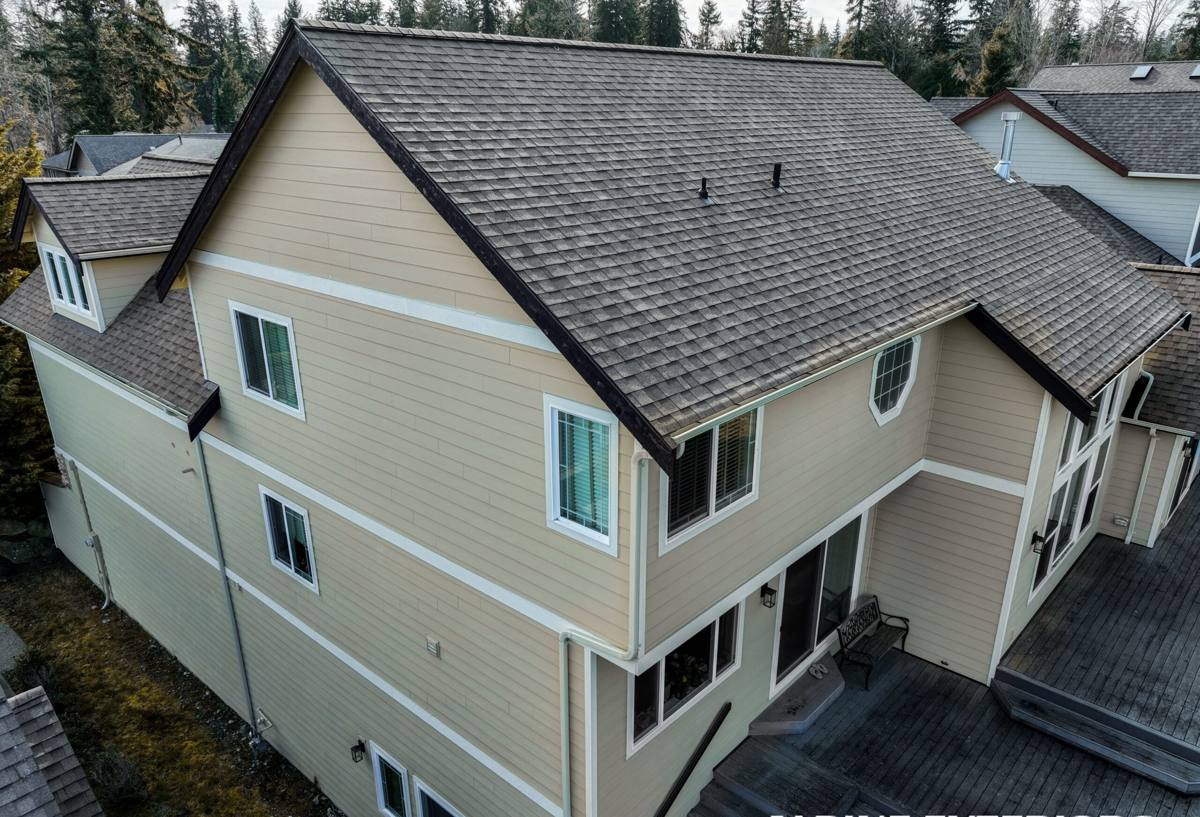
What Siding Actually Needs to Do Here
Given that climate profile, siding on a Geneva-area home needs to do three things well: shed water fast, resist moisture absorption when it can't shed fast enough, and hold its finish without repainting every few years just to keep moss and mildew stains from taking over. That's a tall order, and it's a big part of why we standardized on James Hardie fiber cement rather than installing whatever a homeowner asks for.
Climate-Engineered for This Region
James Hardie makes region-specific product lines rather than a single one-size-fits-all board. Their HZ5 line is engineered for climates like ours — places with real freeze-thaw cycles layered on top of high moisture exposure — and it's the line we spec for homes around Lake Whatcom. It's built to resist moisture-driven damage and hold up to the freeze-thaw swings that hit siding harder than most homeowners realize, especially on a wall that stays damp from shade and rain for long stretches at a time.
A Factory Finish That Doesn't Rely on You
Hardie's ColorPlus finish is baked on at the factory under controlled conditions, not brushed on in the field. That matters directly for moss and algae resistance — a factory finish bonds more consistently and resists the kind of surface breakdown that gives mildew something to grip onto. Field-applied paint, no matter how good the crew, can't match that consistency, and in a moss-heavy environment like this one, finish quality is doing real work every single day the siding is up.
What a Correct Installation Actually Involves
Fiber cement siding is only as good as the installation underneath it, and in a wet, shaded climate the details that get skipped are usually the ones that cause the problems five years down the road.
Tear-Off and Inspection
Before anything new goes up, we pull the old siding and look at the sheathing underneath. In homes that have dealt with a long moss season and trapped moisture for years, this is where we sometimes find soft spots, water staining, or early rot that was hidden behind the old material. Any damaged sheathing gets replaced before we move forward — new siding over compromised sheathing just hides the problem instead of fixing it.
Weather-Resistive Barrier and Flashing
A correctly lapped weather-resistive barrier and properly integrated flashing around every window, door, and roofline intersection is non-negotiable here. This is the layer that actually keeps driving rain out of the wall assembly, and it matters more in Geneva's climate than in drier parts of the state.
Rainscreen Gap Where It Counts
On shaded, high-moisture walls, we often build in a drainage gap between the barrier and the siding — a rainscreen — so any moisture that does get behind the panels has somewhere to drain and air to dry it out, instead of sitting trapped against the back of the siding.
Fastening and Joint Detail
James Hardie publishes exact fastener spacing, panel gaps, and caulking specifications, and in a climate this wet, following them precisely is what separates siding that lasts decades from siding that fails early at the seams. Over-driven nails, missing gaps at butt joints, and skipped caulking are small mistakes that show up as big problems once moss and moisture find them.
Material Comparison for This Climate
Homeowners in Geneva sometimes ask why we don't offer vinyl or engineered wood as a lower-cost option. Here's how the common choices actually perform under shade, moisture, and a long moss season:
| Material | Moisture Behavior | Moss/Algae Resistance | Salt Air Durability | Typical Maintenance |
|---|---|---|---|---|
| James Hardie fiber cement | Does not absorb and swell; engineered HZ5 line for this climate | Factory ColorPlus finish resists buildup and staining | Non-combustible cement composition holds up well; hardware is the main wear point | Periodic gentle washing; repaint only when the owner chooses a new color |
| Vinyl siding | Sheds water on the surface but seams and panels can trap moisture behind them | Prone to green/black staining in shaded, damp spots | Can become brittle over time in coastal-influenced air | Regular washing to keep staining from setting in |
| Engineered wood (LP SmartSide, etc.) | Wood-based core is more moisture-sensitive at cut edges and joints | Needs consistent field-applied finish upkeep to resist moss | Exposed edges and fasteners need close monitoring | More frequent inspection and touch-up, especially in shaded areas |
| Cedar/wood siding | Absorbs moisture directly; performance depends heavily on upkeep | Highest maintenance burden in a long moss season | Requires diligent sealing and refinishing | Regular refinishing on a fixed schedule |
None of these are bad products in the right setting — but Geneva's shade, moisture, and moss exposure is not a forgiving setting, and it's why fiber cement is the only material we put our name behind here.
Living With Siding in a Moss-Prone, Salt-Influenced Spot
Even the right material still needs basic upkeep. A gentle wash once or twice a year keeps moss and algae from getting a foothold, especially on north-facing and tree-shaded walls. Keeping gutters clear and trimming back branches that overhang the roofline reduces how much standing moisture ever reaches the siding in the first place. And because salt air is hardest on exposed metal, it's worth having flashing, fasteners, and trim checked periodically rather than waiting until something visibly fails.
How Our Process Works
We keep the process straightforward and don't rush the parts that matter:
- An on-site walkthrough where we look at the current siding, sheathing condition, sun exposure, and any trouble spots specific to your home's position relative to the lake and tree cover.
- A written estimate that spells out the HZ5 Hardie product, ColorPlus color, and any sheathing repair or rainscreen detail your home needs.
- Full tear-off and inspection, with any compromised sheathing replaced before new material goes up.
- Correct installation of weather-resistive barrier, flashing, and siding to James Hardie's published specifications.
- A final walkthrough with you before we consider the job finished.
Why a Crew Already Working This Area Matters
Siding work in Geneva and the rest of the Lake Whatcom shoreline isn't identical to a job out on flat, open ground elsewhere in Whatcom County. A crew that already works this area knows to expect more shaded wall sections, knows to look closer at sheathing on homes that have had moss sitting against them for years, and knows the flashing and drainage details that actually matter here versus in a drier microclimate a few miles away. That local pattern-recognition is worth more than a lower bid from a crew unfamiliar with what this specific stretch of lakefront does to a house over time.
What to Ask Before You Hire
- Do they install James Hardie specifically, and can they explain which HZ product line and why?
- Will they inspect and replace damaged sheathing before installing new siding, not just cover it up?
- Do they build in a rainscreen/drainage gap on shaded or high-moisture walls?
- Can they walk you through their fastening and joint-gap approach and how it follows manufacturer specs?
- Have they worked on homes in Geneva, Sudden Valley, or elsewhere directly on Lake Whatcom before?
- Is the warranty from James Hardie itself transferable, in addition to any workmanship warranty from the crew?
If you're weighing a siding project on a Geneva-area home, we're glad to walk the property, look at what your walls are actually dealing with, and put together a straightforward, no-pressure estimate. There's a form below to get started.