 Sudden Valley Siding
 Edgemoor sits close enough to the water that its homes deal with a different set of exterior problems than houses a few miles inland in Whatcom County. Salt-laden air, wind-driven rain off the water, and a moss season that can stretch nine months out of the year put real, measurable stress on siding. We install James Hardie fiber cement siding in Edgemoor because it's the one product system we trust to hold up to that combination without turning into a maintenance project every spring.
What Edgemoor's Climate Actually Does to Siding
It's worth being specific about what "coastal exposure" means for a siding job, because it changes what a correct installation looks like.
Salt air and metal fatigue
Homes near the water take on airborne salt that settles on every exterior surface. Over years, that salt accelerates corrosion on fasteners, flashing, and trim — especially anything that wasn't rated for coastal exposure to begin with. Siding that looks fine on the surface can be failing at the fastener level long before a homeowner notices.
Driving rain, not just rain
Whatcom County gets plenty of straight-down rain, but Edgemoor's exposure means wind-driven rain hits siding at an angle, working its way behind laps, around trim, and into any gap that wasn't sealed or flashed correctly. A siding system that performs fine in a sheltered yard three blocks inland can leak here if the installation didn't account for wind-driven moisture specifically.
The long moss and mildew season
Cool, damp air for most of the year gives moss, algae, and mildew a long runway to take hold on exterior surfaces. Siding that stays damp longer — because of poor drainage, tight clearances, or a paint finish that traps moisture — grows moss faster and holds it longer than siding that's built to shed water and dry out.
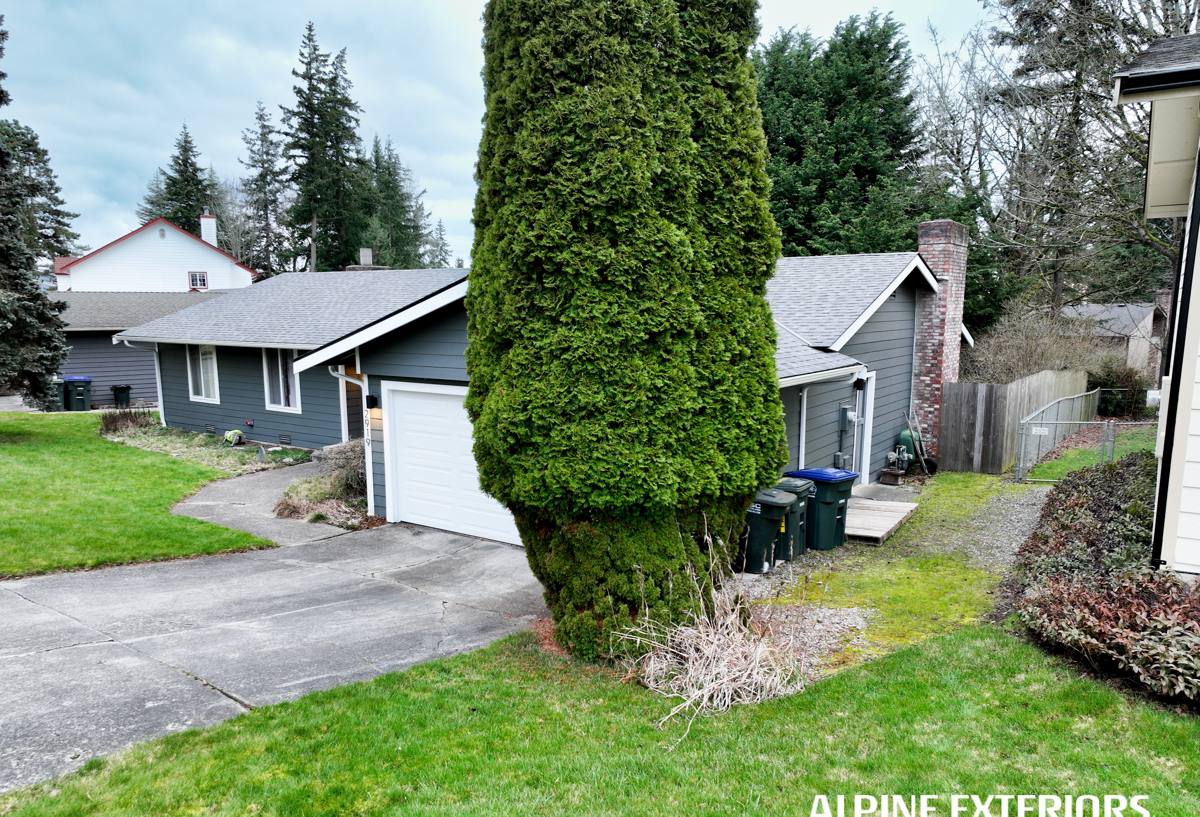
Why We Standardized on James Hardie for Homes Like These
We don't install LP SmartSide, vinyl, Cemplank, Allura, primed spruce, or cedar. That's not a marketing line — it's a decision we made after weighing how each of those products actually performs under this specific set of conditions: salt exposure, driving rain, and a long wet season.
Fiber cement's core advantage is that it's not organic and it's not a thin extrusion. It's cement, sand, and cellulose fiber, which means it doesn't feed moss the way wood-based products can, it doesn't warp or expand the way vinyl does in temperature swings, and it doesn't require the same aggressive maintenance schedule that wood siding does in a wet climate. James Hardie backs its siding with a factory-applied ColorPlus finish that's baked on rather than site-applied, which matters enormously in a climate where a site-applied paint job has a narrow window of dry weather to cure properly.
The HZ5 climate engineering
James Hardie engineers its siding for specific climate zones, and the Pacific Northwest falls into the HZ5 zone — formulated for wet, moisture-heavy climates rather than the freeze-thaw or high-heat zones used elsewhere in the country. That's not a minor spec difference; it affects the moisture management built into the product itself.
What a Correct Installation Involves
The siding material is only half the equation. We've torn off enough failed installations to know that most siding problems in this area trace back to installation shortcuts, not the product itself.
Weather-resistive barrier and flashing first
Before a single piece of siding goes up, the wall needs a continuous weather-resistive barrier, correctly lapped, with flashing at every window, door, and penetration. In a driving-rain environment, this layer is what actually keeps water out of the wall assembly — the siding is the second line of defense, not the first.
Clearances and gaps
James Hardie's installation instructions specify minimum clearances from grade, roofing, decks, and other siding-to-surface transitions. Skipping these clearances is one of the most common shortcuts we see, and it's exactly the kind of detail that causes moisture to wick into the bottom edge of a board in a climate this wet.
Fastening for coastal exposure
Fastener choice matters more here than in a drier, inland climate. Using corrosion-resistant fasteners rated for the exposure, driven at the correct depth and spacing, prevents the streaking and loosening that shows up within a few years when the wrong hardware is used.
Joints, caulking, and paint touch-up
Butt joints, corners, and cut ends need to be treated correctly — sealed or flashed per specification, with any field-cut edges primed to match the factory finish. A cut edge left untreated is a moisture entry point and a visible seam where the ColorPlus finish will fade unevenly over time.
Comparing James Hardie's Product Lines for This Climate
Not every Hardie product is the right fit for every part of a home. Here's how the main options compare for a coastal-exposure property like those in Edgemoor.
| Product | Best Use | Why It Fits (or Doesn't) Here |
|---|---|---|
| HardiePlank lap siding | Primary wall siding | The main workhorse for most elevations; HZ5 formulation handles the wet climate well |
| HardiePanel vertical siding | Accent walls, gables | Good for architectural contrast; still needs the same flashing discipline at seams |
| HardieTrim boards | Corners, window/door trim, fascia | Matches the siding's moisture resistance so trim doesn't become the weak point |
| HardieSoffit panels | Eaves and overhangs | Vented options help manage the moisture load from long wet seasons |
Our Process, Start to Finish
Homeowners in Edgemoor generally want to know two things: what we're actually going to do, and what it's going to disrupt. Here's the honest rundown.
- Assessment and measurement. We walk the exterior, check the current siding and sheathing condition, and note anything specific to the home's exposure — wind direction, shade, drainage, existing moisture damage.
- Written estimate. You get a clear scope: tear-off (if needed), house wrap and flashing work, siding and trim selection, and colors.
- Tear-off and sheathing check. If we're removing old siding, we inspect the sheathing underneath before covering it back up. This is the point where hidden moisture damage, if any, gets caught and addressed rather than sealed in.
- Weather barrier and flashing. Continuous house wrap, properly lapped, with flashing at every opening and penetration — the part of the job that never shows up in the finished look but determines whether it stays dry.
- Siding installation. Installed to James Hardie's published specifications for fastening, clearance, and joint treatment — not shortcuts we'd have to explain later.
- Trim, caulking, and touch-up. Cut edges primed, joints sealed correctly, trim installed to shed water rather than trap it.
- Final walk-through. We go over the finished work with you before calling the job done.
Signs Your Current Siding Is Already Losing the Fight
Whether you're dealing with old wood siding, aging vinyl, or a fiber cement job that wasn't installed correctly, these are the warning signs we see most often on homes in this area:
- Moss or algae building up faster on one side of the house, especially the side facing prevailing wind and rain
- Soft spots, staining, or bubbling near the bottom courses or around window trim
- Visible gaps or caulk that's cracked and pulled away at joints and corners
- Fasteners showing rust streaks bleeding down the face of the siding
- Paint or finish that's fading unevenly, especially on cut ends or repaired sections
- Siding that stays visibly damp long after the rest of the exterior has dried
What Cost Actually Depends On
We're not going to throw out a number that doesn't mean anything without seeing the house. What we can tell you is which factors move the price the most, so you know what you're actually paying for.
| Factor | Why It Matters |
|---|---|
| Tear-off scope | Removing and disposing of old siding down to the sheathing adds labor and often reveals hidden repair work |
| Sheathing repair | Moisture-damaged sheathing found during tear-off has to be replaced before new siding goes on |
| Trim complexity | Homes with more corners, windows, and architectural detail take more time to flash and trim correctly |
| Product line and profile | Plank width, texture, and whether panels or trim boards are involved all affect material cost |
| Color | Standard ColorPlus colors versus custom or premium finishes carry different pricing |
| Access and site conditions | Steep grades, tight lot lines, or multi-story walls affect labor time and equipment needs |
Living With James Hardie Siding After Installation
One reason we recommend Hardie for this climate is that the maintenance burden afterward is genuinely lower than the alternatives, not just marketed as lower. The ColorPlus finish is designed to hold color without needing repainting on the same cycle that site-finished siding requires. That said, "low maintenance" isn't "no maintenance" — an annual rinse to knock off accumulated moss and grime, a periodic check of caulking at joints and trim, and prompt attention to any impact damage will keep the system performing the way it's designed to for the long haul.
Why It Matters That We Already Work in Edgemoor
A crew that only occasionally works this part of Whatcom County doesn't have the same instinct for where water actually gets in on a coastal-exposure home. We know which elevations take the worst of the wind-driven rain, how long moss actually takes to establish itself on a poorly ventilated wall, and what corrosion looks like on hardware that wasn't rated for salt exposure. That's not something you get from a spec sheet — it comes from doing this work repeatedly in this specific environment, on homes dealing with the exact conditions Edgemoor sees year-round.
If your siding is showing its age, or you're planning ahead for a replacement, we're happy to take a look and give you a straightforward, no-pressure estimate — no obligation, just an honest read on what your home actually needs.