 Sudden Valley Siding
 Composite Decking Built for Happy Valley's Weather, Not Just Its View
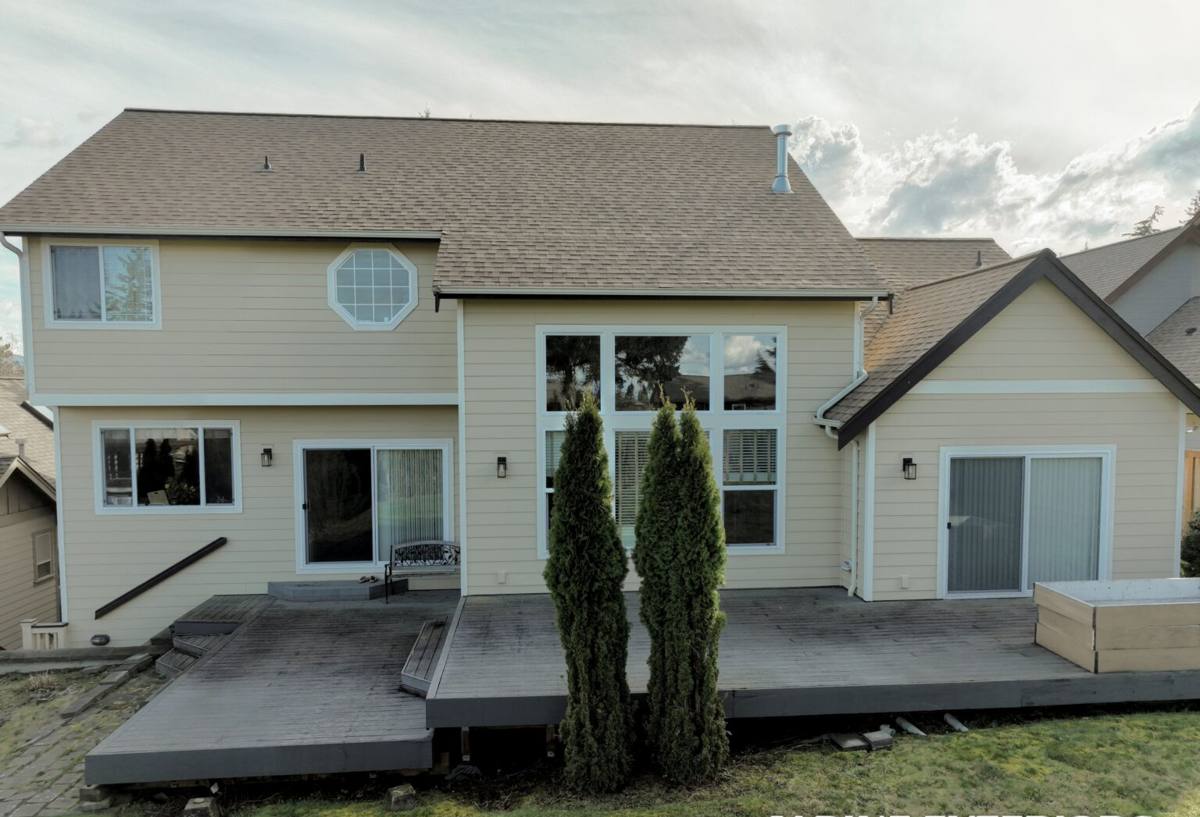
Homes in and around Happy Valley sit in one of the wetter, greener pockets of Whatcom County, and that's part of the appeal — mature trees, quiet lots, and a slower pace than town. It's also exactly the kind of setting that's hard on an outdoor deck. Salt-tinged marine air drifts in for much of the year, rain falls in long, low-intensity stretches rather than quick storms, and shaded, tree-covered lots barely dry out between systems. That combination is why we treat composite decking differently here than we would in a drier inland climate — the material choice matters, but so does everything underneath it that most homeowners never see.
This page is about composite decking specifically for Happy Valley properties: what the climate actually does to a deck over time, what a correctly built composite deck involves structurally, how our process works from first visit to final walkthrough, and what to look for in a crew before you hire one.
What Whatcom County's Climate Does to a Deck Over Time
Every deck failure we get called out to repair traces back to moisture that had somewhere to sit instead of somewhere to go. In a climate like ours, that's not a rare event — it's the default condition for eight or nine months of the year.
Moss and organic buildup
A long moss season isn't just cosmetic. Moss and algae hold moisture directly against a deck surface, and on wood that moisture feeds rot from the top down. On composite boards, moss doesn't cause structural decay the way it does on wood, but it does hold film-forming grime on the board's surface, and if it's never cleaned it can make certain board textures noticeably slick underfoot.
Salt-tinged air and metal fasteners
The marine influence in this part of Washington means fasteners, brackets, and structural hardware corrode faster than they would inland. A deck that looks fine on the surface can have compromised ledger bolts or joist hangers underneath if the original build used the wrong grade of hardware.
Driving rain and low drying time
Whatcom County rain tends to come in long, steady systems rather than brief downpours, and on shaded or tree-covered Happy Valley lots, surfaces can stay damp for days between breaks in the weather. Any part of a deck's substructure that can't shed water quickly — a poorly sloped ledger, a joist bay with no airflow, boards laid tight against a house wall — stays wet longer than it should, and that's where problems start.
Why Composite Makes Sense Here — With Honest Trade-Offs
Composite decking doesn't rot, splinter, or need annual staining, which is a real advantage in a climate that keeps wood surfaces damp for most of the year. But composite isn't maintenance-free, and it isn't automatically the right call for every project. We'll walk you through the honest trade-offs rather than oversell the material.
| Factor | Wood (cedar/pressure-treated) | Capped Composite | PVC/Cellular |
|---|---|---|---|
| Moisture resistance | Absorbs water; needs sealing | Resists moisture with a protective cap | Fully synthetic; does not absorb water |
| Moss/algae behavior | Traps moisture, feeds rot | Grows on surface film, cleans off | Grows on surface film, cleans off |
| Ongoing maintenance | Annual cleaning + staining/sealing | Periodic washing only | Periodic washing only |
| Upfront cost | Lowest | Mid-to-upper | Highest |
| Typical warranty structure | Material warranty only, if any | Manufacturer material + fade warranty | Manufacturer material + fade warranty |
| Feel underfoot in heat | Stays relatively cool | Can retain heat in direct sun | Can retain heat in direct sun |
For Happy Valley's shaded, rain-heavy lots, heat retention is rarely the deciding factor — moisture behavior and long-term maintenance usually are. That's why most homeowners in this area land on capped composite: it holds up to the wet season without the annual upkeep wood demands, at a lower cost than full PVC.
What a Correctly Built Composite Deck Actually Involves
The boards get all the attention, but the boards are the last thing installed. A composite deck's lifespan is decided by the structure underneath, and this is where we see the most corner-cutting on decks we're asked to inspect or replace.
Ledger attachment and flashing
If the deck attaches to the house, the ledger board needs proper flashing that directs water away from the rim joist and wall sheathing — not caulk alone. In a climate with this much sustained rain, a poorly flashed ledger is the single most common source of hidden rot we find on older decks.
Joist spacing and blocking
Composite boards have manufacturer-specified joist spacing requirements, and they're tighter than what's typically used under wood decking — especially on diagonal board patterns or near stair openings. Building to wood-era spacing under composite boards leads to bounce and, over time, board deformation.
Fasteners and hardware grade
Given the marine air in this region, we spec corrosion-resistant, code-rated hardware for ledger bolts, joist hangers, and post bases — not standard interior-grade fasteners. This is a small cost difference at build time and a major difference in how the structure holds up over fifteen or twenty years.
Drainage and airflow underneath
Low decks, or decks built close to grade, need attention to under-deck drainage and ventilation so the joist bays can actually dry out between rain systems. This might mean grading the ground below, adding a gap at the house wall, or in some cases installing an under-deck drainage system if the space below is meant to stay usable.
Board gapping and picture-framing
Composite boards expand and contract with temperature more than most homeowners expect. Gapping has to account for that movement, and end caps or picture-frame trim boards need venting details so moisture doesn't collect at cut ends, which is one of the few places composite boards can absorb water if left uncapped.
Our Process for a Happy Valley Composite Decking Project
- Site visit and assessment — we look at drainage, sun/shade exposure, existing structure (if replacing a deck), and how the lot sheds water, since that shapes the framing plan as much as the design does.
- Material and layout selection — board profile, color, and railing system, weighed against how much sun and moss exposure that specific spot on your property actually gets.
- Structural plan and permitting — framing spec'd to current code and to the composite manufacturer's installation requirements, with permit paperwork handled before any demo starts.
- Tear-out (if replacing) — old decking and, where needed, compromised framing removed and hauled off; we flag any hidden rot or hardware corrosion we find before rebuilding over it.
- Framing and flashing — ledger flashing, joist layout, blocking, and hardware installed to the spacing and grade the composite boards require.
- Decking, trim, and railing installation — boards fastened with the manufacturer's specified clip or fastener system, gapped correctly, with fascia and railing installed last.
- Final walkthrough — we go over the finished deck with you, including what maintenance it does and doesn't need going forward.
Signs an Existing Deck Was Built for the Wrong Climate
We get called to a lot of decks in the Happy Valley and greater Sudden Valley area that were built correctly for a drier climate, or built without much attention to climate at all. A few signs worth checking on your own deck:
- Boards that feel spongy or slightly springy underfoot, especially near the house
- Persistent green or black staining that comes back within weeks of cleaning
- Visible rust streaking below joist hangers, post bases, or fastener heads
- Gaps between boards that have closed up tight or widened unevenly
- A ledger board area that stays visibly damp longer than the rest of the deck after rain
- Railing posts that feel loose or have slight movement when pushed
Any one of these is worth a professional look before it becomes a larger repair.
Maintenance: What Composite Actually Needs in This Climate
Composite decking removes the annual sanding-staining-sealing cycle that wood demands, but "low maintenance" doesn't mean "no maintenance," particularly with a moss season this long. A realistic yearly routine:
- Sweep debris and fallen leaves regularly, especially under trees, so organic matter doesn't sit and feed moss growth
- Wash the surface once or twice a year with a soft-bristle broom and a composite-safe cleaner — pressure washing on the lowest setting only, held well back from the boards
- Check and clear gaps between boards where debris and moss like to collect
- Inspect railing posts and stair connections once a year for any looseness
- Keep gutters and downspouts near the deck clear so runoff isn't dumping extra water onto the structure
Cost Factors to Expect
| Factor | How it affects cost |
|---|---|
| Deck height and grade | Elevated decks need more substructure, footings, and stair work |
| Tear-out condition | Hidden rot or hardware corrosion found during demo adds framing repair |
| Board profile chosen | Basic capped composite vs. premium multi-tone or PVC boards |
| Railing system | Composite/aluminum rail systems cost more than basic wood or cable |
| Drainage detailing | Under-deck drainage systems add cost but protect usable space below |
| Access to the site | Tree-covered or tight lots can add labor time for material staging |
We give you a real number after seeing the site and the existing structure, not a rough figure based on square footage alone — too much of the cost here comes from what's underneath the boards.
Why a Crew That Already Works in Happy Valley Matters
None of the details above are exotic — they're standard good practice for composite decking anywhere it rains a lot. What changes by hiring a crew already working this specific area is that we're not guessing at how a given lot handles water. We've seen how tree cover on Happy Valley properties keeps certain spots damp longer, how the moss season here plays out compared to drier parts of Whatcom County, and where salt-tinged marine air tends to accelerate hardware wear versus more sheltered inland builds. That local pattern recognition shows up in small decisions — where we add extra drainage, which hardware grade we default to, how we phase a build around the wettest months — that a crew unfamiliar with the area might not think to make.
It also means straightforward logistics: permitting familiarity with the jurisdiction, realistic scheduling around the wettest stretches of the year, and being reachable afterward if a question comes up rather than being a one-time crew from out of the area.
A Few Questions Worth Asking Any Deck Contractor
- Will you show me the flashing and fastener hardware you plan to use, and why?
- What joist spacing will you build to for the specific composite board I'm choosing?
- How will you handle drainage if my lot doesn't slope away from the deck on its own?
- Is a permit required for this project, and will you pull it?
- What does the manufacturer's warranty actually cover, and what would void it?
A contractor who answers these plainly, without hedging, is generally one who builds this way as a matter of habit rather than only when asked.
If you're weighing a new composite deck or wondering whether an existing one in Happy Valley was built to hold up to this climate, we're happy to take a look and talk through it honestly. Reach out for a free, no-pressure estimate using the form below.