 Sudden Valley Siding
 Siding Repair Built for Geneva's Corner of Whatcom County
Homes around Geneva sit in one of the more demanding microclimates in Whatcom County. You're close enough to the water to catch salt-tinged air moving up from Bellingham Bay and the Sound, exposed to driving rain that comes in sideways during fall and winter storms, and shaded enough by mature evergreens that moss and algae get a long season to work on anything that stays damp. Siding here doesn't fail because it's old — it fails because water and organic growth found a weak point and had months, sometimes years, to exploit it before anyone noticed.
That's the backdrop for every repair call we take in this neighborhood. A patch job that would hold up fine in a drier part of the state can fail within a season here if it doesn't account for how water actually moves across a wall in this climate. Repair work in Geneva has to be done with that reality in mind, not treated as a generic fix.
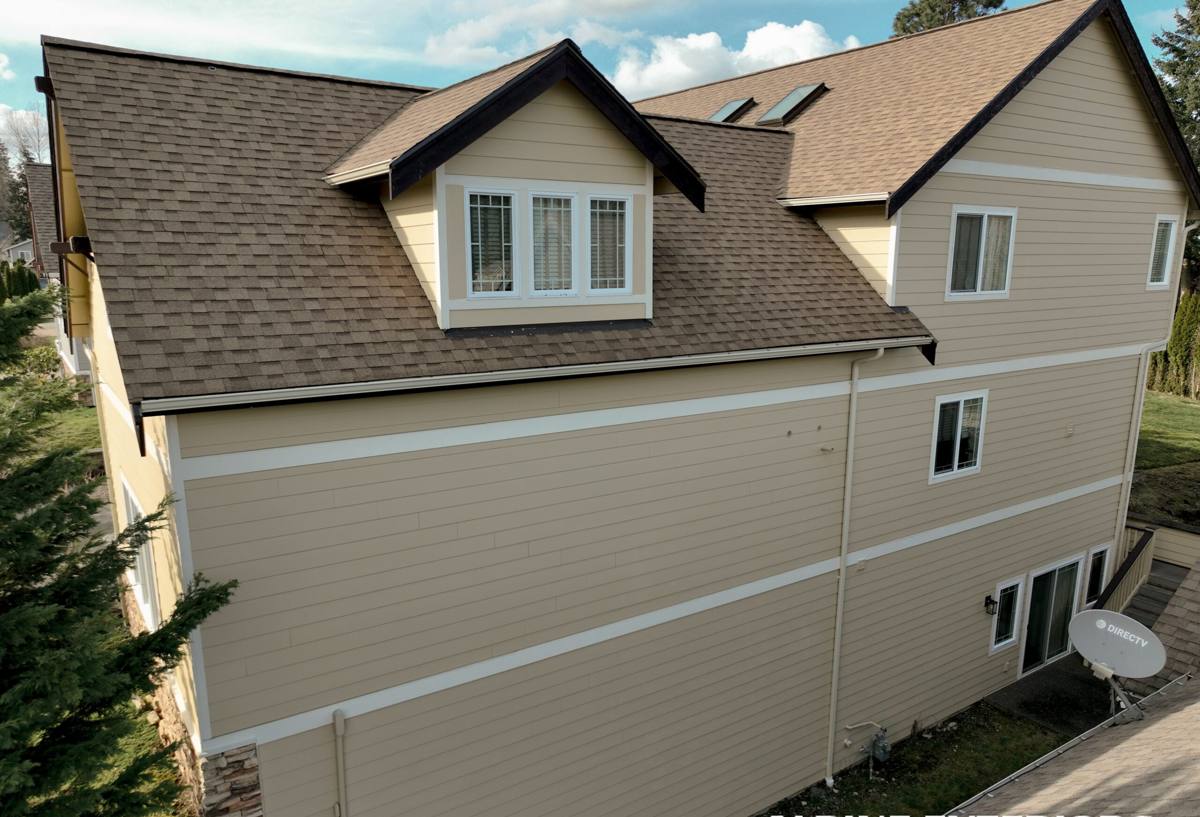
How Whatcom County Weather Shows Up as Siding Damage
Moisture Intrusion
Driving rain doesn't just wet the surface of your siding — it finds gaps at seams, fastener heads, trim joints, and anywhere caulk has shrunk or cracked, and pushes moisture behind the cladding. Once water gets behind siding, it can sit against sheathing and framing for weeks in our wet season, which is how a small cosmetic issue becomes a structural repair.
Moss and Algae Growth
North-facing walls and anything shaded by trees stay damp longer here than almost anywhere else in the region. Moss holds moisture against the siding surface, and over a long moss season that constant dampness breaks down paint film, softens caulk, and accelerates rot in any wood-based product. It also traps organic acids that slowly degrade lower-quality substrates.
Salt Air and Coatings
Airborne salt is corrosive to fasteners and hard on paint finishes. Homes closer to the water tend to show chalking, fading, and fastener corrosion sooner than homes further inland — which is exactly why the finish and fastener quality on any repair matter as much as the siding material itself.
Signs Your Geneva Home Needs Siding Repair, Not Just Paint
Homeowners often call us about a paint or appearance problem and learn the real issue is underneath. Here's what we look for on an initial inspection:
- Soft or spongy spots when you press on the siding, especially near the bottom courses or below windows
- Visible gaps or separation at butt joints, corners, or trim boundaries
- Persistent moss or dark streaking that returns within weeks of cleaning
- Bubbling, peeling, or chalking paint that's isolated to one wall or elevation
- Warping, cupping, or bowing boards, particularly on wood-based or engineered wood siding
- Stains on interior walls or ceilings near exterior corners — a sign water has already gotten past the siding
- Fastener heads that have rusted, backed out, or left rust streaks down the face of the board
Any one of these on its own might be minor. Several together, especially on the same elevation, usually means water has been getting behind the siding for a while.
What a Correct Siding Repair Actually Involves
Diagnosis Before Demolition
The first step is figuring out how far the damage extends, not just patching what's visible. We pull affected boards, check the condition of the water-resistive barrier and flashing underneath, and probe surrounding material to find the true edge of the problem. Repairing over hidden rot just relocates the failure a few feet over and a year or two down the road.
Correcting the Cause, Not Just the Symptom
If a repair is needed because flashing was missing at a window head, or a butt joint was never caulked, or a kickout flashing was left off where a roofline meets a wall, fixing the siding without fixing that detail guarantees a repeat call. A repair that doesn't address the water path that caused the damage isn't really a repair.
Matching Material and Finish
Replacement boards need to match the existing siding's profile, exposure, and finish as closely as possible. On factory-finished fiber cement, that means matching the ColorPlus coating rather than field-painting a patch a slightly different shade that stands out for years.
Proper Fastening and Sealing
Given the salt air and moisture exposure here, we use fasteners rated for the material and climate, follow manufacturer nailing patterns, and use sealants appropriate to the joint — not a bead of general-purpose caulk over a gap that was going to open back up within a season.
Repair or Replace? What We Actually Weigh
Not every damaged wall needs a full re-side, but not every problem is a candidate for a spot repair either. Here's how we typically evaluate it:
| Factor | Leans Toward Repair | Leans Toward Replacement |
|---|---|---|
| Extent of damage | Isolated to one or two boards/areas | Spread across multiple elevations |
| Underlying sheathing | Sound, dry when probed | Soft, delaminated, or visibly rotted |
| Age of existing siding | Well within expected service life | Near or past end of useful life |
| Material involved | Fiber cement, sound condition elsewhere | Wood-based or moisture-sensitive product showing widespread failure |
| Cause of damage | Single identifiable flashing/sealant failure | Systemic issue (missing house wrap, chronic moss saturation) |
We'll always tell you honestly which side of that line your home falls on. If a repair will genuinely hold, we recommend the repair — a full re-side isn't the right answer for every problem.
Our Repair Process in Geneva
- On-site inspection — we walk the exterior, probe suspect areas, and check for hidden moisture with the same attention we'd give a pre-purchase inspection.
- Written scope and estimate — you get a clear explanation of what's damaged, why, and what the fix involves, with pricing before any work starts.
- Repair or replacement of the affected area — including correcting the underlying cause, not just the visible board.
- Finish matching and cleanup — so the repaired section blends in rather than standing out.
- Follow-up guidance — what to watch for and how to keep the same failure from recurring, given our climate.
Why We Repair With James Hardie Fiber Cement — And Nothing Else
When a repair calls for replacement boards, or when damage is extensive enough that patching isn't the honest answer, we only use James Hardie fiber cement. That's not a brand preference — it's a standard we hold ourselves to because of what we've seen matching repairs to other materials over time in this exact climate.
Wood-based products like primed spruce or cedar, and engineered wood siding such as LP SmartSide, depend heavily on paint film and caulk staying intact to keep moisture out. In a place with a long moss season and driving rain, that maintenance margin shrinks fast — a missed recaulk cycle here does more damage than the same lapse would somewhere drier. Vinyl siding handles moisture differently but can warp or crack in temperature swings and doesn't hold paint if you ever want to change the color. Fiber cement products like Cemplank and Allura are chemically similar to Hardie, but we standardized on Hardie specifically for its factory-applied ColorPlus finish, its HZ5 formulation engineered for wet Pacific Northwest conditions, and a warranty structure we've found to be the most straightforward to stand behind.
Hardie fiber cement is non-combustible, holds paint far longer than field-applied finishes on other substrates, and resists the moisture and moss issues that drive most of our repair calls in the first place. When we replace a section of siding, we want it to outlast the rest of the wall — not become next year's repair call.
Why Local Experience in Sudden Valley and Geneva Matters
A repair crew that only works occasionally in Whatcom County will diagnose your siding the same way they'd diagnose a wall in a dry inland climate — because that's the experience they have. We work this area regularly enough to recognize the specific failure patterns that show up here: which elevations take the worst of the driving rain, where moss saturation causes problems before it's visible from the ground, and which older repair methods common in this region tend to fail again. That local pattern recognition is the difference between a repair that fixes the visible problem and one that fixes the actual cause.
Keeping Your Siding in Good Shape After a Repair
A repair is only as good as the maintenance that follows it. A few habits matter more here than in drier climates:
- Clean moss and algae off siding and trim before it has a chance to sit through an entire wet season
- Check caulk at trim joints, corners, and penetrations annually — this is usually the first thing to fail
- Keep gutters clear so overflow isn't running down siding it was never meant to handle
- Trim back vegetation that keeps a wall shaded and damp longer than the rest of the house
- Have any soft spots or bubbling paint looked at promptly rather than waiting for it to spread
If you're seeing early signs of trouble on your siding, or you're not sure whether a repair or a fuller fix is the right call, we're happy to take a look. Estimates are free, there's no pressure, and you'll get a straight answer about what your home actually needs — just fill out the form below to get started.