 Sudden Valley Siding
 Roof Replacement for Geneva, Serving the Sudden Valley Area
Geneva sits in the same wet, wind-exposed pocket of Whatcom County as Sudden Valley — close enough to Bellingham Bay that salt-tinged marine air rides in on the prevailing wind, and close enough to Lake Whatcom that moisture sits in the tree canopy and on rooflines long after a storm has passed. Roofs here don't fail because homeowners neglect them. They fail because the region asks more of a roof than most manufacturers' spec sheets account for: months of driving rain, a moss season that can run from October into May, and enough humidity to keep organic growth going on north-facing slopes almost year-round.
A roof replacement done right in Geneva isn't just "the same roof, but new." It's an opportunity to correct whatever the original roof got wrong — usually ventilation, flashing, or underlayment choices that were fine for a drier climate but never held up here.
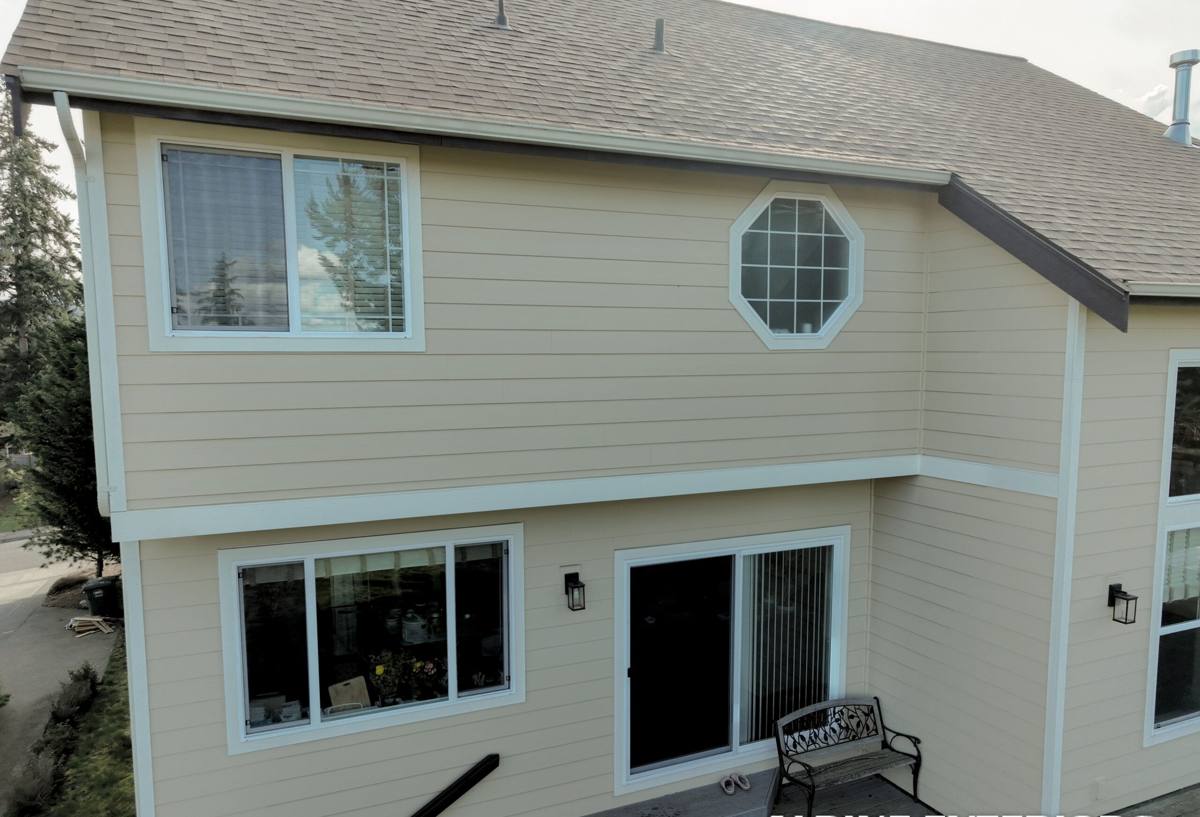
What This Climate Does to a Roof
Driving rain finds every weak point
Wind-driven rain off the Sound doesn't fall straight down — it gets pushed sideways and upward under shingle tabs, around chimney flashing, and into any nail that's slightly overdriven or underdriven. Over years, this is how small installation shortcuts turn into leaks that show up two rooms away from where the water actually entered.
Moss and moisture are a year-round job, not a fall chore
Shaded, north-facing roof planes near mature evergreens hold moisture longest. Moss doesn't just sit on top of shingles — its root structure lifts granules and shingle edges, which lets water track underneath instead of shedding off. Once that starts, no amount of surface cleaning fixes it; the shingles themselves are compromised.
Salt air accelerates metal fatigue
Flashing, fasteners, and gutter systems near the coast corrode faster than the same materials would inland. Builder-grade galvanized fasteners and unprotected flashing are a common failure point we see on roofs in this area that are otherwise still structurally sound.
Signs a Geneva Home Needs a Roof Replacement, Not a Repair
Not every problem calls for a full tear-off. But there's a point where patching becomes throwing money at a roof that's already lost its ability to protect the structure underneath. Watch for:
- Granules collecting in gutters and downspouts in noticeable quantities
- Shingles that are curling, cupping, or have visibly lost their flat profile
- Moss or dark algae staining covering more than a small patch of the roof
- Soft spots, sagging, or a visible dip anywhere in the roof plane
- Daylight visible through the roof deck from inside the attic
- Leaks that reappear in the same general area after a repair
- A roof that's 20+ years old, regardless of how it looks from the ground
If you're only seeing one or two of these, a repair or targeted maintenance visit may still make sense. If several apply, a replacement is usually the more honest recommendation — and the one that saves money over the next five years instead of costing more.
What a Correct Roof Replacement Includes
A roof replacement is only as good as the layers nobody sees once it's finished. For this climate, we treat these as non-negotiable:
Full tear-off and deck inspection
Layering new shingles over old ones is faster and cheaper, but it traps moisture and hides deck damage. We remove the old roofing down to the deck, inspect the sheathing for soft or delaminated spots, and replace any section that's been compromised by long-term moisture exposure.
Ice-and-water shield at vulnerable points
Eaves, valleys, and roof-to-wall transitions get self-adhering waterproof membrane, not just felt. This is the single biggest defense against wind-driven rain finding its way under the shingle field.
Balanced ventilation
Intake at the soffits and exhaust at the ridge, sized to actually move air through the attic. Poor ventilation is one of the most common — and most overlooked — reasons roofs in humid, tree-covered areas grow moss faster and age prematurely from the underside.
Corrosion-resistant flashing and fasteners
Given the salt-air exposure this area gets, we use flashing and fastener grades built to hold up to it, not the minimum the code allows.
Correct starter strip and ridge detailing
These are small, cheap components that are also the first things to fail when a crew is moving fast. They're where a lot of avoidable leaks originate.
Material Options and Honest Trade-offs
There's no single "best" roofing material for every home — the right choice depends on your roof's exposure, tree cover, and how long you plan to own the home. Here's how the common options actually perform in this climate:
| Material | Moss/Moisture Behavior | Typical Lifespan Here | Trade-offs |
|---|---|---|---|
| Standard 3-tab asphalt | Prone to granule loss and moss anchoring on shaded slopes | 15–20 years | Lowest upfront cost; shortest service life in this climate |
| Architectural (dimensional) shingle | Thicker mat sheds water better; algae-resistant granule options available | 25–30 years | Best balance of cost and durability for most Geneva homes |
| Metal roofing (standing seam) | Sheds moisture almost entirely; minimal moss growth | 40–50+ years | Higher upfront cost; requires experienced installation for watertightness at penetrations |
| Cedar shake | Attractive but holds moisture and requires ongoing treatment to resist rot and moss | 20–30 years with maintenance | Highest maintenance burden in a wet, shaded climate; we're upfront with clients about this before recommending it |
Most homeowners in the Sudden Valley and Geneva area land on an algae-resistant architectural shingle — it holds up to the moss and moisture cycle far better than 3-tab without the cost jump of metal. We'll walk through the real trade-offs for your specific roof rather than steer everyone toward the same product.
Our Process, Start to Finish
- On-site inspection. We walk the roof and attic, not just look from the ground, and check ventilation, decking condition, and flashing points.
- Written estimate. A clear scope and price — what's being torn off, what's being replaced, and why — with no vague allowances.
- Material selection. We go over the trade-offs above so you're choosing based on your roof and budget, not a sales pitch.
- Permitting. Roof replacement in unincorporated Whatcom County, which covers Sudden Valley and Geneva, generally requires a building permit. We handle that as part of the project.
- Tear-off and deck repair. Old roofing comes off, the deck gets inspected, and any damaged sheathing is replaced before anything new goes down.
- Installation. Waterproof underlayment at vulnerable points, correct ventilation, new flashing, and the chosen roofing material installed to manufacturer spec.
- Cleanup and magnetic sweep. Debris and stray fasteners are cleared from the yard and driveway before we consider the job done.
- Final walkthrough. We go over the finished roof with you and confirm the warranty paperwork.
What Affects the Cost
Every roof is priced on its own specifics, but these are the factors that move the number most:
| Factor | Why It Matters |
|---|---|
| Roof size and pitch | Steeper roofs take longer and need more safety setup, which affects labor cost |
| Number of layers to remove | Tearing off two layers of old roofing costs more in labor and disposal than one |
| Deck condition | Rotted or soft sheathing found during tear-off adds material and labor not visible in the original estimate |
| Material chosen | Standard shingle, upgraded algae-resistant shingle, and metal each carry different material costs |
| Roof complexity | Valleys, dormers, skylights, and multiple roof planes all add flashing work and time |
| Access | Tree cover, tight driveways, or difficult staging around the home can affect labor time |
We'd rather flag a likely deck repair or complexity issue during the estimate than surprise you with it mid-project. If something unexpected turns up once tear-off starts, we stop and talk it through before proceeding.
Why a Crew That Already Works Geneva Matters
A roof replacement isn't just a materials question — it's a scheduling, access, and local-knowledge question too. A crew that already works in and around Sudden Valley and Geneva knows the tree cover and drainage patterns that make certain roof planes moss-prone here, has already dealt with the county permitting process for reroofing in this area, and understands how driving rain off the Sound behaves differently than a generic "coastal Pacific Northwest" installation guide assumes. That familiarity shows up in fewer surprises, tighter scheduling around our actual weather windows, and a finished roof detailed for the conditions it's going to face, not just the conditions on a manufacturer's warranty sheet.
Maintaining a New Roof in This Climate
A properly installed roof still benefits from basic upkeep, especially given the moss season here:
- Keep overhanging branches trimmed back to reduce shade and debris buildup
- Clear gutters and valleys of needles and leaves at least twice a year
- Have moss treated or gently removed before it spreads, rather than after
- Check attic ventilation isn't blocked by insulation or storage
- Schedule a roof inspection after any major windstorm
None of this replaces professional inspection, but it meaningfully extends the life of a new roof between visits.
Get a Straight Answer About Your Roof
If you're not sure whether your roof needs a full replacement or just targeted repair, that's exactly what an inspection is for. We'll give you a straight assessment, walk you through the material trade-offs that actually matter for a Geneva-area home, and put together a clear, no-pressure estimate. Use the form below to request a free estimate.