 Sudden Valley Siding
 Geneva's Climate Is Hard on Siding — Here's Why
Geneva sits on the north side of Lake Whatcom, tucked in close to Sudden Valley, and it takes weather from two directions at once. Marine air moves in off Whatcom County's coastline carrying a fine salt content that settles on every exterior surface, and the lake itself keeps humidity high year-round. Add driving rain that comes in sideways during fall and winter storms, and a moss season that can run eight months or longer under the tree canopy that shades so many lots here, and you've got a climate that is genuinely tough on siding — tougher than most manufacturers' marketing photos ever show.
Wood-based and lower-grade siding products absorb that moisture cycle after cycle. Paint fails early. Seams open up. Moss and algae take hold on north- and east-facing walls where the sun never fully dries the surface. None of this is a defect in your house — it's just what happens when a siding product isn't engineered for this specific combination of rain, humidity, and shade. Fiber cement, installed correctly, is built to take that punishment for decades instead of years.
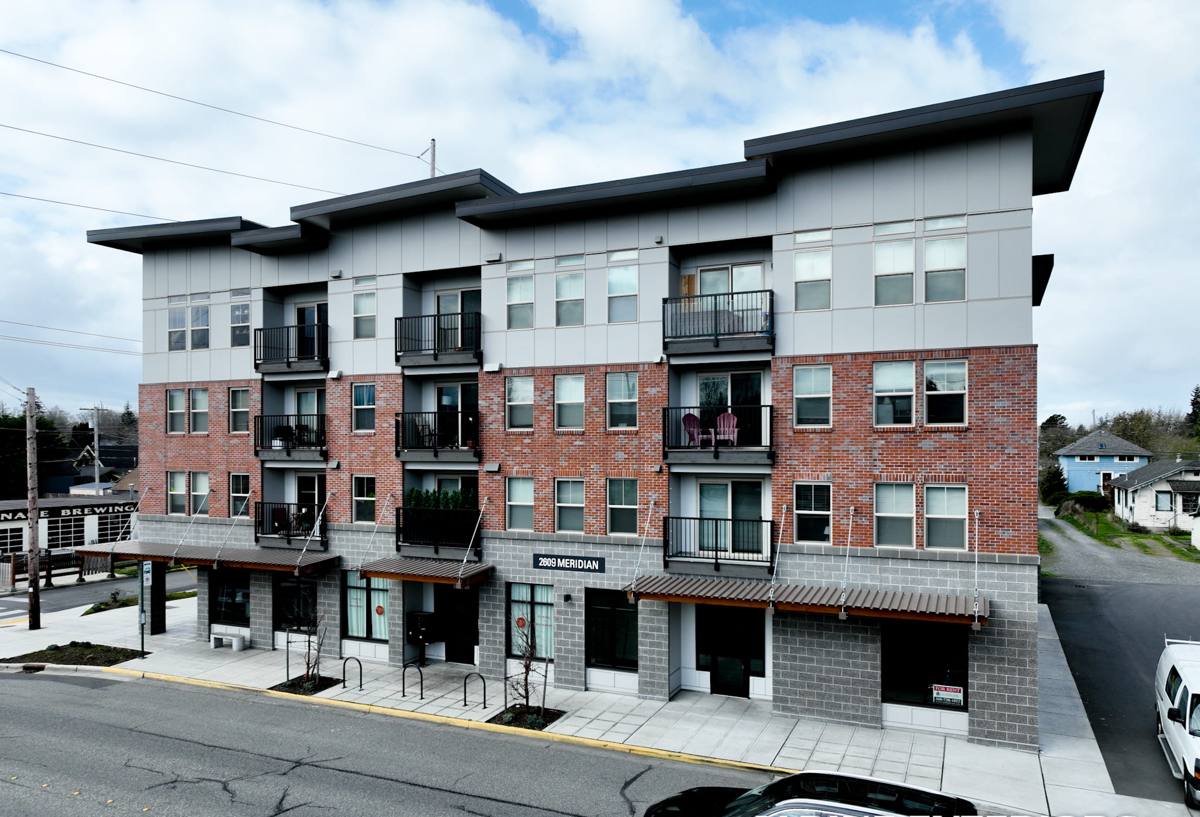
What Correct Fiber Cement Installation Actually Involves
Fiber cement siding is only as good as the installation underneath it. In a climate like Geneva's, the details that get skipped on a rush job are exactly the details that cause problems in year three or four — not year one, which is why a bad install can look fine at first.
Flashing and Water Management
Every window, door, and horizontal trim transition needs proper flashing and a drainage plane behind the siding, not just caulk. Caulk is a second line of defense, not the first. Water that gets behind the cladding needs somewhere to go — a correctly lapped water-resistive barrier and flashing system gives it that path instead of trapping it against your sheathing.
Fastening and Clearances
James Hardie publishes specific fastener patterns, nailing zones, and ground and roofline clearances for a reason — panels fastened too tight, too close to the edge, or without the minimum clearance from grade, decks, and roof lines are the single most common cause of early moisture problems we see on fiber cement jobs that weren't installed to spec.
Factory Finish vs. Field Painting
ColorPlus factory-finished products are baked on under controlled conditions and hold color and adhesion far longer than field-applied paint, especially in a humid, shaded environment like Geneva's. Field-cut edges still need to be sealed with the correct touch-up product — a step that's easy to shortcut and hard to catch once the job is buttoned up.
Why We Install Only James Hardie in Geneva
We get asked why we don't offer LP SmartSide, vinyl, Cemplank, Allura, or primed cedar and spruce alongside Hardie. It's a fair question, and the honest answer is climate and long-term performance, not brand loyalty.
LP SmartSide is an engineered wood product with an OSB-based core. It performs well in drier climates, but wood-based substrates are inherently more moisture-sensitive than fiber cement, and Geneva's rain and humidity load isn't kind to any product built around a wood core, however well-treated. Vinyl siding is inexpensive and low-maintenance in the sense that it never needs paint, but it expands and contracts with temperature swings, can crack in a hard freeze, fades over time, and doesn't hold up structurally the way a heavier, non-combustible board does — and it doesn't resist moss and algae growth any better than anything else on a shaded wall. Primed cedar or spruce looks great on day one, but it's a genuine maintenance commitment: recoating, caulk maintenance, and constant vigilance against rot, especially on the shaded, moisture-heavy sides of a lakeside lot.
James Hardie fiber cement is non-combustible, dimensionally stable across temperature and moisture swings, and its HZ5 product line is specifically engineered for climates with sustained moisture exposure like ours. The ColorPlus finish and Hardie's transferable warranty give homeowners a product built for exactly this weather, backed by a manufacturer that stands behind it. That's why it's the only product we put on a house.
Our Process for a Geneva Siding Project
- Inspection and moisture check: We walk the exterior, check for existing rot, soft sheathing, and moisture intrusion around windows, corners, and roof transitions before we ever quote a job.
- Tear-off and sheathing review: Old siding comes off and we inspect the sheathing underneath. Any rot or damage gets addressed before new siding goes up — covering a problem is not an option.
- Water-resistive barrier and flashing: A new drainage plane and properly lapped flashing go in at every penetration and transition, sized and detailed for this rain load.
- Hardie installation to manufacturer spec: Fastener pattern, nailing zone, panel gap, and clearance requirements are followed exactly — not approximated.
- Trim, caulking, and touch-up: Field cuts are sealed with the correct product, joints are caulked where specified, and trim is finished to match.
- Final walkthrough and cleanup: We review the finished work with you and clear the site completely.
Signs Your Geneva Home's Siding Needs Attention Now
- Green or black staining that keeps coming back on north- or east-facing walls, even after cleaning
- Paint that's peeling, bubbling, or chalking rather than just fading evenly
- Soft or spongy spots when you press on the siding, especially near the bottom courses or corners
- Visible warping, cupping, or gaps opening up between boards or at trim joints
- A noticeable jump in heating costs, which can point to moisture-compromised insulation behind the siding
- Rot or discoloration at butt joints, window sills, or anywhere siding meets a horizontal trim piece
Choosing the Right Hardie Product for This Setting
Not every Hardie product fits every home the same way, and lot conditions in Geneva — tree cover, sun exposure, lake proximity — factor into what we recommend.
| Product | Best Use | Why It Fits Here |
|---|---|---|
| HardiePlank Lap Siding | Most home styles, primary field siding | Traditional look, wide color range, proven long-term moisture performance |
| HardiePanel Vertical Siding | Accent walls, gables, modern designs | Clean lines that shed water well on steep gable ends common in wooded lots |
| HardieShingle | Accent bands, dormers, coastal-style homes | Textured look without the maintenance burden of real wood shingles |
| HardieTrim | Corners, fascia, window and door surrounds | Matches the siding's moisture and finish performance at vulnerable edges |
Cost Factors for a Geneva Fiber Cement Project
Every home is different, but these are the variables that actually move a quote up or down. We'll walk through them specifically during your estimate rather than quoting a flat number sight unseen.
| Factor | Why It Matters |
|---|---|
| Home size and number of stories | More surface area and taller walls mean more material, staging, and labor time |
| Existing siding removal | Tear-off and disposal of old material adds time versus a bare-sheathing install |
| Sheathing condition | Any rot repair found during tear-off is addressed before new siding goes on |
| Trim and architectural detail | Multiple gables, dormers, and window surrounds add cutting and finishing time |
| Site access and terrain | Sloped, wooded Sudden Valley-area lots can require extra staging and equipment |
| Product line and finish | Standard versus premium ColorPlus finishes and product lines vary in material cost |
Maintenance After the Job Is Done
One of the real advantages of fiber cement over wood or vinyl is how little ongoing work it asks for — but "little" isn't "none," especially in a moss-prone environment like this one.
- Rinse the siding annually, focusing on shaded north- and east-facing walls where moss and algae take hold first
- Avoid pointing a pressure washer directly at seams or up under panel edges — a garden hose and soft brush is usually enough
- Check caulking at trim joints and penetrations once a year and have any cracked or missing sections redone
- Touch up any field-cut edges that get nicked or scraped after installation, using the correct manufacturer-matched product
- Trim back vegetation and tree limbs that keep a wall in constant shade — the single best thing you can do to slow moss regrowth
Why Local Experience in Geneva and Sudden Valley Matters
A crew that already works this area knows how the rain moves off the lake, which walls stay wet longest, and how tree cover on a typical wooded lot changes where moss and algae actually take hold. If your property falls under an HOA or community association's exterior guidelines, we can work within those requirements as part of the estimate rather than surprising you with it mid-project. That local familiarity shows up in the details — where extra flashing attention goes, which walls get a heavier moss-resistant finish, how staging is planned around sloped or tree-covered lots — not just in knowing the neighborhood by name.
If your Geneva home's siding is showing its age, or you're planning ahead for a replacement, we're happy to take a look and give you a straight answer about what it needs. Reach out for a free, no-pressure estimate — there's a form right below to get started.