 Sudden Valley Siding
 Fiber Cement Siding for Sehome Homes
Sehome sits near Sehome Hill in central Bellingham, part of the wider Whatcom County territory we cover out of our Sudden Valley base. It's an older, established neighborhood, mixed housing stock, mature trees, and a fair number of homes that are on their second or third exterior since they were built. That mix is exactly why we treat siding here as a climate decision first and a cosmetic one second. This page is about one thing: fiber cement siding, specifically what it needs to do on a Sehome home, and what a correctly installed job looks like when the crew doing it already knows this part of Whatcom County.
We install James Hardie fiber cement siding exclusively. We don't offer LP SmartSide, vinyl, Cemplank, Allura, primed spruce, or cedar as alternatives, and that's a deliberate professional standard, not a lack of options. The rest of this page explains why, and what it actually takes to get a fiber cement job right on a Sehome property.
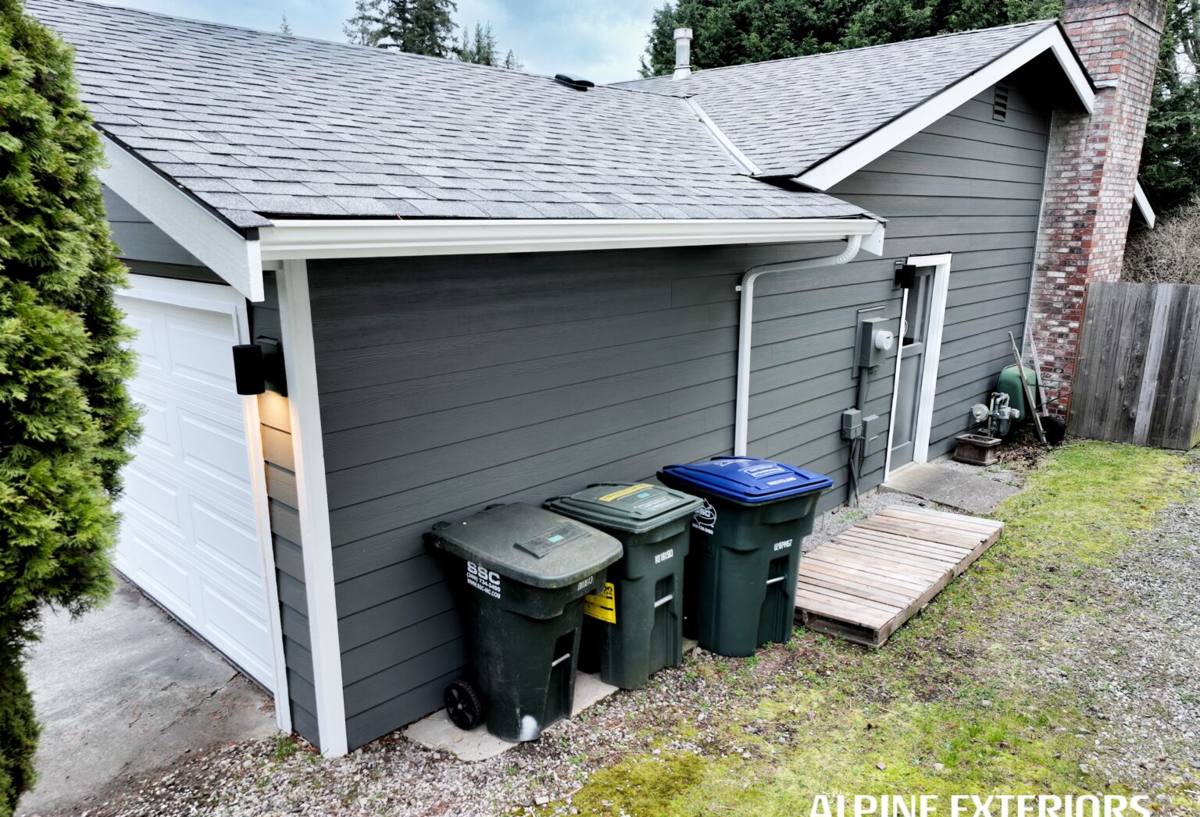
What Sehome's Climate Asks of Siding
Salt Air
Sehome isn't waterfront, but it's close enough to the Salish Sea that salt-laden air moves through the neighborhood regularly. Salt exposure speeds up corrosion on fasteners, flashing, and any exposed metal trim, and it wears down lower-grade coatings faster than they'd wear in a drier inland climate. A siding material's core matters here, but so does every piece of hardware that holds it to the wall.
Driving Rain
Rain in this part of Whatcom County tends to come in on a wind rather than straight down, which pushes water sideways into seams, laps, and trim joints instead of just sheeting off a wall. On older Sehome homes, that means water finds its way into whatever gaps decades of prior repairs or aging caulk have left behind. Siding that depends on surface sealant rather than a real water-management system behind it tends to fail quietly, showing damage only after moisture has already been getting in for a while.
A Long Moss Season
Mature tree cover, mild temperatures, and consistent moisture add up to a moss and mildew season that runs most of the year across Bellingham, Sehome included. North-facing walls and anywhere airflow is limited pick up growth first. Porous or moisture-holding materials give that growth something to root into, and once moss establishes itself, it holds even more water against the wall than the rain alone would.
Why We Only Install James Hardie Fiber Cement
We used to offer a wider range of siding products. We stopped after years of service calls and tear-offs showed a consistent pattern: in a climate with this much sustained moisture and salt exposure, some materials hold up and some quietly don't, no matter how well they're installed.
- Non-combustible core: Fiber cement doesn't feed a fire the way wood-based products can, which matters for both safety and insurance considerations.
- Factory-applied ColorPlus finish: The color is baked on in a controlled factory process rather than brushed on in the field, so it resists fading and moisture intrusion longer than site-applied paint.
- Climate-engineered HZ5 formulation: Hardie's HZ5 line is built specifically for regions with heavy moisture exposure and freeze-thaw cycling, which describes Whatcom County's climate well.
- Dimensional stability: Fiber cement doesn't swell, warp, or cup the way engineered wood products can after repeated wet-season exposure.
- Strong transferable warranty: Hardie backs the product with one of the stronger warranty structures in the industry, provided installation follows their spec.
Each of the products we don't install has a legitimate place in the market, and plenty of homeowners are satisfied with them elsewhere. Vinyl can crack and gap under Whatcom County's temperature swings and driving rain, and it can't be painted a different color if a homeowner's taste changes. Engineered wood products like LP SmartSide handle moisture reasonably well when every detail is installed to spec, but they're less forgiving of the small installation shortcuts we sometimes find when we open up an older wall, and any breach in the coating lets moisture reach a wood-based substrate. Cedar and primed spruce are real wood, which means they need ongoing refinishing, and in a shaded, moss-prone neighborhood like Sehome, that maintenance schedule tends to slip. We'd rather install one system we fully stand behind than offer a cheaper option that quietly shifts long-term maintenance risk onto the homeowner.
What a Correct Fiber Cement Job Actually Involves
The Water Layer Behind the Siding
Siding sheds most of the water, but it isn't the wall's only defense. A properly lapped and sealed weather-resistive barrier goes on first, with flashing integrated at every window, door, and penetration, and kick-out flashing anywhere a roofline meets a wall. On Sehome's older homes, this is often the step that was skipped or done poorly decades ago, and it's usually the real source of a soft spot that gets blamed on the siding itself.
Fastening and Clearances
Hardie planks and panels are fastened at specified spacing into studs or approved sheathing, using corrosion-resistant fasteners suited to this area's salt exposure. Manufacturer clearances get followed without exception: siding stays clear of grade, roofs, decks, and patios, so bottom edges never sit in splash-back or standing water. Butt joints land on studs and stagger properly between courses. None of this shows on install day. All of it shows up in year five if it was skipped.
Coursing and Layout
On a lap siding job, courses need to run level and consistent across the whole house, align across adjoining walls, and land sensibly at window heads rather than leaving an awkward sliver above a window. That takes a layout plan done before the first plank is cut, not eyeballed as the crew works. Inconsistent coursing is one of the most common flaws we see on lower-bid siding jobs, and once it's up, the only real fix is redoing it.
Choosing the Right Hardie Product for a Sehome Home
Most Sehome homes are well suited to HardiePlank lap siding as the primary cladding, with HardiePanel and HardieTrim used for board-and-batten accents on gables or entry features. The choice between ColorPlus factory finish and field-painted primed siding depends on how soon you want to stop thinking about repainting: ColorPlus holds its color longer under this region's damp, shaded conditions and comes with its own finish warranty, while primed siding opens up any paint color but will need repainting sooner in a climate this consistently wet.
| Hardie Product | Typical Use on a Sehome Home | Climate Consideration |
|---|---|---|
| HardiePlank lap siding | Primary wall cladding | HZ5 formulation for moisture and freeze-thaw resistance |
| HardiePanel + HardieTrim | Board-and-batten accents on gables or entries | Vertical seams need careful flashing given driving rain |
| ColorPlus finish | Homeowners who want to stop repainting | Factory-cured coating resists this area's long wet season better than field paint |
| Primed for field paint | Homeowners matching an existing or custom color | Will need repainting sooner given consistent moisture and shade |
Our Process on a Sehome Siding Job
- Walk the property and inspect existing siding, trim, and any visible moisture damage before quoting anything.
- Open up sample sections where damage is suspected, so tear-off scope and substrate repair get identified before the job starts, not mid-project.
- Spec the weather-resistive barrier, flashing details, and Hardie product line to the specific walls and exposures on that home.
- Install to Hardie's fastening schedule and clearance requirements, with layout planned before cutting begins.
- Walk the finished job with the homeowner and review the warranty paperwork together.
What Drives the Cost of a Fiber Cement Job in Sehome
| Cost Factor | Why It Matters Here |
|---|---|
| Wall area and home size | Base driver of material and labor cost |
| Tear-off vs. overlay | Older Sehome homes more often need a full tear-off to check the wall assembly underneath |
| Substrate repair | Sheathing or framing repair if moisture has already gotten behind old siding |
| Trim and accent scope | HardieTrim at corners and windows, board-and-batten accents, soffit and fascia work |
| ColorPlus vs. primed finish | ColorPlus raises material cost but removes near-term repainting |
Exact numbers depend on the specific home and what's found once old siding comes off, which is why we walk each property before giving a real number instead of quoting from a general price list.
Signs a Sehome Home Needs New Siding
- Moss or dark staining that returns quickly after cleaning, especially on shaded, north-facing walls
- Soft or spongy siding, particularly low on the wall or around window and door trim
- Peeling paint or visible warping on wood-based siding
- Cracked, gapped, or rattling vinyl panels after temperature swings
- Visible rust staining at fasteners or trim
- Rising energy bills without another clear cause, which can point to a compromised wall assembly
Why a Crew That Already Works Sehome Matters
A crew that installs fiber cement siding across Whatcom County day to day, not just occasionally, has already seen how salt air, driving rain, and a long moss season behave on real houses through a full year. That shapes practical decisions on a Sehome job: where extra flashing attention pays off given the neighborhood's older housing stock, which walls need the most moisture-resistant detailing based on shade and orientation, and which shortcuts we've already watched fail on other homes nearby. A contractor who only occasionally works this specific climate is more likely to apply generic details that don't quite hold up to what this part of Whatcom County throws at a wall.
If your Sehome home needs new siding, or you're not sure whether what you're seeing is a siding problem or something underneath it, we're glad to take a look. Reach out using the form below for a free, no-pressure estimate.