 Sudden Valley Siding
 Why Siding Repair in Fairhaven Is Its Own Specialty
Fairhaven sits close enough to Bellingham Bay that its homes take on exterior stress most inland Whatcom County properties never see. Salt-tinged air drifts off the water more or less year-round, storms push rain sideways into seams and trim joints that a calmer climate would never test, and shaded, tree-lined lots stay damp long enough to grow moss for most of the year. Siding repair here isn't just patching a hole and moving on. It's understanding why that hole, crack, or soft spot showed up in the first place, and making sure the repair addresses the actual cause instead of just the visible symptom.
We work Fairhaven regularly as part of our Whatcom County service area, and siding repair calls in this neighborhood tend to follow patterns that are different from what we see on drier, more sheltered properties further inland. That pattern recognition is most of what separates a repair that lasts from one that fails again in a year or two.
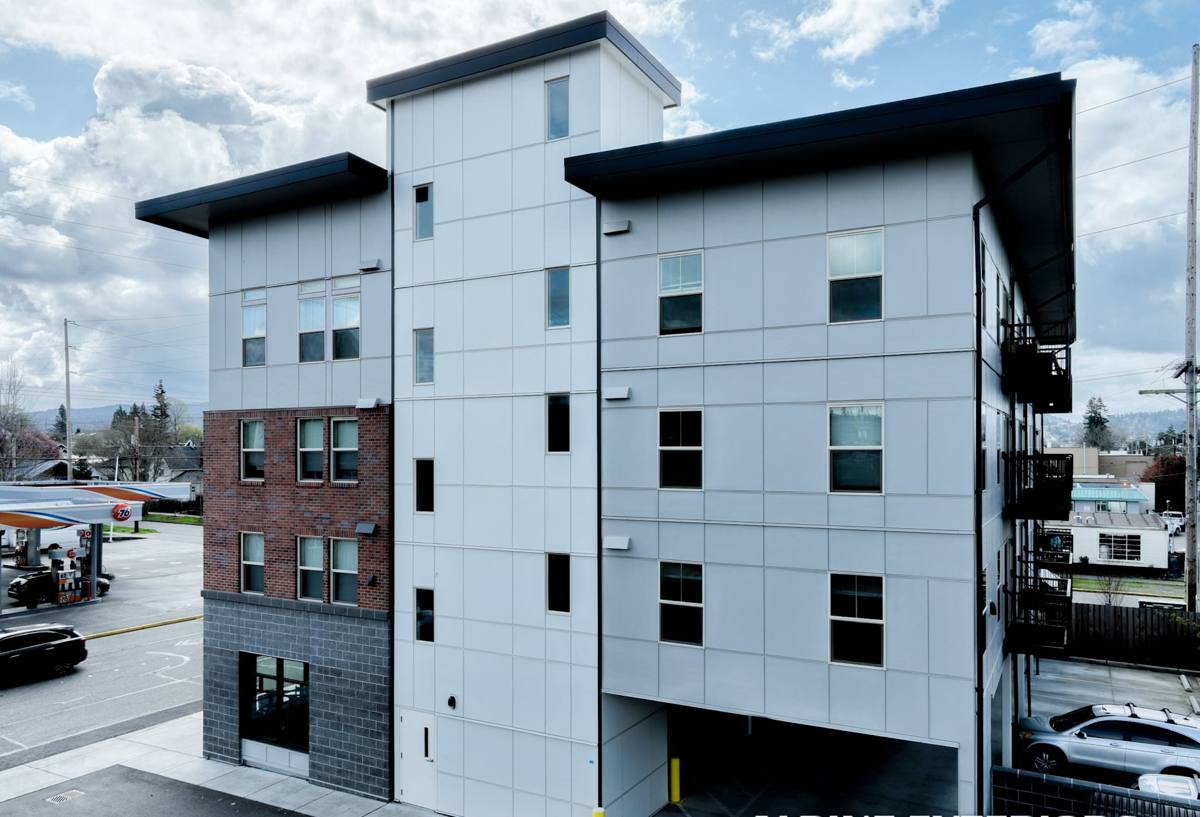
What Bellingham Bay's Climate Does to Siding Over Time
Salt Air and Slow Corrosion
Homes near the bay are exposed to a steady, low-grade dose of moisture-laden, mildly corrosive air. It doesn't announce itself the way a storm does. Instead it works quietly on fasteners, flashing, and lower-grade finishes over years, showing up eventually as rust bleed streaking down from nail heads, caulking that's gone brittle and pulled away from joints, or a paint finish that's chalked out well before it should have. By the time a homeowner notices it, the damage has usually been developing for a while.
Wind-Driven Rain and Hidden Water Entry
Fairhaven's exposure to open water means rain rarely just falls straight down. Wind pushes it sideways into lap joints, under trim, and around window and door openings from angles a siding installation built for a calmer climate was never detailed to resist. This is the single biggest reason siding repair calls in this neighborhood so often turn out to be water damage repairs first and cosmetic repairs second. The visible crack or gap is where the water is getting in; the actual damage is frequently further along the wall assembly than the point of entry.
An Extended Moss and Mildew Season
Mild temperatures, consistent dampness, and mature tree cover on many Fairhaven lots keep moss and mildew active for most of the year, especially on north-facing walls and anywhere shade slows drying after a storm. Moss itself doesn't usually damage fiber cement siding directly, but it holds moisture against the surface longer, and on caulked joints, trim seams, or older materials underneath, that sustained dampness accelerates whatever failure was already starting.
The Most Common Siding Repairs We See in Fairhaven
Impact and Storm Damage
Wind events, falling branches, and the occasional accidental impact crack or chip individual siding boards. On Hardie fiber cement, this kind of damage is usually straightforward to repair: the affected board gets cut out and replaced with a matching piece, properly flashed and fastened. The trick is matching the existing ColorPlus finish closely enough that the repair doesn't stand out, which depends on knowing the product line and color that was originally installed.
Moisture Intrusion and Soft Sheathing
This is the repair category that requires the most judgment. Wind-driven rain finds its way behind siding through a failed joint, a poorly flashed penetration, or old caulking that's given out, and by the time it's visible from outside, the sheathing behind it may already be soft or delaminating. A correct repair here means opening the wall enough to find where the water is actually getting in and how far it's traveled, not just resealing the crack that first caught someone's eye.
Failed Caulking and Trim Separation
Caulking is a wear item, not a permanent seal, and salt air ages it faster than it would in a drier inland climate. Trim boards that have pulled slightly away from the wall, gaps opening at corners, or a bead of caulk that's cracked and lifted are all early warning signs. Left alone through another wet season, these small gaps are exactly how water starts working its way behind the siding in the first place.
Moss and Mildew Staining Versus Real Damage
Not every dark streak or green patch on a wall means the siding has failed. Surface staining from moss or mildew can often be cleaned without any repair work at all, and part of a proper diagnosis is telling that apart from staining that's actually tracking moisture damage underneath. We check both before recommending anything, since a homeowner shouldn't pay for a repair that a cleaning would have solved.
Repair or Replace: How We Make the Call
Not every siding issue on a Fairhaven home calls for a full re-side, and not every issue is safely handled with a patch. The honest answer depends on how contained the problem is and how long moisture has likely been active behind the wall.
| Situation | Usual Approach | Why |
|---|---|---|
| Isolated impact damage, one or two boards | Spot repair | Damage is contained and the surrounding wall assembly is sound |
| Localized water entry caught early | Targeted repair with reflashing | Correcting the entry point and replacing affected boards resolves the issue without disturbing sound siding elsewhere |
| Widespread caulk failure across the house | Repair now, plan for resealing project | Individual gaps can be sealed, but a home-wide pattern usually means the original caulking has reached the end of its service life |
| Soft sheathing found across multiple wall sections | Broader replacement likely needed | Extensive hidden moisture damage usually means the water problem isn't isolated, and patching over it just delays a larger repair |
| Siding at or near the end of its rated service life | Full replacement discussion | Repairing an aging material that's already failing elsewhere is often a short-term fix that doesn't hold up through another wet season |
We'll tell you plainly which situation your home is actually in. A repair-only approach that ignores a bigger underlying problem doesn't do you any favors, and neither does recommending a full re-side when a targeted fix would genuinely solve it.
What a Correct Hardie Siding Repair Actually Involves
Because we install and repair James Hardie fiber cement exclusively, every repair on a Fairhaven property gets held to the same installation standard as new construction, not a shortcut version of it.
Matching Color and Profile
Hardie's factory-applied ColorPlus finish is what gives the siding its long-term resistance to fading and chalking, but it also means a repair needs to match the correct product line, plank width, and color match closely, or the patch will be visible for years. We identify the original specification before ordering replacement material rather than guessing from a paint chip.
Flashing and Water Management
A repair that just replaces a damaged board without correcting the flashing or house wrap detail underneath it is a repair that's likely to fail again. Every board we replace gets properly lapped and integrated with the water-resistive barrier behind it, the same way it should have been detailed the first time.
Fastening and Sealant Standards
Hardie specifies fastener type, spacing, and clearance for a reason, and those specs matter just as much on a repair as they do on a full installation. We use sealants and fasteners rated for sustained coastal moisture exposure, not whatever's fastest to grab off the truck.
Our Fairhaven Siding Repair Process
- On-site inspection of the damaged area and the surrounding wall assembly, not just the spot that prompted the call
- Diagnosis of the actual water or damage source, including checking for hidden moisture behind visibly sound siding nearby
- A clear, written scope explaining what needs to be repaired, what it will cost, and why
- Sourcing correctly matched Hardie material and color before any siding comes off the wall
- Repair work performed to the same flashing, fastening, and sealant standards as new installation
- A final walk-through so you can see exactly what was done and why
Siding Repair Cost Factors in Fairhaven
| Factor | What It Affects | Why It Matters Here |
|---|---|---|
| How far moisture has traveled behind the wall | Scope of the repair | Wind-driven rain off the bay can push water further behind a wall than the visible damage suggests |
| Age and condition of surrounding siding | Whether a spot repair is realistic | Older siding near a failed section is more likely to have its own hidden issues |
| Color and product match availability | Material sourcing time | Older ColorPlus runs can require closer matching to avoid a visibly different panel |
| Access and site conditions | Labor time | Hillside lots and closely built properties common in Fairhaven can add setup time |
| Hidden sheathing or framing damage | Repair costs beyond the siding itself | Sustained wind-driven rain exposure makes hidden substrate damage more common near the water |
We won't quote a repair sight unseen. A short on-site look tells us whether we're dealing with a straightforward board swap or something that needs the wall opened up, and the price should reflect which one it actually is.
Signs a Fairhaven Home Needs Siding Repair
- Cracked, chipped, or missing siding boards after a wind event
- Soft or spongy siding, especially near the base of the wall or around window and door trim
- Caulking that's cracked, shrunk, or pulled away from a joint or trim edge
- Gaps opening up at corners, seams, or where trim meets siding
- Rust staining bleeding from fastener heads or flashing
- Moss or dark staining that returns quickly after cleaning, particularly on shaded walls
- Paint or finish that's chalking, peeling, or fading unevenly across the wall
Why a Crew That Already Works Fairhaven Matters
A contractor who works this stretch of Whatcom County regularly knows which walls in a neighborhood like Fairhaven stay damp longest, which orientations take the worst of the wind off the bay, and where past repairs in this area tend to fail if they weren't detailed correctly the first time. That experience shows up in small decisions during a repair: how much of the surrounding wall to check before calling the job done, which flashing detail is worth the extra ten minutes, and when a homeowner is genuinely looking at a simple patch versus a problem that will resurface next winter if it's only patched. Fairhaven's proximity to the bay, its older housing stock, and its shaded, hillside lots aren't identical to conditions elsewhere in Bellingham, and a crew with real repair experience specifically in this neighborhood accounts for that instead of treating every siding repair the same way.
If you're noticing damage, staining, or gaps in your Fairhaven home's siding and want an honest read on what it actually needs, we're glad to take a look. Reach out using the form below to schedule a free, no-pressure estimate.