 Sudden Valley Siding
 Windows Built for Happy Valley's Weather, Not Just Any Weather
Happy Valley sits inside the Sudden Valley community on Lake Whatcom, and homes here take a specific kind of beating year-round. It's not one dramatic storm that wears out windows in this part of Whatcom County — it's the accumulation. Salt-tinged air moving up from the Sound, driving rain that hits window frames sideways for days at a stretch, and a moss and mildew season that can run from October through May all work on the weak points of a window system slowly and quietly. By the time a homeowner notices fogging between panes, soft trim, or a draft they can feel with a hand near the glass, the damage has usually been building for a couple of seasons.
An energy-efficient window replacement in Happy Valley isn't just about lowering a power bill, though that's a real benefit. It's about closing off the paths that moisture and cold air use to get into a wall system in a climate that doesn't give a house much of a dry-out window between rain events. We treat those two goals — efficiency and moisture management — as the same job, because in this part of Sudden Valley they are.
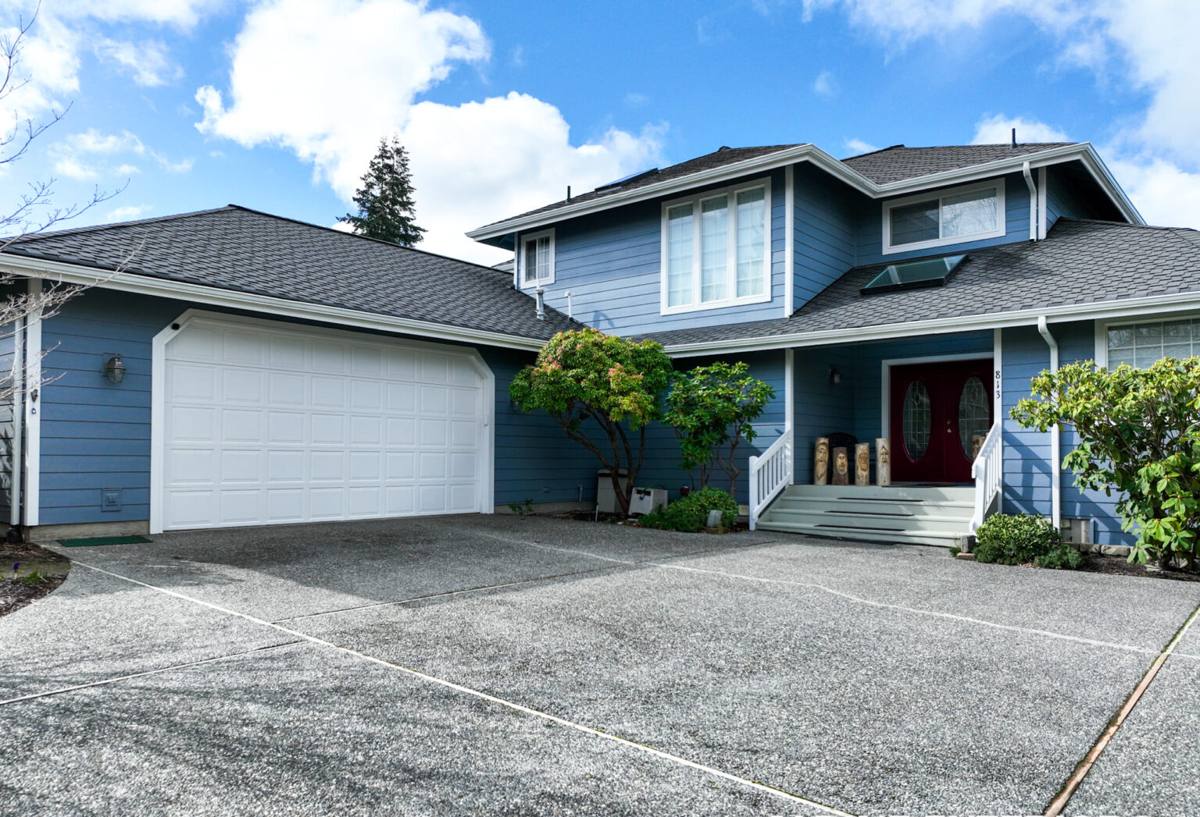
What This Climate Actually Does to Windows
Salt Air and Metal Fatigue
Homes closer to the lake and the broader Whatcom County coastal air pattern see accelerated corrosion on window hardware — hinges, cranks, and lock mechanisms — long before the glass or frame itself fails. Aluminum-clad and vinyl windows handle this better than bare wood or unprotected metal frames, but hardware quality still matters more here than in a drier inland climate.
Driving Rain and Wind-Driven Water
Sudden Valley's exposure means rain doesn't always fall straight down. Wind-driven rain finds gaps at the window-to-wall transition that would never get tested in a calmer climate. This is why flashing and sealant detail at installation matters as much as the window unit itself — a premium window installed with poor flashing will leak just as fast as a budget one.
Moss, Mildew, and the Long Wet Season
Whatcom County's extended damp season means any wood component left exposed — sills, trim, or older wood-frame sashes — stays wet longer between dry spells. That's ideal conditions for moss and mildew to take hold, and once organic growth gets into a seam or joint, it holds moisture against the material and accelerates rot from the inside out.
What "Energy-Efficient" Actually Means for a Happy Valley Home
Energy efficiency in a window comes down to three things working together: the glass package, the frame material, and the installation. Homeowners often focus only on the first and skip the other two, which is where performance gets lost.
- Glass package: Double-pane with low-E coating and argon gas fill is the practical standard for this climate. It cuts heat loss and helps manage condensation on interior glass during cold, damp mornings.
- Frame material: Vinyl and fiberglass frames resist moisture absorption and don't need the periodic painting or sealing that wood does. In a climate this wet, that maintenance difference adds up over years.
- Installation detail: Proper flashing, backer rod, and sealant at the rough opening — done in the right order — is what actually keeps wind-driven rain out. This is the step that separates a window that performs for 20+ years from one that fails in five.
We're straightforward with homeowners about trade-offs on frame choice. Wood-clad windows can look excellent, but bare or under-maintained wood exposed to Sudden Valley's rain and moss season is a recurring maintenance commitment, not a one-time purchase. If a homeowner wants a wood interior look, we'll talk through clad options that protect the exterior face while keeping the interior warmth of wood — that's a matter of matching the product to the maintenance appetite, not a knock on wood itself.
Signs a Happy Valley Home Needs This Now
- Fogging or a milky haze between panes — the seal has failed and the insulating gas is gone
- Visible condensation or moisture pooling on interior sills during cold mornings
- Soft, spongy, or discolored wood trim around the window frame
- Moss or dark streaking building up in the corners of frames or sills
- A noticeable draft near the window even when it's fully latched
- Windows that are difficult to open, close, or lock — often a sign the frame has shifted or swollen
- Higher heating bills in winter without a clear explanation elsewhere in the house
How We Approach the Job
1. On-Site Assessment
We look at each window individually, not just the house as a whole. Orientation matters — a west-facing window taking the brunt of driving rain off the lake needs different flashing attention than a sheltered window on the leeward side. We also check the condition of the wall sheathing and framing around each opening while the window is out, since that's the only time it's visible.
2. Product Selection Based on Exposure
Not every window on a house needs the same spec. Exposed elevations may warrant a higher-performance glass package or more robust hardware, while sheltered windows have more flexibility. We walk through options with the homeowner rather than defaulting to one product line for the whole house.
3. Removal and Opening Prep
Old windows come out carefully to avoid damaging surrounding siding or trim. Any soft or compromised sheathing found at this stage gets flagged and addressed before a new window goes in — installing a new window over a wet or rotting opening just moves the failure point, it doesn't fix it.
4. Flashing and Weatherproofing
This is the step that matters most in this climate. Proper flashing tape, sill pans where called for, and correctly lapped house wrap around the opening are what keep wind-driven rain from tracking behind the window into the wall cavity. We follow manufacturer installation instructions closely — this is also what keeps the window's warranty valid.
5. Setting, Sealing, and Insulating
The window is shimmed level and square, insulated around the frame without over-packing (which can bow the frame and affect operation), and sealed on the interior and exterior with appropriate sealant for the surface and exposure.
6. Final Check and Cleanup
We test operation, check for square and smooth function, confirm weatherstripping contact, and walk the homeowner through basic care specific to this climate — mainly, what to watch for as moss season approaches each fall.
Comparing Frame Options for This Climate
| Frame Type | Moisture Resistance | Maintenance | Best Fit |
|---|---|---|---|
| Vinyl | Excellent — won't rot or absorb water | Low — occasional cleaning | Most Happy Valley homes prioritizing low upkeep |
| Fiberglass | Excellent — very stable in wet/dry cycling | Low | Homes wanting extra strength or larger window openings |
| Wood-clad | Good on the exterior face if clad is intact | Moderate — interior wood still needs periodic attention | Homeowners wanting a wood interior look |
| Bare wood | Poor in this climate without diligent upkeep | High — regular painting/sealing needed | Historic or character-driven projects only, with maintenance commitment understood |
| Aluminum | Fair — prone to condensation and corrosion near salt air | Moderate | Generally not our first recommendation for this specific exposure |
Cost Factors to Understand Before You Budget
Window replacement costs vary widely based on a handful of factors that matter more than the sticker price of the window itself:
- Number and size of openings — larger or custom-sized windows cost more than standard sizes
- Frame material — vinyl is typically the most budget-friendly, fiberglass and wood-clad run higher
- Glass package upgrades — triple-pane or specialty coatings add cost but may not be necessary on every elevation
- Condition of the existing opening — hidden rot or sheathing damage found during removal adds time and material
- Access and elevation — second-story or hard-to-reach windows take more labor time
We give homeowners a real number after seeing the actual openings, not a phone estimate — too much of the cost depends on what's found once the old window comes out.
Why a Crew That Knows Sudden Valley Matters
A window installer who mostly works drier inland climates can do fine work and still get flashing details wrong for a lake-adjacent, rain-driven environment like Happy Valley. The failure isn't usually visible right away — it shows up two or three wet seasons later as a soft spot in the wall or a window that's started leaking at the corners. Working in Sudden Valley and the surrounding Whatcom County area regularly means we're not guessing at how this climate treats a window installation; we're building to what we've seen hold up and what we've seen fail.
We're also familiar with the specific mix of home styles around Sudden Valley and Lake Whatcom — from older cabins with original wood windows to newer builds — and can talk through options that fit both the house and the budget without pushing one product line as a default answer.
If you're noticing drafts, fogged glass, or trim trouble on your Happy Valley home, we're happy to take a look and give you a straight assessment — no pressure, no obligation. Fill out the form below to schedule a free estimate.