 Sudden Valley Siding
 Why Edgemoor's Location Puts Extra Stress on Siding
Homes in the Edgemoor area don't age the same way houses do twenty or thirty miles inland. Sitting close enough to the water to catch salt-laden air, and exposed to weather that comes off the water sideways more often than straight down, siding here works harder than the manufacturer's average-climate rating assumes. We've replaced siding on enough homes in this part of Whatcom County to see the pattern clearly: the failures aren't random, they're climate-driven, and they show up in predictable places.
Salt Air and Coastal Exposure
Airborne salt doesn't just affect boats and metal fixtures. It settles on siding surfaces, works into seams and fastener heads, and accelerates the breakdown of finishes that aren't built to resist it. On painted wood and some engineered wood products, that shows up as finish failure and edge swelling years before it would happen on an inland home. Fasteners and trim hardware corrode faster too, which matters more than most homeowners realize — a rusting nail head telegraphing through paint is often the first visible sign of a bigger moisture problem underneath.
Driving Rain and Wind-Driven Moisture
Whatcom County gets a lot of rain, but the rain that damages siding fastest isn't the steady vertical kind — it's wind-driven rain that gets pushed sideways into laps, seams, and butt joints. Edgemoor's exposure means siding here regularly deals with rain hitting the wall face at an angle, which puts real pressure on lap joints, caulking, and flashing details that a calmer site would barely notice. Products and installation methods that are marginal in sheltered locations tend to fail first in spots exactly like this.
A Long Moss and Algae Season
Cool, damp, and often shaded — that's a description of both the regional climate and the growing conditions moss and algae love. On siding, moss holds moisture against the surface long after a storm has passed, which is bad news for any material that can absorb water or swell when saturated. The growing season here runs long, so siding that isn't dense, factory-sealed, and resistant to sustained moisture contact ends up fighting a losing battle against organic growth almost year-round.
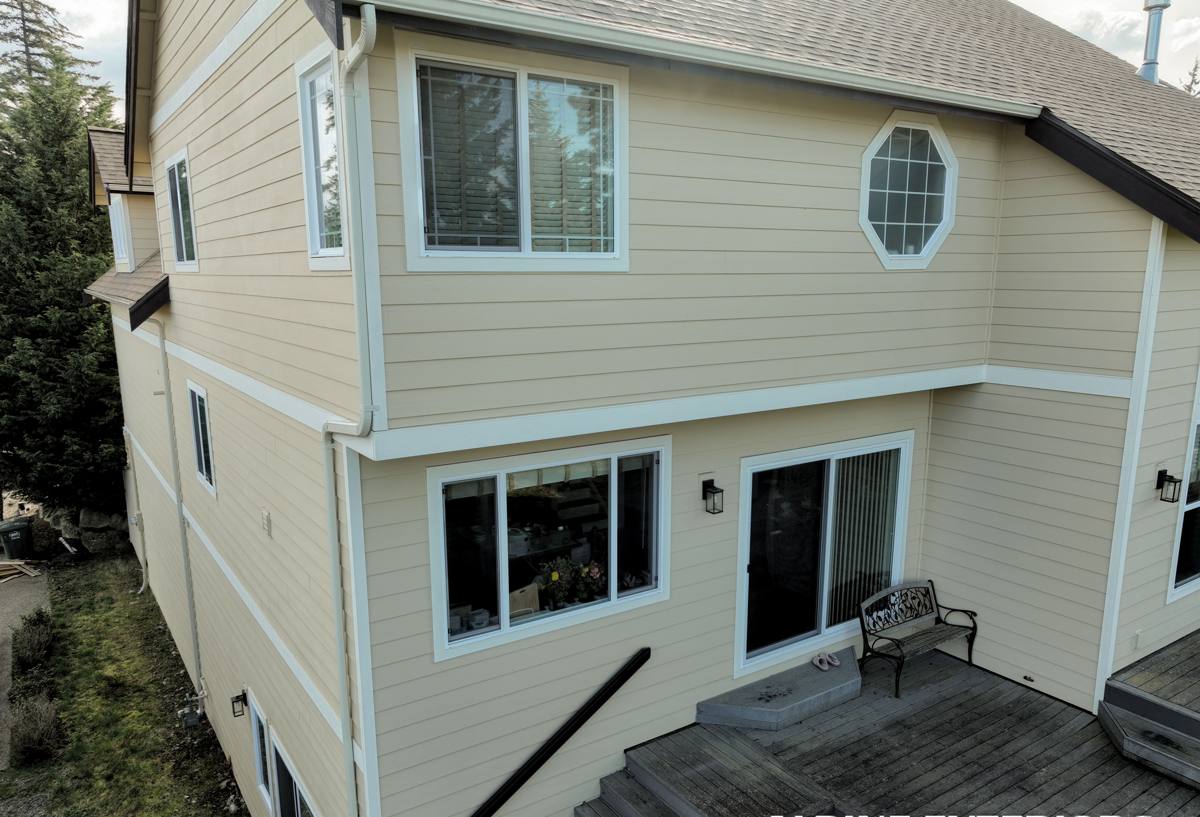
What Correct Siding Replacement Actually Involves
Siding replacement done right is mostly invisible — the parts that matter most are covered up by the time the job looks finished. A lot of problems we get called out to fix started with a previous installation that looked fine on day one and failed within a few years because a step underneath the surface got skipped.
Tear-Off and What's Underneath
Full replacement means removing the old siding down to the sheathing and actually looking at what's there — not assuming it's fine because the old siding didn't show obvious damage. In a climate this wet, we routinely find soft sheathing, rot around window and door openings, and water staining that never made it to the surface. Any of that needs to be addressed before new siding goes on, or you're just covering the same problem back up.
Water-Resistive Barrier and Flashing Details
The house wrap and flashing behind the siding do more work than the siding itself when it comes to keeping a wall dry. Every window, door, and penetration needs flashing that sheds water down and out, not into the wall cavity. Given how much wind-driven rain this area sees, corners cut here — reused old wrap, missing head flashing, caulk used as a substitute for proper flashing — are the difference between siding that lasts decades and siding that causes a rot problem in five years.
Installing to Manufacturer Specification
Fiber cement siding has specific requirements for fastener type, fastener placement, clearances from grade and roof lines, and gaps at butt joints. These specs exist because manufacturers have already worked out what a coastal, high-moisture climate does to siding that's installed loose. Skipping them doesn't just risk cosmetic issues — it can void the manufacturer's warranty, which defeats the point of choosing a well-engineered product in the first place.
Why We Install Only James Hardie Fiber Cement
We don't install vinyl, LP SmartSide, Cemplank, Allura, primed spruce, or cedar. That's not a marketing position — it's a standard we settled on after weighing how each of those products actually performs against the climate homes here have to deal with. Fiber cement handles sustained moisture exposure, salt air, and constant damp shade better than wood-based or vinyl alternatives, and James Hardie is the manufacturer we trust to back that performance with a real product system rather than a single generic board.
A Factory Finish Built for This Climate
Hardie's ColorPlus finish is baked on and cured at the factory under controlled conditions, not applied on-site or left to a field painter's timing and weather window. That matters directly for a place like Edgemoor: a factory finish resists fading and moisture intrusion at the surface far better than field-applied paint, which is exactly the layer that salt air and driving rain attack first. It also means touch-up and future maintenance are simpler, because the finish is a known, consistent product rather than whatever paint happened to be used at install.
Engineered Product Lines, Not One-Size-Fits-All
James Hardie makes climate-specific product lines rather than a single board for the whole country. That distinction is exactly why we standardized on this manufacturer — a product engineered with Pacific Northwest moisture exposure in mind holds up differently than a general-purpose board pushed into a demanding climate. Combined with a strong, transferable warranty, it's a system we can stand behind on a home that's going to spend years next to salt air and rain, not just look good on installation day.
How Hardie Compares to Other Siding Materials in This Climate
| Material | Moisture Behavior | Finish Durability | Long-Term Maintenance |
|---|---|---|---|
| James Hardie fiber cement | Dense, non-combustible, engineered for high-moisture climates | Factory-cured ColorPlus finish resists fading and moisture intrusion | Occasional washing; caulk checks at joints |
| Vinyl siding | Doesn't rot, but can warp and gap at seams under wind-driven rain | Color molded in but can fade and chalk over time | Low, but seam and fastener issues are hard to repair invisibly |
| LP SmartSide / engineered wood | Wood-based core is more moisture-sensitive at cut edges and seams | Field or factory finish still relies on sealed edges staying intact | Regular inspection of seams and edges is important in wet climates |
| Primed spruce or cedar | Natural wood; absorbs moisture and swells if finish fails | Field-applied paint or stain, breaks down faster under salt exposure | Repainting and sealing on a recurring cycle |
None of these products are "bad" — vinyl and engineered wood both have legitimate uses. But once you weigh how each one handles sustained coastal moisture and a long moss season, fiber cement is the clear standard for what we're willing to put our name behind.
Our Siding Replacement Process for Edgemoor Homes
- On-site inspection of existing siding, sheathing, and trouble spots like window trim and lower wall sections
- Written estimate that breaks out material, tear-off, sheathing repair if needed, and installation
- Full tear-off and inspection of sheathing before anything new goes up
- Repair of any rot or moisture damage found underneath the old siding
- Installation of water-resistive barrier and flashing at every window, door, and penetration
- James Hardie siding installed to manufacturer spec, including fastener pattern and clearances
- Final walkthrough so you can see the completed work and ask questions before we call it done
A few things worth checking on any siding proposal, whether it's ours or someone else's:
- Does the quote separate out tear-off and any sheathing repair, or is it lumped into one number?
- Is flashing detail at windows and doors specifically addressed, or just assumed?
- Does the crew installing the siding have manufacturer training on the specific product line?
- Is the warranty from the manufacturer transferable if you sell the home?
- Will the contractor put the fastener type and placement in writing?
Why Hiring a Crew That Already Works This Area Matters
A crew that's replaced siding on homes near Sudden Valley and Edgemoor already knows what this specific stretch of coastline does to a wall. That's not something you learn from a manufacturer's install manual — it comes from having seen where wind-driven rain actually collects on a house, which sides of a home stay damp and shady long enough to grow moss, and how salt air shows up in corroded fasteners on a ten-year-old install. That local pattern recognition shapes decisions during the job — where to double up on flashing, which details need extra attention — in ways a crew unfamiliar with the area might not think twice about.
Working this area regularly also means being familiar with Whatcom County permitting and inspection expectations, and having a realistic sense of the weather windows available for tear-off work without leaving a home exposed longer than necessary.
Keeping New Siding Looking Right in This Climate
Even the right product installed correctly benefits from a little upkeep in a climate like this. A periodic gentle wash removes salt residue and organic buildup before it has a chance to hold moisture against the surface. It's also worth doing a visual check of caulking at trim and joints every year or two — caulk is a maintenance item on any siding system, and catching a failed bead early is a lot cheaper than dealing with the water damage that follows if it's ignored. Keeping vegetation trimmed back from walls helps too, since it improves airflow and cuts down on the shaded, damp conditions moss needs to take hold.
What Affects the Cost of Your Replacement
Every home is different, so we won't pretend there's a single number that applies to an Edgemoor house sight unseen. That said, the main factors that move the price are consistent: the size and complexity of the home's exterior, how much of the existing sheathing needs repair once the old siding comes off, the amount of trim and detail work involved, and which Hardie product line and profile you choose. Homes with straightforward wall lines and sound sheathing underneath cost less than homes with extensive trim, multiple stories, or moisture damage that needs to be fixed before new siding goes up. We give a written, itemized estimate after seeing the home in person, not a ballpark over the phone, because guessing at sheathing condition from a photo does nobody any favors.
If your Edgemoor-area home is due for new siding, we're happy to take a look and put together a free, no-pressure estimate — just fill out the form below and we'll get in touch to schedule a time.