 Sudden Valley Siding
 Why Window Replacement in Deming Takes More Than a Tape Measure
Deming sits in the Nooksack River valley on the way up to Mount Baker, and like the rest of Whatcom County it gets a marine climate that's tougher on window openings than most homeowners realize. It isn't just "a lot of rain" — it's driving, wind-pushed rain that hits siding and window frames sideways for days at a stretch, followed by long stretches of damp air that never fully dries out. Add in salt-laden air moving inland off the Puget Sound corridor and a moss season that can run half the year on shaded, north-facing walls, and you've got conditions that find every weak point in a window installation, usually within a few winters.
That's the part homeowners don't see until it's too late: window failure around here is rarely about the glass. It's about what happens at the edges — where the frame meets the rough opening, where flashing does or doesn't shed water down and out, and where old caulk finally gives up. A window replacement done for a drier climate simply doesn't hold up the same way here.
What This Climate Does to an Existing Window Over Time
Wood sills and lower corners are usually the first to go soft, since that's where standing water sits longest after a storm. Older aluminum-framed windows tend to sweat heavily on the inside during cold, wet stretches, which leads to sill rot and mildew on surrounding trim even when the glass itself is fine. Sealed double-pane units start to fog between the panes once the seal fails — a sign the unit is done, not something that can be repaired. And on shaded walls, moss and algae creeping onto the frame itself isn't just cosmetic; it holds moisture against the material and accelerates whatever's already failing underneath.
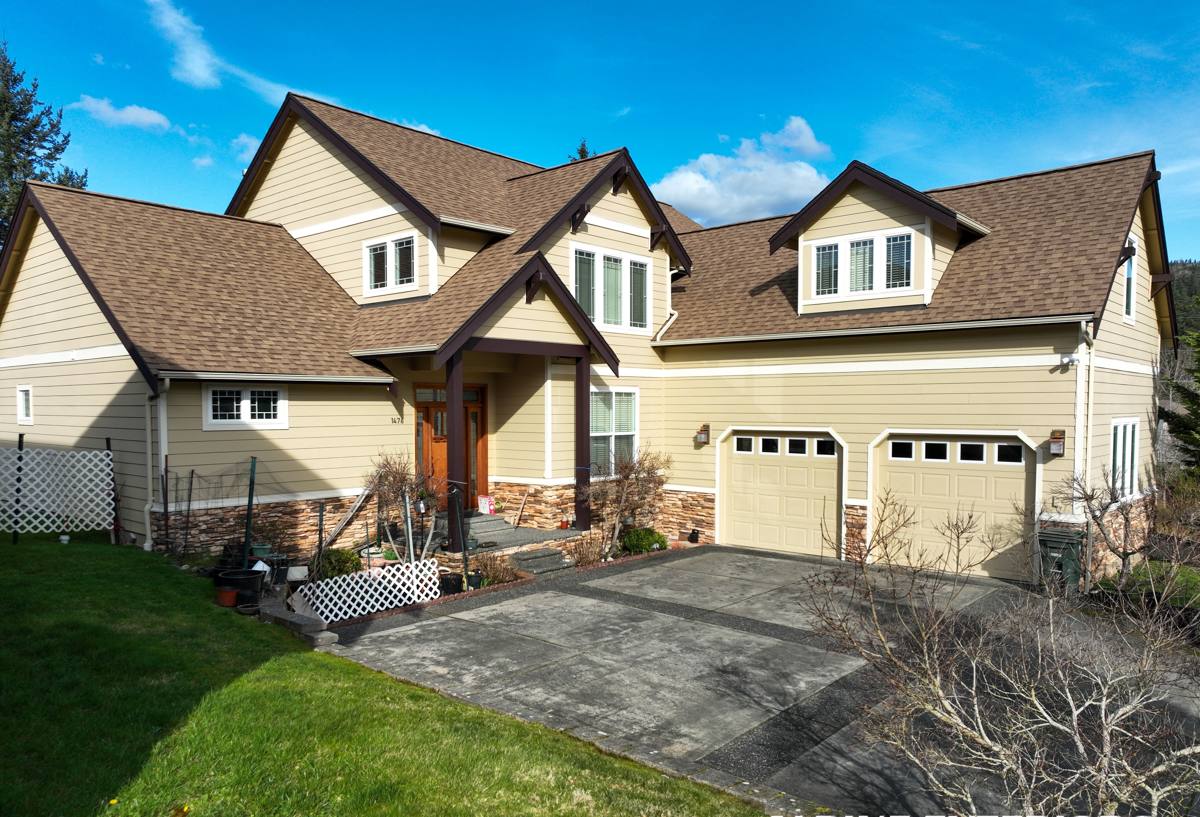
Signs Your Windows Are Ready for Replacement, Not Repair
Some window problems are worth fixing — a stuck sash, a broken pull, a worn weatherstrip. Others mean the unit has reached the end of its service life and repair is just delaying the inevitable. Here's what tells us it's time to talk replacement rather than repair:
- Fogging, haze, or visible moisture between the panes of a double-pane window
- Soft, spongy, or discolored wood at the sill, corners, or bottom rail
- A steady draft you can feel at the frame edge even with the window latched shut
- Windows that are painted or swollen shut, or that bind badly when opening
- Moss, algae, or black staining building up on the frame itself, not just nearby siding
- Rusted, seized, or broken hardware that no longer locks the sash tight
- A noticeable jump in heating costs with no other explanation
- Original single-pane windows still in place on an older home
If you're seeing two or three of these on the same window, replacement almost always makes more financial sense than another round of caulk and weatherstripping.
What a Correct Window Replacement Job Actually Involves
The window unit itself is maybe a third of what determines whether a replacement lasts. The rest is installation technique — and in a climate like this one, cutting corners here shows up fast.
Removing the Old Window Without Hiding a Problem
Once the old window comes out, we check the rough opening before anything new goes in. If there's rot in the framing or sheathing from years of slow water intrusion, that gets addressed before the new window goes in — installing a new window into a compromised opening just buries the problem for the next owner to find.
Flashing and Moisture Barrier Sequencing
This is the step that matters most in Deming's climate. Flashing has to be layered so water is shed downward and outward, integrated correctly with the existing weather-resistive barrier or house wrap — sill pan flashing at the bottom, jamb flashing up the sides, and head flashing lapped over the top, in that order. Done out of sequence, or skipped to save time, water gets trapped behind the frame instead of directed away from it, and you won't see the damage until it's already spread into the wall.
Insulation and Air-Sealing Around the Frame
The gap between the new window frame and the rough opening needs to be filled with a low-expansion foam or backer rod and sealant designed for window installation — not just packed with fiberglass or oversprayed with standard caulk. Done right, this stops both drafts and the moist air infiltration that leads to condensation and mold inside the wall cavity.
Exterior Trim and Finish Work
The last line of defense is the exterior trim and paint or caulk line. It has to be finished so water runs off the face of the window and siding, not into any seam. This is also where we make sure the finished look matches the rest of the home instead of looking like an obvious retrofit.
Choosing Materials That Actually Hold Up Here
There's no single "best" window material for every home — it depends on your budget, the home's age and style, and how much upkeep you want to take on. Here's how the common options compare for a home in this climate:
| Material | Moisture & Rot Resistance | Maintenance | Typical Lifespan |
|---|---|---|---|
| Vinyl | Good — won't rot, handles damp climates well | Low | 20–30 years |
| Fiberglass | Very good — dimensionally stable in temperature and humidity swings | Low | 30+ years |
| Aluminum-clad wood | Good exterior protection, but performance depends heavily on installation quality | Moderate — interior wood may need periodic attention | 20–30 years with good upkeep |
| Bare wood | Poor in this climate unless heavily maintained | High — regular painting/sealing required | Varies widely with upkeep |
As a professional standard, we steer homeowners away from bare wood exteriors and builder-grade aluminum-frame units in this specific climate — not because they can't work anywhere, but because the maintenance burden and moisture behavior make them a poor long-term match for the rain and humidity we get in the Nooksack valley. Vinyl and fiberglass consistently give homeowners here the best balance of performance and low upkeep.
Our Process, From First Look to Final Walkthrough
- On-site assessment — we look at each window opening, not just the glass, including any signs of rot or past water intrusion.
- Measurements and product selection — accurate measurements and a material/glass package that fits your budget and the home's exposure.
- Scheduling around the weather — we plan installs so openings aren't left exposed to a storm system overnight.
- Removal and structural check — old units come out, and we inspect the framing before anything new goes in.
- Install with proper flashing and sealing — done in the correct sequence, every time, not just when it's convenient.
- Exterior finish work — trim, caulk lines, and paint match so the new window looks like it belongs.
- Final walkthrough — we test every operable window with you and go over warranty paperwork before we call the job done.
What Actually Drives the Cost
Window replacement pricing varies a lot from house to house, and most of that variation comes down to a handful of factors rather than the sticker price of the window unit itself:
| Factor | Why It Moves the Price |
|---|---|
| Number and size of windows | Larger openings and whole-house jobs have different labor and material needs than a one-off replacement |
| Frame material chosen | Vinyl, fiberglass, and clad-wood carry different material costs |
| Condition of the existing opening | Rot or framing repair adds labor beyond a straightforward swap |
| Access and height | Second-story or hard-to-reach windows take more time and equipment |
| Whether siding or trim must be opened up | Some flashing corrections require pulling back adjacent siding, not just the window itself |
| Glass and performance package | Low-E coatings, gas fills, and pane count affect both cost and energy performance |
We'll walk through which of these apply to your home during the estimate, so you know what you're paying for and why — not just a single lump number.
Why It Matters That We Already Work in Deming
A crew that's replaced windows across Deming and the surrounding Sudden Valley area isn't guessing at what your home needs — we've seen the range of construction here, from older single-pane wood-framed homes to newer builder-grade vinyl installs that were never flashed correctly to begin with. That means we know which failure patterns to check for before we even open the wall, and we're not learning Whatcom County's weather rhythms on your project.
It also means practical scheduling knowledge: knowing how to sequence a job so an opening isn't left exposed overnight during a wet stretch, and building in realistic timelines around the seasons when driving rain is most likely. A crew unfamiliar with this area might plan a job the way they would somewhere drier — and that's exactly the kind of mismatch that leads to callbacks.
Keeping New Windows Performing for the Long Run
A correctly installed window still benefits from a little upkeep in this climate. Keep an eye on:
- Weep holes at the base of the frame — clear them if debris or moss builds up so water can drain out
- Exterior caulk lines — inspect annually and touch up if you see cracking or gaps
- Nearby vegetation and moss growth — keep it from bridging onto the frame from siding or trim
- Pressure washing — avoid aiming directly at window seals, which can force water past them
None of this is heavy maintenance — it's the kind of five-minute check that keeps a good installation good for its full lifespan.
If your windows are showing any of the signs above, or you just want an honest read on whether repair or replacement makes more sense for your home, we're happy to take a look. Estimates are free, there's no pressure to move forward, and you'll get a clear explanation of what we'd actually recommend and why.