 Sudden Valley Siding
 New-Construction Windows in Deming: A Different Job Than Replacement
New-construction window installation is not the same trade as replacing an old window in an existing wall. On a new build or a full re-side down to the sheathing, the window goes in before the siding does, which means the window itself becomes part of the wall's water management system rather than something dropped into an existing opening. In Deming, where homes sit up the Nooksack River valley under heavy tree cover, that distinction matters more than it does in a lot of places. The rough openings, the weather-resistive barrier, the flashing tape, and the window's nailing flange all have to work together as one system, or water finds the one seam that was rushed.
We build new-construction window packages for homeowners, builders, and remodelers working in Deming and the surrounding Whatcom County foothills. This page covers what the job actually requires here, what we do differently because of the local climate, and what to expect if you're planning a new build or a re-side that includes window replacement.
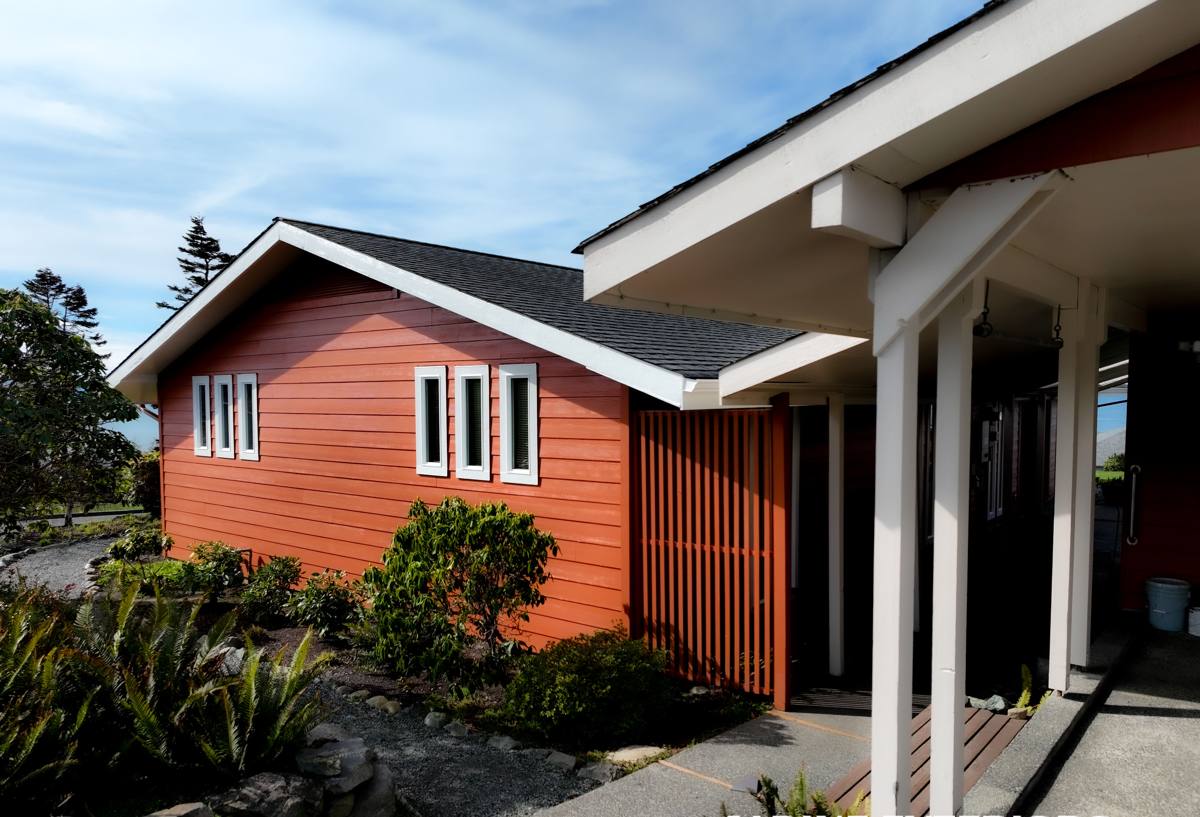
Why Deming's Climate Changes the Install
Whatcom County sits at the edge of the Salish Sea, and even inland communities like Deming get the benefit — and the burden — of that marine influence: long stretches of driving rain, high ambient humidity, and short, low-angle winter sun that lets moss and moisture sit on north- and east-facing walls for months at a time. Add the tree canopy that shades much of the Nooksack valley, and you get walls that dry out slower than they would in open, sunnier parts of the county.
That combination shows up in window performance in a few specific ways:
- Driving rain pushed by valley winds finds gaps at the head flashing and side flanges before it finds anything else — these are the first failure points on a poorly sequenced install.
- Extended damp season means any trapped moisture behind the flange or under the sill pan has months, not days, to do damage before a dry spell lets the wall breathe.
- Moss and organic growth on shaded siding and trim can hold water against the wall assembly longer, which raises the importance of a properly lapped WRB and drainage plane around every opening.
- Salt-influenced air moving in off the Sound accelerates corrosion on the wrong fastener or flashing metal, which is a detail that's easy to skip and expensive to fix later.
None of this means Deming needs exotic materials. It means the ordinary steps — sill pans, flashing sequence, sealant selection — need to be done correctly and in the right order, every time, with no shortcuts on the north and west elevations that take the worst of the weather.
What Happens When It's Done Wrong
The failures we get called out to fix are rarely dramatic. It's usually slow, hidden water intrusion — a stained sill years later, soft trim, or sheathing that's gone soft behind the siding around a window that looked fine from the outside. By the time it's visible, the water has usually been getting in for a season or more. Because Deming's damp season runs long, a small flashing mistake here has more time to cause real damage than the same mistake would in a drier climate.
What a Correct New-Construction Window Install Involves
There's a specific order of operations for installing a flanged window into a new or newly-sheathed wall, and skipping steps or doing them out of order is the single biggest cause of window-related water damage in new builds.
- Rough opening check. The opening is measured, squared, and confirmed level and plumb before anything else happens. An out-of-square opening stresses the window frame and can crack seals over time.
- Sill pan flashing. A sloped, sealed pan goes in at the bottom of the opening so any water that does get past the window has a path back out, not into the wall cavity.
- Weather-resistive barrier integration. The WRB is cut and lapped in the correct sequence — bottom to top, back to front — so water always drains down and out over each layer, never behind it.
- Window set and fastening. The window is set into the pan, checked for square and level again, and fastened through the nailing flange per the manufacturer's schedule — not just "enough screws to hold it."
- Flange and flashing tape. Self-adhered flashing tape covers the side and head flanges in the correct shingle-lap order, tying back into the WRB above and beside the opening.
- Head flashing. A separate head flashing element sheds water out and away from the top of the window before it ever reaches the flange.
- Sealant at the interior and exterior. Backer rod and sealant are used where called for by the window manufacturer — and only where called for, since sealing the wrong spot can trap moisture instead of keeping it out.
Every one of these steps has a manufacturer-specified method, and every window brand's instructions differ slightly. We follow the specific window manufacturer's installation instructions on every job, because that's also what keeps the manufacturer's warranty intact if a window ever fails.
Choosing Windows for New Construction in This Area
Material choice matters less than installation quality, but it's still worth getting right for a Whatcom County build. Here's how the common options compare for a new-construction project in a damp, tree-shaded setting like Deming.
| Frame Material | Moisture Behavior | Maintenance | Best Fit |
|---|---|---|---|
| Vinyl | Won't rot; expands/contracts with temperature swings | Low — occasional cleaning | Budget-conscious new builds, rental/spec homes |
| Fiberglass | Very stable, minimal expansion, holds paint and seals well | Low | Homes wanting a longer-term, low-drift install |
| Wood-clad | Good if the cladding and flashing details are correct; exposed wood is a liability in this climate | Moderate to high — finish upkeep | Homeowners who want a wood interior look and are willing to maintain exterior details |
| Aluminum | Conducts cold and can condense in our humid winters unless thermally broken | Low | Specific architectural applications, less common in residential new builds here |
We don't push one brand or material as the answer for every project. What we do insist on is a flanged, new-construction-rated window with documented installation instructions we can follow and warranty — that's what lets us build a wall assembly around it that will actually perform through a Whatcom County winter.
Our Process on a Deming New-Construction Window Job
Whether we're framing windows into a new build or handling window replacement as part of a full re-side, our process is the same on every opening:
- Site walk and measure. We confirm rough opening sizes against the window order before anything is cut or installed, catching sizing problems on paper instead of on the wall.
- Material staging. Sill pan stock, flashing tape, and WRB are matched to the wall assembly and confirmed compatible with each other — mixing incompatible tapes and housewraps is a common cause of adhesion failure.
- Sequenced installation. One opening at a time, following the pan-WRB-flange-flashing order above, with each step checked before the next begins.
- Fastening and flashing verification. We check flange fastening patterns and flashing laps against manufacturer instructions before siding goes on and covers the work.
- Final seal and trim. Interior and exterior sealant, trim, and any brick mold or casing go on last, once the water management layers underneath are already correct.
- Walkthrough. We go over what was installed and answer questions before we consider the job finished.
Working Alongside Builders and General Contractors
On new-construction projects, window installation timing has to line up with the framer's and siding crew's schedule. We coordinate directly with builders and GCs working in the Deming area so the window install happens at the right point in the build sequence — after sheathing and WRB are in, before siding closes the wall up. Getting that timing wrong is one of the more common reasons window flashing gets rushed or skipped on new builds.
Common Mistakes We See on New-Construction Window Jobs
Most of the window-related water problems we get called to diagnose trace back to a small number of repeat mistakes:
- WRB lapped in the wrong order, so water is directed behind a layer instead of over it.
- No sill pan, or a flat sill pan with no slope to drain water back out.
- Flashing tape applied to a dirty, wet, or cold surface where it won't bond long-term.
- Sealant used as a substitute for proper flashing instead of a backup to it.
- Fasteners that don't match what the window manufacturer specifies, which can void the warranty and, in some cases, compromise the seal.
Every one of these is avoidable with a crew that treats window flashing as a system rather than a checklist item to get through quickly.
Cost Factors for New-Construction Window Installation
Pricing on new-construction window work depends on more than the window unit itself. The factors below are the ones that most often move a job's price up or down.
| Factor | Why It Affects Cost |
|---|---|
| Number and size of openings | More openings and larger units mean more flashing detail work and material |
| Window material and brand | Vinyl, fiberglass, and wood-clad units carry different unit costs |
| Wall height and access | Second-story and steep-site openings take longer to flash correctly and safely |
| Coordination with framing/siding crews | Tight scheduling on active builds can add logistics time |
| Trim and casing scope | Custom interior or exterior trim adds labor beyond the flashing and set |
We give a written estimate after seeing the plans or the site, not a phone-quote guess — new-construction window pricing varies too much project to project to do it any other way honestly.
Why a Crew That Already Works Deming Matters
A lot of window and siding problems in this part of Whatcom County come from work done by crews who install correctly for a drier climate but don't adjust for ours. Deming's tree cover, valley humidity, and long wet season mean the margin for error on flashing sequencing and drainage detailing is smaller here than in a lot of the country. A crew that already works this area knows to treat every opening as if it will see a full wet season before the siding around it is ever checked again — because it will.
We also know the practical side of working in Deming and the surrounding valley: seasonal access on some rural properties, coordinating around the wetter months for exterior work, and building schedules that account for the area's weather patterns rather than fighting them.
Before You Hire: A Quick Checklist
- Ask what specific flashing sequence will be used at the sill, sides, and head of each window.
- Confirm the WRB and flashing tape brands are compatible with each other and with the window manufacturer's requirements.
- Get the window manufacturer's installation instructions referenced in your estimate or contract, not just "industry standard."
- Ask how fastening will be verified before siding covers the window flange.
- Get a written estimate tied to your actual plans or site conditions, not a rough phone number.
If you're planning new construction or a re-side that includes window replacement in Deming, we're glad to walk the site or review your plans and put together a straightforward, no-pressure estimate — just fill out the form below.