 Sudden Valley Siding
 Windows in Deming Have a Harder Job Than Most
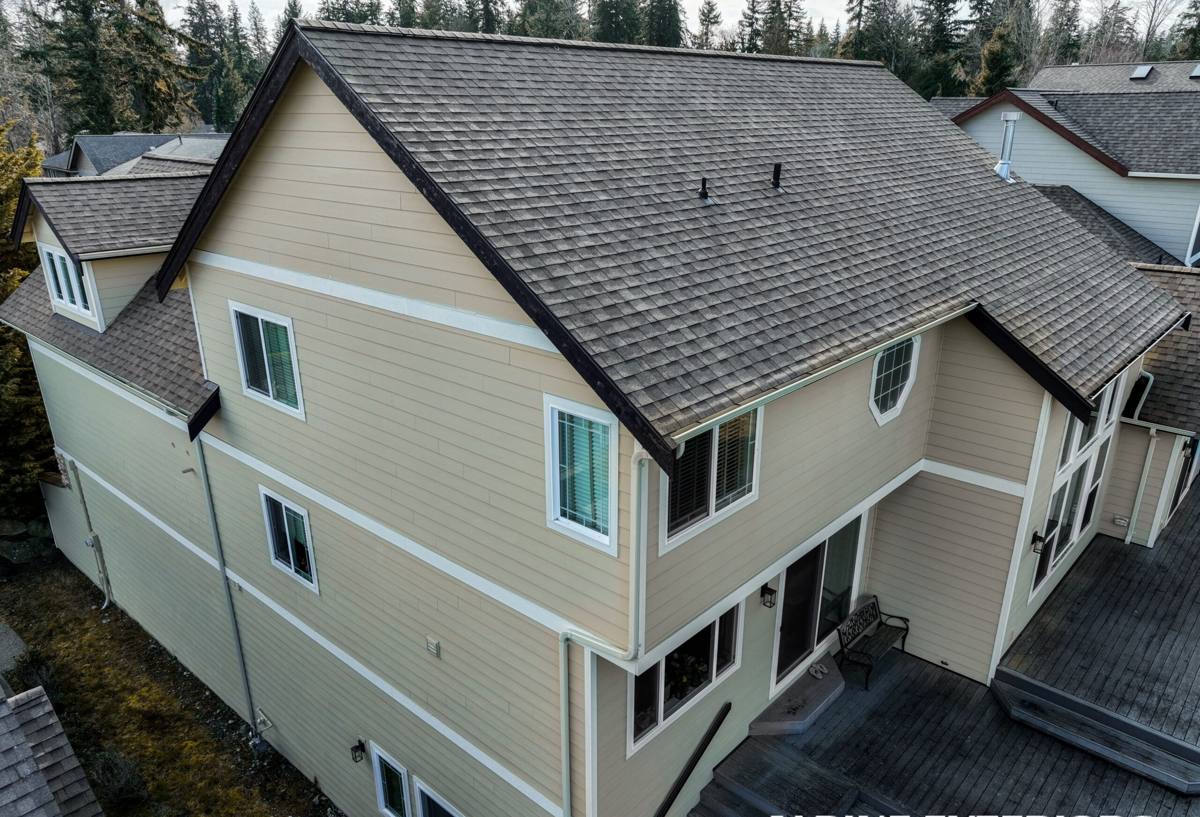
Deming sits up the Nooksack River valley, tucked under heavy tree cover with the Cascade foothills close enough to funnel weather straight through. That geography means more than just pretty views — it means homes here deal with driving rain that comes in sideways during a fall storm, deep shade that keeps siding and trim damp for days after the rain stops, and a moss season that can run from October well into spring. Windows are one of the first places all of that shows up, because every window is a manufactured hole in your wall with seals, flashing, and trim that have to keep working year after year in wet, low-light conditions.
Across this part of Whatcom County, from the lake down through the river bottoms, the combination of salt-tinged marine air and constant moisture wears down materials faster than most manufacturers assume in their standard warranty language. A window that performs fine in a dry inland climate can fail early here if it wasn't installed with this specific environment in mind. That's the difference between a window that's just "put in" and one that's actually built for Deming.
What Damp, Shaded Conditions Do to Ordinary Windows
We get called out to a lot of Deming homes for the same handful of problems, and almost all of them trace back to moisture, not the glass itself:
- Wood trim and sills that stay wet — under tree canopy, siding and trim can take two or three extra days to dry out after a storm compared to an open lot in town. That extra dwell time is exactly what wood rot and moss need to take hold.
- Failed caulk and sealant joints — constant wet-dry cycling breaks down sealant faster than it does in a drier climate, and once a joint opens up even slightly, driving rain finds it.
- Fogged or failed double-pane glass — when the seal between panes fails, moisture gets between the panes and won't clear. This is almost always an installation or seal-age issue, not something you can fix by cleaning the glass.
- Moss and algae staining on frames and trim — cosmetic at first, but moss holds moisture against the surface underneath it, which accelerates whatever's already going wrong there.
None of this means custom windows are a bad investment in this area — it means the installation details matter more here than they would somewhere drier, and cutting corners shows up faster.
What a Correct Custom Window Installation Actually Involves
"Custom" doesn't just mean a non-standard size — it means the window is built and installed to fit the specific opening, siding type, and exposure of your house, rather than forced into a generic frame. In a valley climate, three parts of the job matter more than anything else.
Flashing and Water Management
This is the part homeowners never see and contractors sometimes rush. A correct install uses proper flashing tape and, on exposed walls, a sloped sill pan so any water that does get past the window sheds outward instead of pooling at the bottom of the opening. Where a window sits under a roofline or wall transition, kickout flashing directs runoff away from the frame instead of letting it wash straight down the face of the window for years.
Framing, Shimming, and Insulation
The window has to be plumb, level, and square in the rough opening, with continuous support under the sill — not just shimmed at the corners. Gaps around the frame get filled with a low-expansion foam or mineral wool that manages moisture, not a spray foam that traps it. Skipping this step is one of the most common causes of drafts and condensation on the inside of a window that's otherwise a good product.
Glass and Energy Performance
River valley winters bring cold, damp air that sits low against the ground, and homes here see real temperature swings between day and night. Low-E coatings and gas-filled double or triple-pane glass cut down on heat loss and reduce interior condensation on cold mornings — which matters just as much for comfort as it does for the energy bill.
Choosing the Right Frame Material for This Climate
Every frame material has trade-offs. In a wet, shaded, wind-exposed area like Deming, moisture behavior and maintenance burden matter as much as upfront cost.
| Frame Material | Moisture Resistance | Maintenance | Typical Lifespan |
|---|---|---|---|
| Vinyl | Very good — won't rot, low water absorption | Low — occasional cleaning | 20–30 years |
| Fiberglass | Excellent — dimensionally stable in wet/dry cycling | Low | 30–40 years |
| Wood | Fair — needs protective finish maintained regularly | High — repainting/sealing on a schedule | 15–25 years without upkeep, longer with it |
| Aluminum-clad wood | Good exterior protection, wood core still needs interior care | Moderate | 25–35 years |
We don't push one material on every job. A wood-frame window with real upkeep can look excellent on the right home; we just make sure homeowners understand the maintenance commitment that comes with it before they choose it for a shaded, high-moisture wall.
Our Process, Start to Finish
- On-site assessment. We look at each opening's exposure — full sun, shade, wind direction — because not every wall of the house needs the same window spec.
- Measure and product selection. True custom sizing, plus a frame and glass package matched to that wall's exposure and your budget.
- Removal and opening inspection. Old windows come out carefully so we can check the sheathing and framing underneath for hidden rot before anything new goes in — a step that gets skipped by crews trying to move fast.
- Flashing, install, and seal. Sill pan, flashing tape, correct shimming, low-expansion insulation, and sealant tied into your existing siding so water has one continuous path to shed outward.
- Interior and exterior trim. Finished to match the rest of the house, with attention to any spot where trim meets siding — a common weak point for water intrusion.
- Walkthrough. We show you the finished work and go over basic care, especially anything specific to the material you chose.
Signs Your Current Windows Need Attention
- Fogging or a milky haze between the panes that doesn't wipe away
- Visible moss or dark staining building up on sills or frames
- Soft or spongy trim when pressed near the corners of the frame
- Drafts you can feel near the frame on a windy day, even with the window latched
- Water staining on the interior wall or sill below a window
- Windows that are difficult to open, close, or lock — often a sign the frame has shifted
- Condensation forming on the inside of the glass most mornings in winter
Any one of these is worth a look. Several together usually mean water has been getting past the window for a while, not just that the glass is old.
Cost Factors Worth Understanding Upfront
Custom window pricing depends on more than the size of the opening. The main variables we walk through with Deming homeowners are:
- Frame material — vinyl and fiberglass are generally more budget-friendly than wood or clad options.
- Glass package — double vs. triple pane, and Low-E coatings, add cost but pay back in comfort and lower heating bills through the winter.
- Opening condition — if we find rotted sheathing or framing once the old window is out, that repair is additional but necessary; we won't seal a new window over a compromised opening.
- Number and location of windows — north-facing and heavily shaded walls sometimes justify a step up in weatherproofing detail versus a sheltered, south-facing wall.
- Trim and siding tie-in — matching existing trim profiles or siding material adds labor but keeps the finished look consistent.
We give straight, itemized numbers rather than a single bundled figure, so you can see exactly what you're paying for and where there's room to adjust.
Why Local Experience in Deming Actually Matters
A lot of window problems we get called to fix trace back to a crew that installed the same way they would in a dry, open subdivision somewhere else — not to a bad window. Working this area regularly means we already know which walls take the worst of the driving rain, how much drying time to plan around when scheduling a job during the wetter months, and what Whatcom County's permitting expects for window replacements on older homes. It also means we're not learning on your house — we've already seen how these products hold up here over years, not just on install day.
If your windows are drafty, fogged, showing moss, or just original to a home that's due for an upgrade, we're happy to take a look. Reach out for a free, no-pressure estimate — we'll walk the exterior with you, point out anything we see, and give you a straight answer on what your home actually needs.