 Sudden Valley Siding
 Why Edgemoor Decks Wear Out Faster Than You'd Expect
Edgemoor sits close enough to the water that decks here deal with a different set of problems than decks fifty miles inland. Salt-laden air corrodes fasteners and hardware from the inside out, long stretches of driving rain push moisture into every seam and joint, and the region's mild, damp winters give moss and algae months to take hold on any surface that doesn't dry out quickly. None of this shows up overnight. It shows up two or three years later as soft spots underfoot, rust streaks bleeding out of screw heads, or a slick green film that never fully goes away no matter how often you scrub it.
A deck built or repaired without accounting for this climate tends to fail in predictable spots: the ledger board where the deck meets the house, the framing directly under high-traffic areas, and any hardware that isn't rated for coastal exposure. We've worked on enough decks around Sudden Valley and the surrounding Whatcom County shoreline to know exactly where to look first.
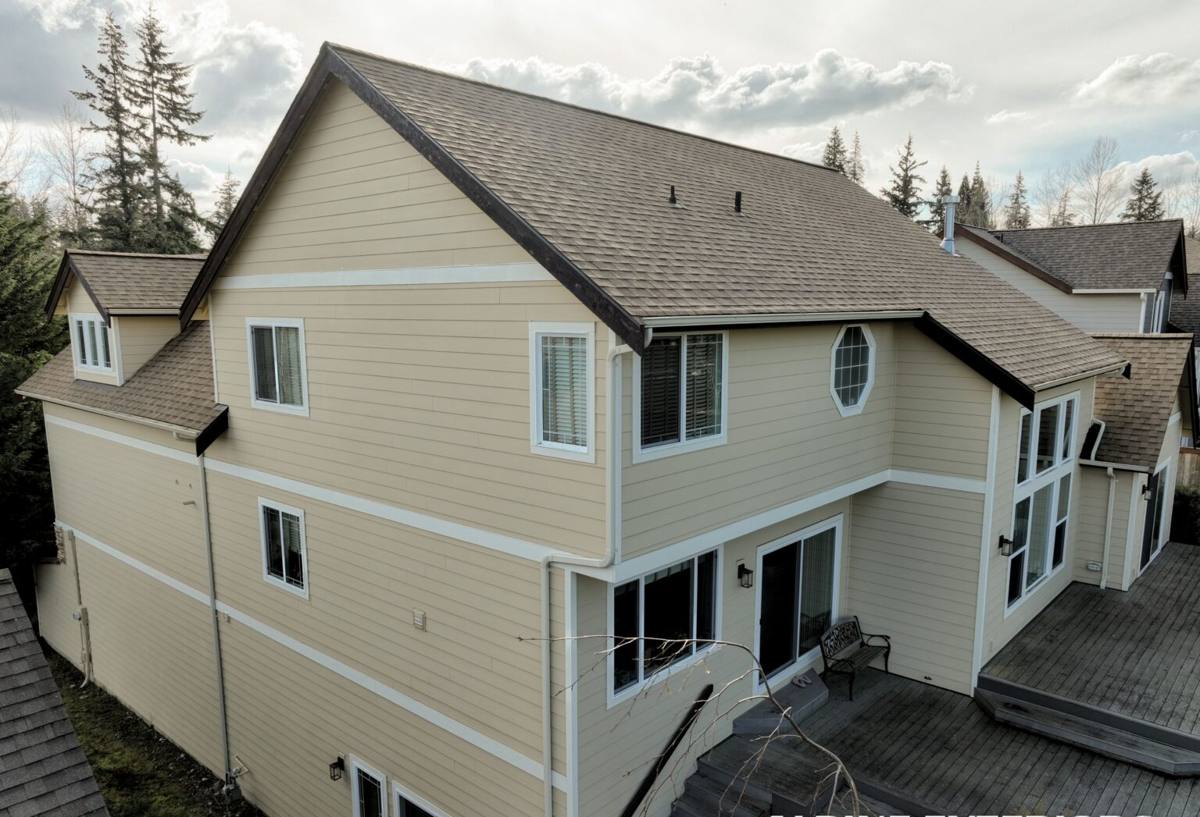
Signs a Deck Needs Repair, Not Just a Wash
Homeowners often assume a mossy, weathered deck just needs a pressure wash and a coat of stain. Sometimes that's true. Other times the surface problems are hiding structural ones underneath. Here's what tells us the difference:
- Boards that flex, bounce, or feel spongy when you walk across them
- Nail or screw heads that have popped up above the board surface
- Rust stains bleeding from fasteners into the surrounding wood
- Gaps or dark staining where the deck ledger meets the house siding
- Moss or algae that regrows within weeks of cleaning, especially on the shaded side
- Wobble or give in the railing posts when pushed
- Visible gaps, cracks, or splintering concentrated in one section rather than spread evenly
- A musty smell coming from underneath the deck
If you're only seeing surface graying and mild moss, that's usually cosmetic. If you're seeing any of the structural signs above, the repair needs to start below the decking, not on top of it.
Where Damage Hides in a Marine Climate
The ledger board connection is the single most common failure point we find on repair calls in this area. It's the board bolted directly to the house that carries a large share of the deck's weight, and it's also the spot most exposed to water running down the siding during driving rain. When flashing there is missing, undersized, or was never properly lapped, water gets behind it and rot sets in quietly for years before anyone notices a problem.
Joist hangers and other hidden hardware are the second common failure point. Standard galvanized hardware holds up fine in a dry climate, but in salt-influenced air near the water it can start corroding well before the wood around it shows any wear. That's why matching hardware to the environment matters as much as matching it to the lumber.
What a Correct Deck Repair Actually Involves
A repair done right isn't just swapping out the boards that look bad. It starts with figuring out why they failed in the first place, because replacing rotted decking on top of a moisture problem just buys a year or two before the same boards fail again.
Structural Assessment
We check the ledger board attachment and flashing, the condition of the joists and beams underneath, post bases where they meet grade or concrete footings, and any spot where two materials meet — because that's always where water finds a way in. On an older deck we'll probe suspect wood with an awl rather than guessing from the surface; wood that looks fine on top can be soft an inch below.
Framing and Ledger Repairs
Rotted joists or beam sections get sistered or replaced, never just patched over. If the ledger flashing is missing or failing, we correct that connection properly — this is the repair that prevents the next round of hidden rot, and skipping it to save time is the single biggest shortcut we won't take.
Decking, Railing, and Fastener Work
Individual boards get replaced with matching or compatible material, fasteners get upgraded where the originals show corrosion, and railings get re-secured or rebuilt if posts have loosened. We also check stair stringers separately, since they take concentrated foot traffic and often wear faster than the main deck surface.
Our Deck Repair Process
- On-site inspection. We walk the whole structure, probe questionable wood, and check the ledger, framing, and hardware — not just the visible surface.
- Written scope and estimate. You get a clear list of what's failing, what we recommend fixing now versus monitoring, and a price before any work starts.
- Demo of failed sections only. We remove what's actually damaged rather than tearing into sound material, which keeps cost and disruption down.
- Structural repair first. Framing, ledger flashing, and hardware get corrected before any new decking goes down.
- Decking and railing restoration. New boards and railing components are installed to match the existing deck as closely as possible, or upgraded if you'd rather move to a lower-maintenance material.
- Final walkthrough. We check for level, secure railings, and proper drainage before calling the job done.
Repair Approaches Compared
Not every deck problem calls for the same fix. Here's how the common approaches stack up for a home in this climate:
| Approach | Best for | Trade-offs |
|---|---|---|
| Spot repair (boards, railing, fasteners) | Decks under 10-15 years old with isolated damage | Fastest and least expensive, but won't fix an underlying moisture or ledger problem |
| Structural repair (framing, ledger, hardware) | Decks with soft spots, ledger rot, or corroded hardware | More labor and cost up front, but addresses the actual cause of failure |
| Full deck rebuild | Decks with widespread rot or a substructure past its service life | Highest cost, but resets the clock and lets you correct old design flaws (drainage, flashing, material choice) |
We'll tell you honestly which category your deck falls into. There's no benefit to us talking a homeowner into a full rebuild when a targeted structural repair will hold up fine, and no benefit to patching a deck that's going to need the same work again in two years.
Materials That Hold Up Near Salt Air
Material choice matters more here than it would inland. A few standards we hold to on repair work in this area:
- Stainless or coated fasteners rated for coastal/marine exposure, not standard galvanized, anywhere corrosion has already shown up
- Proper flashing tape and metal flashing at the ledger board — this one detail prevents more repeat repairs than any other
- Pressure-treated framing lumber rated for ground contact where posts meet grade
- Decking material matched to how much upkeep you're willing to do — natural wood needs periodic sealing and cleaning to resist moss, while composite decking resists moisture and moss growth better but costs more upfront and can't be sanded or refinished if it's damaged
We'll walk through the honest trade-offs of wood versus composite for your specific deck rather than pushing one material as a blanket answer — the right call depends on your budget, how much shade the deck gets, and how much maintenance you actually want to do.
Keeping a Repaired Deck From Failing Again
Whatcom County's wet season is long, and a deck that stays damp for months at a time is a deck that grows moss and, eventually, rot. A few habits make a real difference after a repair:
- Sweep debris and standing water off the deck surface regularly through fall and winter
- Keep gutters and downspouts clear so runoff isn't draining directly onto or under the deck
- Trim back vegetation that keeps sections of the deck shaded and slow to dry
- Reseal or restain wood decking on the manufacturer's recommended schedule, not just when it looks faded
- Check the underside of the deck once a year for early rot or hardware corrosion before it spreads
How Long Should a Repair Last?
A properly done structural repair with corrosion-resistant hardware and correct flashing should give you many years before you're looking at the same issue again. Cosmetic wear on the decking surface itself — graying, minor splintering — is normal and expected well before the framing underneath needs attention again, which is exactly why we separate the two when we inspect.
Why a Crew That Already Works Edgemoor and Sudden Valley Matters
A contractor who mostly works drier inland areas can still frame a deck competently, but they won't necessarily think to double-check ledger flashing on an older home the way a crew that repairs storm and salt-air damage every season will. Working regularly around Sudden Valley and the Edgemoor area means we've seen how decks in this specific climate actually fail over time, not just how they're built on paper. That translates into inspections that catch the real problem the first time, instead of a repair that looks fine for a season and needs revisiting once the rains set back in.
We're also familiar with the practical side of working in this area — coordinating around tree cover and drainage patterns typical of the neighborhood, and building in the kind of moisture management a marine climate actually demands rather than what a generic spec sheet calls for.
Get an Honest Look at Your Deck
If your deck has soft spots, rust stains, stubborn moss, or you're just not sure whether it needs a repair or a full rebuild, we'll come take a look and tell you straight. The estimate is free, there's no pressure to book anything on the spot, and you'll walk away with a clear picture of what's actually going on underneath your deck.