 Sudden Valley Siding
 Deck Building in Columbia, Built for What This Climate Actually Does to Wood and Metal
Columbia sits in the same weather pattern that shapes every deck we build around Sudden Valley: long stretches of steady rain, humid air that never fully dries out between storms, and enough moss and algae pressure to turn an untreated surface green within a season or two. A deck built here has to handle standing moisture, wind-driven rain that gets up under railings and ledger boards, and the slow corrosion that salt-tinged coastal air can bring to fasteners and metal connectors. None of that is exotic — it's just the baseline any deck in this part of Whatcom County has to be designed around from day one.
A lot of deck problems we get called out to fix in this area didn't start as bad workmanship. They started as a deck built to a generic spec that ignored the local climate — the wrong fastener alloy, decking laid without enough airflow underneath, or a ledger attachment that let water track into the house framing. Building it right the first time costs a little more up front and saves the homeowner a rebuild in eight years instead of twenty-five.
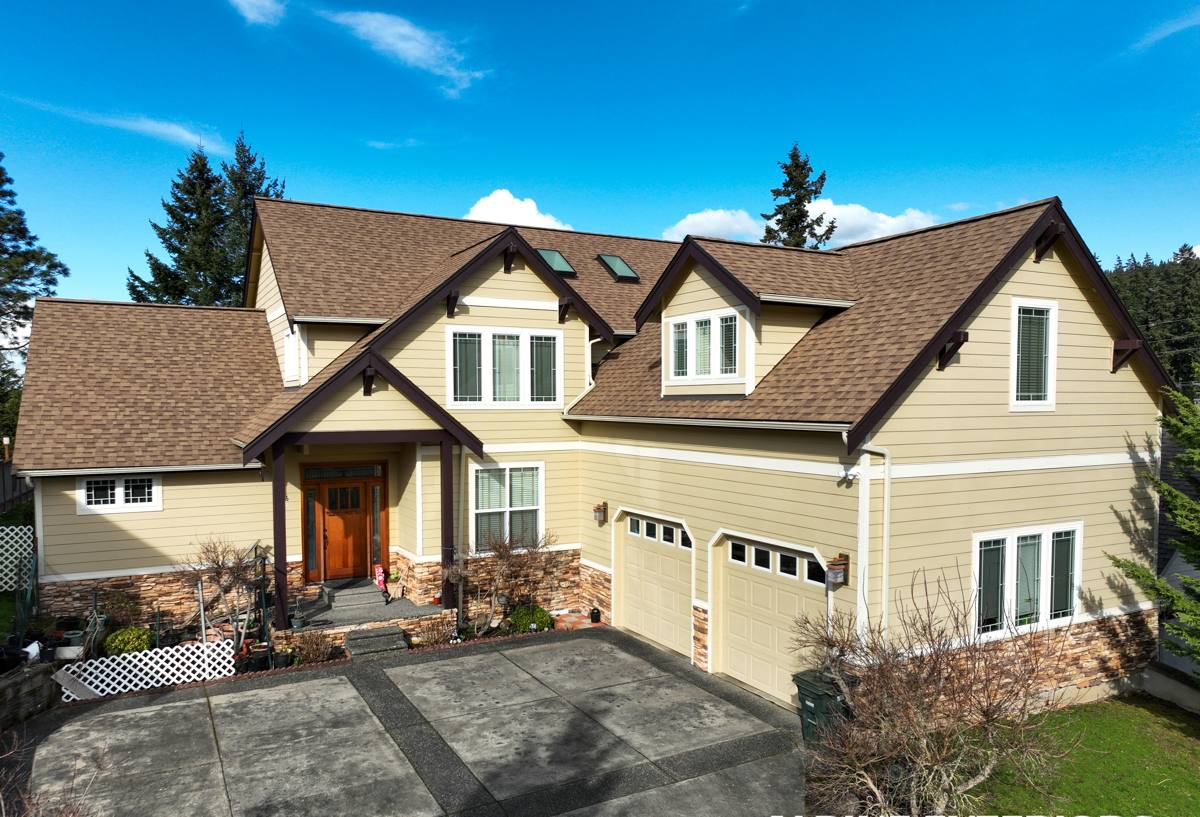
What Salt Air, Driving Rain, and Moss Season Do to an Outdoor Structure
Moisture Load
Rain here doesn't fall straight down most of the time — it comes in at an angle, driven by wind off the water and terrain. That means vertical surfaces like railings, skirting, and the sides of a deck take on more water than people expect, and horizontal surfaces stay damp longer between dry spells than they would in a drier climate.
Moss and Algae
Shaded decks, decks under tree cover, and any deck with poor airflow underneath will grow moss faster here than almost anywhere else in the country. Moss holds moisture against the decking surface, which accelerates rot in wood and can make composite and even PVC boards dangerously slippery if they're not cleaned.
Corrosion
Proximity to Puget Sound and Bellingham Bay puts a mild but real salt content in the air across much of Whatcom County, including inland communities like Columbia. Ordinary galvanized fasteners and connectors can start to corrode faster than their rated lifespan suggests, especially where two dissimilar metals touch or where a fastener head is left exposed to standing water.
Choosing Decking Material for a Columbia-Area Deck
There's no single "best" decking material — there's a best material for this climate and this budget. Here's how the common options actually perform under the rain, moss, and moisture load typical of the Sudden Valley area.
| Material | Moisture Behavior | Moss/Algae Resistance | Maintenance | Typical Lifespan Here |
|---|---|---|---|---|
| Pressure-treated wood | Absorbs and releases moisture readily; prone to cupping if not sealed | Low — needs regular cleaning and re-sealing | Annual cleaning, re-stain/seal every 2-3 years | 10-15 years with upkeep |
| Cedar | Naturally moisture-resistant, but still needs sealing here | Moderate | Cleaning plus periodic sealing | 15-20 years with upkeep |
| Capped composite | Does not absorb water into the core | Moderate to good — surface can still host moss film if never cleaned | Occasional washing, no sealing | 25+ years |
| PVC/cellular decking | Fully non-absorbent | Good, though still benefits from washing in heavy shade | Occasional washing | 25+ years |
Our default recommendation for a Columbia-area deck with any shade or tree cover is capped composite or PVC decking, specifically because they don't give moisture a path into the board's core. For a sunnier, more open lot, quality wood decking with a real sealing schedule is a legitimate, lower-cost option — the trade-off is homeowner maintenance commitment, not the material being wrong.
Why We Steer Away From Uncapped Composite in This Climate
First-generation uncapped composite decking can absorb moisture at the board surface over time, which in a climate this wet leads to swelling, staining, and mold growth faster than in drier regions. We're not saying every uncapped product will fail — we're saying it asks more of the ongoing maintenance and drainage detailing than most homeowners want to commit to, so we default to capped products where budget allows and explain the trade-off plainly when it doesn't.
Framing and Substructure — Where Deck Failures Actually Start
The decking surface is the part everyone sees, but the framing underneath is what determines whether a deck lasts 10 years or 30 in this climate. Three things matter most:
- Ledger flashing: The connection where a deck attaches to the house has to be flashed correctly so wind-driven rain can't track behind the siding and into the wall framing — this is the single most common source of hidden rot damage we find on older decks in wet coastal climates.
- Joist protection: Joist tape or an equivalent moisture barrier over the top of each joist keeps standing water out of the screw holes and end grain, which is where rot typically starts even on pressure-treated lumber.
- Airflow underneath: Enough clearance and ventilation below the deck keeps humidity from getting trapped against the framing, which slows both rot and moss growth on the underside.
Post bases and footings also need to be set to drain, not sit in a bowl of collected water — a detail that's easy to get wrong on a sloped lot, which describes a fair number of properties around Sudden Valley and the surrounding Whatcom County hillsides.
Fasteners, Hardware, and Railings That Hold Up to Salt-Tinged Air
Every structural connector, screw, and bolt on a deck in this area should be rated for the moisture and salt exposure it will actually see — not just the minimum code requirement. That means stainless steel or coated fasteners rated for treated lumber contact, hot-dip galvanized structural hardware rather than lighter electro-galvanized parts, and railing hardware that won't seize or streak with rust after a few wet seasons. Mixing incompatible metals (for example, the wrong screw in an aluminum railing bracket) is a common shortcut that causes visible corrosion staining within a year or two out here.
How We Build a Deck in Columbia, Start to Finish
- Site walk and design: We look at drainage, sun/shade exposure, tree cover, and how the deck ties into the house before recommending a material or layout.
- Engineering and permitting: We handle the structural sizing and pull the required permit through the local building department so the deck is inspected and legal, not just built.
- Ledger and flashing: Proper ledger attachment and flashing come first, since this is the connection most likely to cause hidden damage if rushed.
- Framing with moisture protection: Joist tape, correctly spaced footings, and ventilation built in from the start.
- Decking and railing install: Installed per the manufacturer's spacing and fastening specs, which matter more in a wet climate than most people realize — tight gapping traps moisture, wide gapping catches debris and holds moss.
- Final walkthrough: We go over the maintenance schedule specific to whatever material was installed, so the deck actually reaches its rated lifespan.
Maintenance Checklist for a Columbia-Area Deck
Whatever material a deck is built from, here's what actually keeps it performing through Whatcom County's wet seasons:
- Sweep debris off the surface regularly — trapped leaves and needles hold moisture against the boards.
- Wash the deck at least once a year with a deck-safe cleaner to remove moss and algae film before it takes hold.
- Check railing hardware and structural connectors annually for early rust staining or loosening.
- Inspect the ledger flashing line where the deck meets the house for any gaps, cracking caulk, or water staining.
- Confirm gaps under the deck and around posts haven't been blocked by landscaping, mulch, or debris buildup — airflow underneath needs to stay open.
- For wood decking, keep to a sealing schedule rather than waiting until graying or cracking is visible.
Permits and Local Considerations
Deck projects in and around Sudden Valley typically require a building permit once they exceed a certain height or size, and inspections check things like footing depth, ledger attachment, and railing height and spacing. We handle that process as part of the job rather than leaving it to the homeowner, because a deck built without the required permit can create real problems at resale and isn't covered the same way if something goes wrong structurally down the line.
Why Hire a Crew That Already Works in Columbia
A deck built to a generic national spec will function fine in a dry climate and struggle here. A crew that already works the Sudden Valley and greater Whatcom County area knows which ledger detailing holds up to this rain pattern, which fastener grade actually resists the local air, and how much airflow a substructure needs to keep moss from taking over a shaded deck within two summers. That local pattern recognition is the difference between a deck that needs attention every year and one that quietly does its job for decades.
If you're planning a new deck or replacing an aging one in the Columbia area, we're happy to walk the site, talk through material options honestly, and put together a straightforward estimate — no pressure, no obligation. Fill out the form below to get started.