 Sudden Valley Siding
 Windows Take a Different Kind of Beating Out Here
Alger sits in that stretch of rural Whatcom and northern Skagit country between Bellingham and Mount Vernon — timber, small farms, lake and bay influence, and weather that comes off the water sideways more often than straight down. If you've lived here more than a winter or two, you already know the pattern: weeks of driving rain pushed by wind, long stretches of low gray humidity that never quite dries out, and a moss season that seems to start earlier every year and end later. Windows are one of the first things on a house to show what that environment is doing, usually well before the siding does.
Salt-tinged air moving inland off the Sound and the bay corrodes hardware and fasteners faster than manufacturers' warranty language usually admits. Driving rain finds every gap in flashing that wasn't detailed correctly. And moss and algae hold moisture against trim and sills for months at a time, which is exactly the condition that rots wood and lifts caulk. None of this is unique to any one brand of window — it's a function of how the window was installed and detailed against the wall, not just what's stamped on the frame.
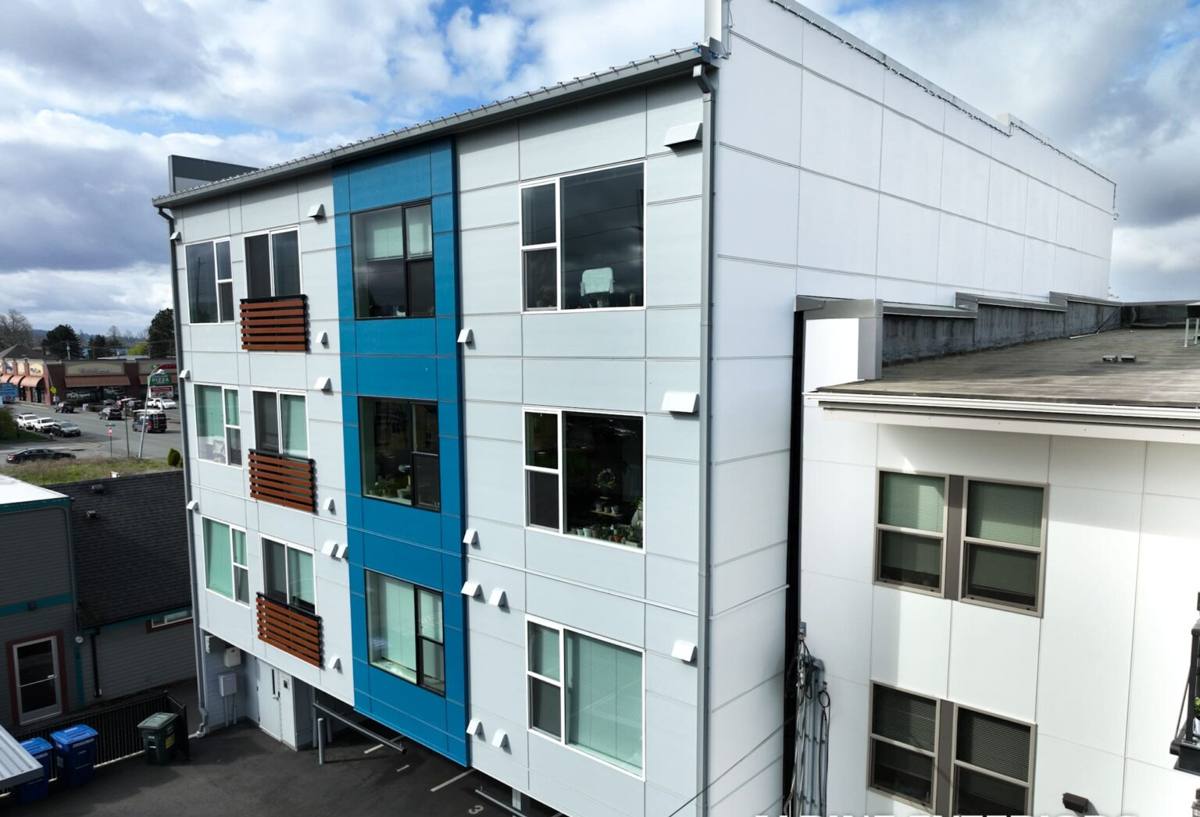
What "Correct" Actually Means for a Window Install Here
A window replacement can look finished from the curb and still be set up to fail in three to five years. The difference is almost always in the parts you can't see once the trim is back on.
Sill Pan and Flashing Sequence
Every opening needs a sloped sill pan so any water that gets past the window body drains back out, not into the wall cavity. Flashing tape at the jambs and head needs to lap in the right order — bottom to top, like shingles — so wind-driven rain can't work its way up and behind. On a home getting new siding at the same time, this is also the moment to tie the window flanges into the housewrap correctly, which is far easier to get right during a siding project than as a standalone window swap.
Insulation and Air Sealing Around the Frame
Gaps around a new window should get a low-expansion foam or backer rod and sealant, not stuffed fiberglass batting. Over-filling with high-expansion foam can bow vinyl frames and cause the sash to bind, which is a common callback on rushed jobs.
Interior and Exterior Sealant
Exterior sealant sheds bulk water; it is not the primary defense — the flashing is. Interior sealant is about air sealing and condensation control, which matters in this climate because cold, damp winters plus warm interior air is a recipe for window condensation if the unit isn't sealed and the glass package isn't right for the exposure.
Full-Frame Replacement vs. Insert Windows
This is the first real decision on most jobs, and it depends on the condition of the existing frame and sill, not just budget.
| Factor | Insert (Pocket) Replacement | Full-Frame Replacement |
|---|---|---|
| When it's appropriate | Existing frame and sill are solid, square, and dry | Frame, sill, or sheathing show rot, soft spots, or past water intrusion |
| Access to flashing/sill pan | Limited — you're working inside the old frame | Full access to re-flash and correct past mistakes |
| Glass area | Slightly reduced due to nesting frames | Can match or improve original glass area |
| Typical cost | Lower labor, faster install | Higher labor, more trim and siding disturbance |
| Best fit for this climate | Homes with no history of water intrusion at openings | Homes showing staining, soft trim, or moss-driven decay at sills |
Given how often we find soft sills or old, undersized flashing on homes in this area once trim comes off, we don't default to insert replacements just because they're faster. We look at the actual condition of each opening before recommending either approach.
Material Choice: Vinyl, Fiberglass, and Wood-Clad
All three materials are used successfully in western Washington. The right choice depends on exposure, budget, and how much upkeep you want to take on.
| Material | Moisture Behavior | Maintenance | Relative Cost |
|---|---|---|---|
| Vinyl | Won't rot; seals and hardware are the main wear points | Low — occasional cleaning | Lowest |
| Fiberglass | Very stable in moisture and temperature swings; holds paint well | Low to moderate | Mid to upper-mid |
| Wood-clad | Exterior clad protects wood, but any breach at a joint or corner exposes wood to rot | Higher — cladding seams need periodic inspection | Highest |
For most homes near Sudden Valley and Alger, we steer people toward vinyl or fiberglass for anything with real weather exposure — south and west walls, areas shaded by trees where moss and moisture linger longest, and anywhere near ground splash-back. Wood-clad has its place on protected elevations where the look matters and the exposure is limited, but we're honest that it demands more attention over time in a climate this wet, and we say so before you buy rather than after a callback.
How We Handle a Custom Window Job
- On-site assessment. We check each opening's condition — sill, sheathing, existing flashing — not just measure for glass size.
- Product selection. We walk through material, glass package, and grille options based on the wall's actual sun and rain exposure, not a one-size answer for the whole house.
- Removal and inspection. Old units come out carefully so we can see what's really going on behind the trim before anything new goes in.
- Sill pan and flashing. Sloped sill pan, properly lapped flashing tape, and integration with housewrap or new siding underlayment.
- Set, shim, and fasten. Window is set level and square, shimmed without distorting the frame, fastened per manufacturer spec.
- Insulate and seal. Low-expansion foam or backer rod at the gap, interior air sealing, exterior sealant as the secondary line of defense.
- Trim and finish. Interior and exterior trim reset or replaced, caulk lines finished clean.
- Walkthrough. Operation checked on every unit, sightlines and reveals confirmed even, questions answered before we leave.
Timing Around Siding Work
If your siding is due for replacement in the same window of time, doing windows first — or at the same time — is almost always the better sequence. It lets us tie window flashing directly into new housewrap and siding, instead of cutting into siding that was just installed. Homes in this area that need one usually need the other within a few years, given how the climate works on both at similar rates.
Signs Your Current Windows Are Already Failing
- Fogging or moisture between the panes (failed seal on a double- or triple-pane unit)
- Soft, discolored, or spongy trim or sill at the interior or exterior
- Visible gaps, drafts, or whistling during windy, wet weather
- Difficulty opening, closing, or locking a sash that used to operate smoothly
- Moss or dark staining concentrated below or around the frame
- Paint or finish failing faster on window trim than on the surrounding wall
- Noticeably higher heating bills with no other explanation
Any one of these on its own isn't an emergency. Several showing up on the same opening usually means water has already found its way behind the trim, and it's worth having someone look before it spreads to the framing.
Why It Matters That We Already Work This Area
Window details that work fine in a dry inland climate aren't automatically right for wind-driven rain off the water and a moss season that runs half the year. A crew that's already installed and repaired windows around Sudden Valley and the surrounding Whatcom County communities has a working sense of which walls take the worst exposure, which older homes tend to have undersized original flashing, and where trees and shade turn a normal install into one that needs extra attention to drainage. That's not something you can fully substitute with a general checklist — it comes from having pulled trim off enough local houses to know what's usually underneath.
It also means we're not guessing at lead times, permit expectations, or what products actually hold up here versus what looks good on a spec sheet. We'd rather tell you a wood-clad window needs more attention on a west-facing wall than sell it to you and let you find out the hard way.
Living With New Windows in This Climate
Even a correctly installed window benefits from a little seasonal attention here. Rinse pollen, road film, and salt residue off frames and glass a couple of times a year. Keep weep holes at the sill clear of debris and moss so water can drain instead of pooling. Check exterior caulk lines annually, especially after a hard winter, and have any cracked or missing sealant redone before the next wet season sets in. None of this is heavy maintenance — it's the same kind of upkeep that keeps siding and roofing performing, just applied to the openings in the wall.
If you're weighing whether to replace a few problem windows or handle the whole house at once, we're happy to walk through your home, look at what's actually happening at each opening, and give you a straight answer — including telling you if a window doesn't need replacing yet. Reach out for a free, no-pressure estimate using the form below.