 Sudden Valley Siding
 Decks Built for Sehome's Climate, Not Just Sehome's Style
A deck in Sehome has to do more work than a deck in a dry climate. Between the salt-tinged air drifting off the water, the long stretches of driving rain, and a moss season that can run from fall through spring, an outdoor structure here is under near-constant moisture pressure for most of the year. A deck that looks fine when it's built can start showing soft boards, black streaking, or corroded hardware within a few seasons if it wasn't designed with this specific climate in mind.
We build and repair custom decks for homeowners in Sehome and across the surrounding Whatcom County area, working out of Sudden Valley. This page covers what actually matters for a deck built in this environment — not generic deck-building advice, but the details that determine whether a deck lasts 10 years or 25.
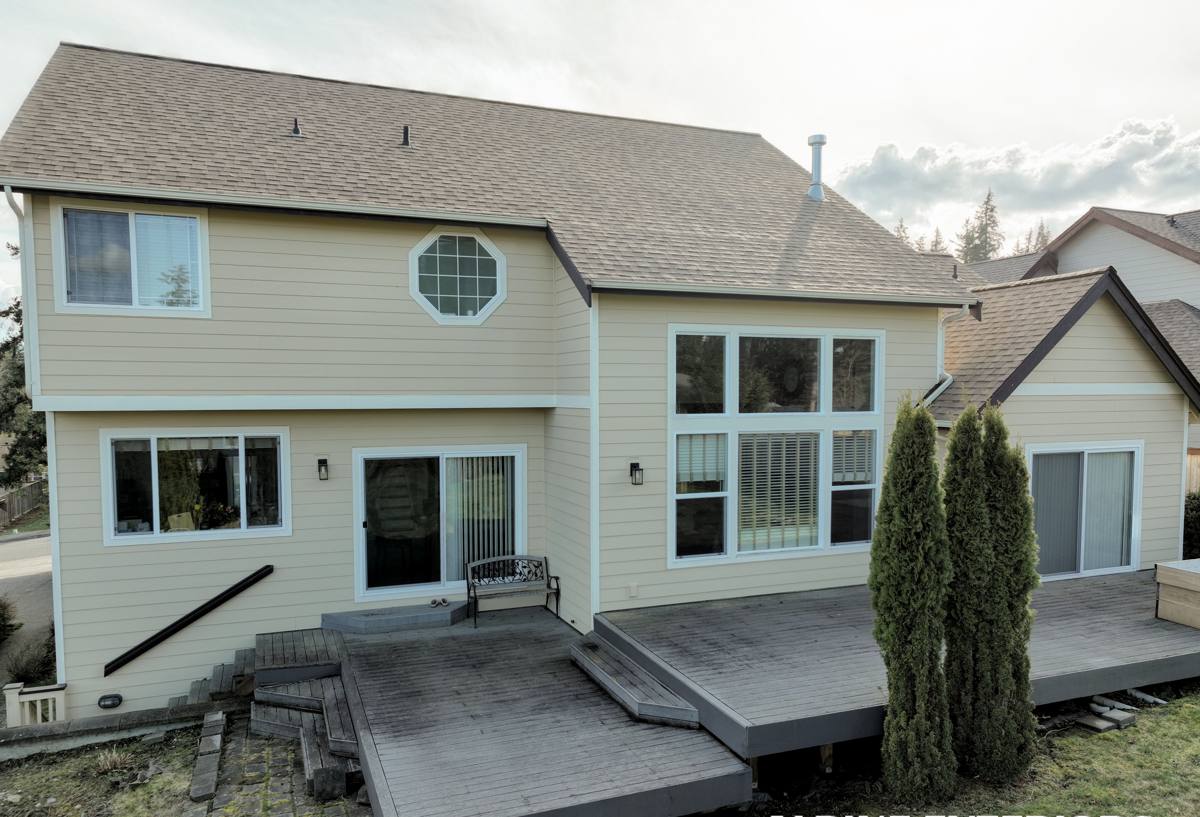
What This Climate Actually Does to a Deck
Before talking about materials and process, it helps to understand the specific failure patterns we see on decks in this area.
Constant Moisture Cycling
Whatcom County doesn't just get a lot of rain — it gets long, low-intensity rain events that keep wood surfaces wet for days at a time, followed by short dry spells that never fully dry the structure underneath. That wet-dry cycling is harder on lumber than a single heavy storm, because it drives moisture into end grain, fastener holes, and any spot where two boards meet.
Moss and Algae Growth
Shaded, north-facing, or tree-covered decks in this region can develop moss and algae film within a single wet season if the surface doesn't drain and dry quickly. Beyond looking bad, moss holds moisture against the decking material and makes the surface slick and genuinely dangerous underfoot.
Salt Air and Metal Corrosion
Proximity to the water means airborne salt reaches fasteners, flashing, and structural hardware even on decks that aren't right on the shoreline. Standard zinc-coated screws and connectors can start showing rust bleed and weakening within a few years in this kind of exposure, well before the decking itself is a problem.
Choosing a Decking Material That Fits This Environment
There's no single "best" decking material — there's a best material for this specific climate and this specific budget. Here's how the common options actually perform under Whatcom County conditions:
| Material | Moisture & Moss Behavior | Maintenance | Typical Lifespan Here |
|---|---|---|---|
| Pressure-treated lumber | Absorbs water readily; moss and algae take hold quickly in shaded areas without regular cleaning | Annual cleaning and re-sealing recommended | 10–15 years with upkeep |
| Cedar | Naturally rot-resistant but still needs sealing; can gray and stain unevenly in wet, shaded spots | Sealing every 1–2 years | 15–20 years with upkeep |
| Capped composite | Resists moisture absorption well; capped surface sheds algae more easily than wood but grooved/textured boards can still trap moss film in shade | Periodic washing, no sealing | 25+ years |
| PVC decking | Doesn't absorb moisture at all; best resistance to rot and moss staining | Occasional washing | 25+ years |
We don't push one product on every job. A shaded, moss-prone deck under trees is a different decision than a full-sun deck on an open lot, and budget matters too. What we won't do is install a wood species or fastener package that we know is a poor match for a specific site's sun, shade, and drainage pattern just because it's cheaper up front — we'll tell you honestly where that trade-off leads.
The Ledger Board: Where Most Deck Failures Actually Start
As a siding contractor, this is the detail we pay closest attention to that a pure deck-builder sometimes doesn't: the ledger board, where the deck attaches to the house. This connection point sits directly against your home's wall assembly, and if it isn't flashed correctly, water gets channeled behind the siding and into the wall framing rather than away from it.
What Correct Ledger Flashing Involves
- Removing siding at the attachment point rather than fastening over it
- Installing proper step flashing and a continuous flashing membrane above and behind the ledger
- Using a water-resistive barrier that integrates with the home's existing weather barrier, not just caulk
- Sloping the flashing to direct water outward, away from the wall assembly
- Confirming the ledger is bolted (not just screwed) into solid framing, sized to the deck's actual load
This is the single most common source of hidden rot we find when repairing older decks in this region — not the decking boards themselves, but water that's been getting behind the siding at the ledger for years, unnoticed until the wall sheathing is already soft.
Drainage, Slope, and Airflow: Fighting Moss Before It Starts
Moss doesn't grow because a material is "bad" — it grows wherever moisture sits still. The structural details that prevent standing moisture do more for long-term deck appearance than any surface treatment.
Under-Deck Drainage
For decks with usable space underneath, an under-deck drainage system channels rainwater off the top surface and away from the framing below, keeping joists and beams drier and reducing the moss and algae that builds up on ground-level surfaces beneath the deck.
Board Spacing and Slope
Decking should be installed with a slight slope away from the house and with fastener and gap spacing that lets water actually shed rather than pool in low spots. Boards installed dead level, or too tight, hold water in the gaps between them — exactly where moss gets its start.
Joist Protection
Joist tape over the top of each joist keeps rainwater that gets through the decking surface from soaking directly into end grain and fastener penetrations, which is where structural rot typically begins on an older deck.
Fasteners, Hardware, and Guardrails for Salt Air Exposure
Hardware selection matters more here than in a dry inland climate. We use corrosion-resistant fasteners — stainless steel or hot-dip galvanized, depending on the application — for structural connections, hidden fastener systems, and any hardware exposed to weather. Standard coated deck screws are a false economy in this environment: the labor to replace decking is the same whether the screws cost more or less, so using hardware that won't rust-stain the boards or lose holding strength in five years is the more honest long-term choice.
Guardrails, stair stringers, and post bases also need attention here specifically because they're the load-bearing components most exposed to standing water and splashback. Post bases that hold water against the post end grain are a common source of hidden rot on older Whatcom County decks.
Our Custom Deck Process in Sehome
1. On-Site Assessment
We walk the site, note sun and shade exposure, existing drainage patterns, and (for rebuilds) the condition of the ledger connection and substructure.
2. Design and Material Selection
We talk through decking material, layout, and railing options based on your budget, how the space will be used, and how much shade the deck will get — since shade is the biggest driver of moss and algae in this climate.
3. Permitting
Most new decks and many rebuilds require a permit depending on size, height, and attachment to the home. We handle the permit application and coordinate required inspections.
4. Build
Ledger flashing, footings, framing, joist protection, decking, and railings — built in that order, with the flashing and structural work done right the first time since it's the part that gets covered up.
5. Final Walkthrough
We go over the finished deck with you, including basic care specific to the material you chose.
Permits and Local Code Considerations
Whatcom County and local jurisdictions typically require permits for decks above a certain height or attached to the home's structure, along with specific guardrail height and baluster spacing requirements for safety. Frost depth and soil conditions in this area also affect footing depth requirements. We handle this as part of the build rather than leaving it for the homeowner to sort out — a deck built without the required permit and inspections can create real problems at resale.
Keeping a Sehome Deck Moss-Free Year to Year
Even a well-built deck needs some seasonal attention in this climate. A short annual routine goes a long way:
- Sweep debris and fallen leaves off the surface regularly through fall — trapped organic material is what moss and algae feed on
- Wash the decking surface at least once a year with a deck-safe cleaner to remove early algae film before it takes hold
- Check that gaps between boards are clear of debris so water keeps draining as designed
- Inspect the ledger area and any flashing you can see for staining or gaps at least once a year
- Re-seal wood decking on the manufacturer's recommended schedule rather than waiting until it looks weathered
- Check fastener heads and hardware periodically for rust staining, which can signal a coating starting to fail
Why a Crew That Already Works Sehome Makes a Difference
A deck built by a crew that hasn't worked this specific microclimate tends to make the same mistakes: standard flashing details that don't account for our rain volume, decking layouts that don't shed water fast enough in shaded spots, and hardware specified for a drier region. We work in Sudden Valley and throughout Whatcom County, including Sehome, so the flashing details, material choices, and drainage decisions on your deck reflect what we've actually seen hold up — and what we've seen fail — on decks a few miles from yours.
If you're planning a new deck, replacing an aging one, or want a second opinion on a deck that's showing early moss or soft spots, we're happy to take a look. Reach out for a free, no-pressure estimate using the form below.