 Sudden Valley Siding
 Building a Deck for Cordata's Climate, Not a Generic One
A deck in Cordata has to earn its keep against conditions that a lot of national deck-building guides simply don't account for. Whatcom County's marine climate means driving rain for a good chunk of the year, salt-tinged air moving in off the Sound, and a moss and algae season that can stretch from fall through spring. A deck built to a generic spec sheet — the kind you'd get from a big-box design tool or a crew that mostly works drier inland regions — tends to show its age fast here: soft spots at the ledger, rusted-out fastener heads, and a surface that turns slick and green well before it should.
We build custom decks for homes in and around Cordata with those realities baked into the plan from the start, not bolted on as an afterthought. That means specific choices about framing protection, fastener grade, decking material, and drainage that are worth understanding before you sign off on a design — whether you hire us or not.
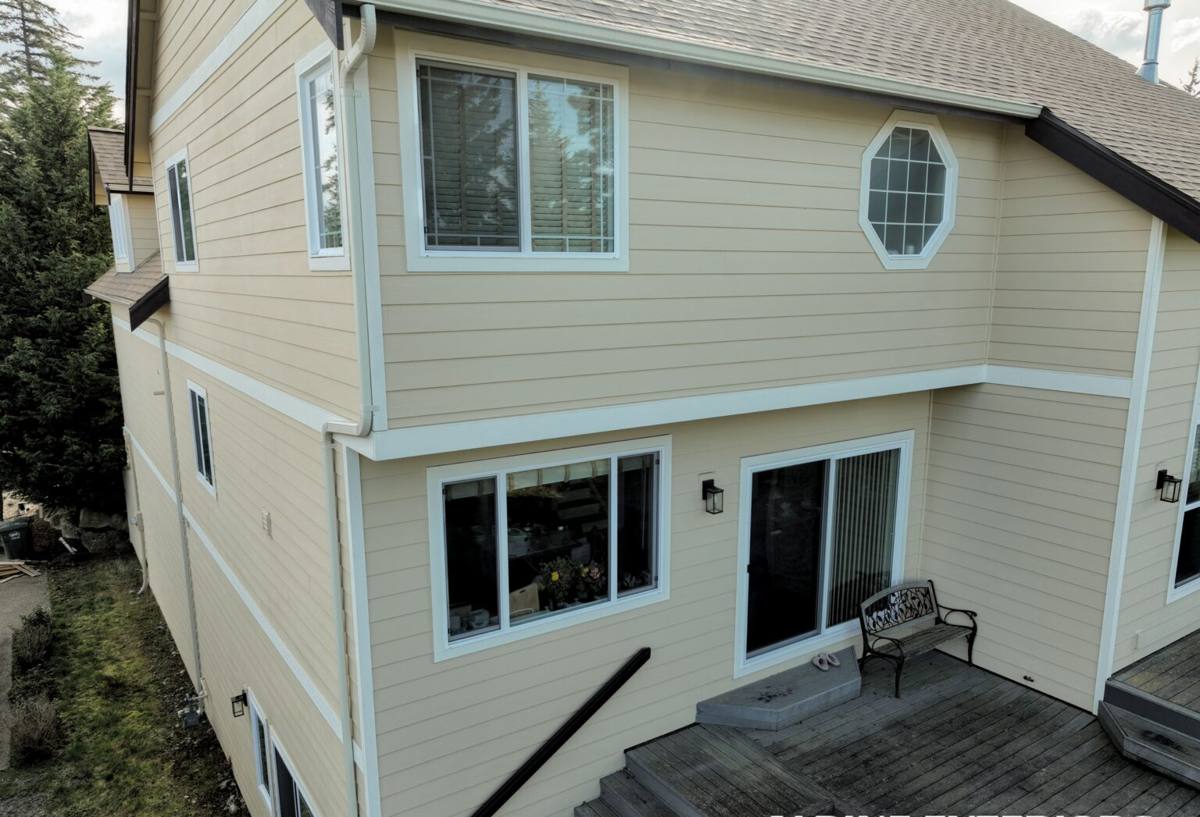
What a Correctly Built Deck Needs to Handle Here
Moisture at the Ledger and Framing
The single most common point of failure on any deck in this region isn't the decking boards — it's the ledger board where the deck attaches to the house, and the framing underneath. Whatcom County sees enough sustained rainfall that any gap in flashing or any fastener that lets water track behind the siding will eventually rot the band joist or the ledger itself. This is a slow failure — it can take years to show up as a soft spot or a sagging rail post — which is exactly why it has to be done right the first time.
Salt Air and Corrosion
Cordata sits within reach of salt-influenced air moving through the county, and that air is hard on unprotected metal. Fasteners, joist hangers, and structural screws that aren't rated for coastal exposure will corrode faster than homeowners expect, sometimes staining the wood around them or losing holding strength years before the decking itself needs replacing.
Moss, Algae, and Slip Risk
A long wet season with limited direct sun on shaded sides of a house is a near-perfect environment for moss and algae to establish on any horizontal wood or composite surface. Beyond looking bad, a mossy deck surface is a genuine slip hazard, and moss that's allowed to sit holds moisture against the board, accelerating rot in real wood decking specifically.
Decking Material Options for Cordata Homes
There's no single "correct" decking material for every project — it depends on budget, how much upkeep you want to take on, and how the deck is used. Here's how the common options actually perform under Whatcom County conditions:
| Material | Moisture & Rot Resistance | Moss/Algae Behavior | Maintenance | Typical Lifespan |
|---|---|---|---|---|
| Pressure-treated wood | Good if properly sealed and maintained | Prone to growth if not cleaned; holds moisture | Annual cleaning, periodic re-sealing | 10–15 years with upkeep |
| Cedar | Naturally rot-resistant but still needs sealing here | Prone to growth in shaded, wet spots | Regular cleaning and finish renewal | 15–20 years with upkeep |
| Capped composite | Excellent — won't rot or absorb water like wood | Still needs periodic washing; capped surface resists staining | Occasional washing, no sealing/staining | 25+ years |
| PVC decking | Excellent — fully synthetic, no wood core to rot | Smooth surface sheds moss more easily than wood grain | Occasional washing | 25–30+ years |
We install real wood decking when a homeowner wants that look and understands the maintenance commitment, and we install capped composite or PVC when the priority is lower upkeep over the deck's life. What we won't do is put wood decking on a shaded, low-airflow deck without being upfront that it's going to need more attention than the same deck in full sun — that's a maintenance-burden conversation we have honestly, not a sales pitch.
Framing and Substructure: Where Decks Actually Fail
Most deck problems that bring us out for repair calls trace back to the substructure, not the decking surface. A correct build for this climate includes:
- Ledger flashing installed to shed water away from the house band joist, not just caulked and hoped for
- Joist tape or an equivalent moisture barrier on top of every framing member before decking goes down
- Structural connectors and hangers rated for exterior, corrosion-prone environments
- Footings sized and set to the depth required for the soil conditions on your lot, since clay-heavy and consistently wet soils common in this part of Whatcom County behave differently than well-drained inland sites
- Proper airflow underneath the deck so framing can dry out between rain events instead of staying damp for weeks
None of this is visible once the decking boards are down, which is exactly why it matters who does it and how carefully. A deck that looks great for the first two summers but was framed with shortcuts underneath is a much more expensive problem to fix later than it would have been to build correctly the first time.
Railings, Fasteners, and Hardware Built for Salt Air
Hardware is where a lot of decks quietly fail before the visible structure does. For fasteners and connectors, we use stainless steel or coated fasteners rated for coastal and marine-influenced exposure rather than standard exterior-grade hardware, because the cost difference is small relative to the deck's total cost and the failure mode — a rusted screw head snapping off or a hanger losing strength — is exactly the kind of thing that's expensive and disruptive to fix later.
For railings, we work with wood, powder-coated aluminum, and cable rail systems depending on the look a homeowner wants. Aluminum and cable systems tend to hold up with less maintenance in this climate since they don't need refinishing the way a wood rail does, but a well-built and properly finished wood rail is a legitimate choice too if you're willing to keep up with it. We'll walk through the real trade-offs for your specific project rather than pushing whichever product is easiest for us to install.
Drainage and Moss Management by Design
You can't eliminate moss and algae risk entirely in this climate, but a well-designed deck fights it instead of feeding it. That means correct board spacing so water drains through rather than pooling, grading and drainage away from the deck's footings, and, where the layout allows it, positioning or trimming back overhead cover so more of the deck surface gets direct sun and airflow during the year. On composite and PVC decking we also make sure board spacing and substructure venting follow the manufacturer's requirements, since undersized gaps trap moisture and defeat the point of choosing a low-maintenance material in the first place.
Our Custom Deck Process
- On-site assessment — we look at your home's layout, sun exposure, existing structure if there's a deck to replace, and any drainage issues before talking materials.
- Design and material selection — we walk through decking, railing, and framing options with honest trade-offs, sized to your budget and how you'll actually use the space.
- Permitting — we handle the permit application for your jurisdiction and coordinate any required inspections.
- Build — proper flashing and moisture protection at the ledger, corrosion-rated hardware throughout, and framing built to last under wet conditions, not just to pass a quick glance.
- Final walkthrough — we go over the finished deck with you, including what maintenance it actually needs going forward.
Permits and Local Considerations
Deck permitting requirements depend on your specific property and whether it falls under the City of Bellingham or unincorporated Whatcom County, along with factors like deck height, size, and proximity to property lines. Guardrail height, stair requirements, and footing specifications are set by code and are typically verified at inspection. We handle this process as part of the build so you're not tracking down permit requirements on your own — but it's worth knowing up front that "how big can I build without a permit" isn't a single fixed answer; it depends on your lot and structure.
Maintenance Checklist for Your Cordata Deck
Whatever material your deck is built from, a little seasonal attention goes a long way in this climate:
- Sweep debris off the deck regularly, especially in fall when leaves and needles trap moisture against the surface
- Wash the deck at least once a year with a cleaner appropriate for the material to remove early moss and algae growth before it takes hold
- Check fastener heads and railing connections annually for any signs of corrosion or loosening
- Reseal or restain wood decking on the schedule the product actually needs, not just when it looks faded
- Keep gutters and downspouts near the deck clear so runoff isn't dumping extra water onto or under the structure
- Trim back overhanging branches that keep sections of the deck shaded and damp longer than the rest
Why Hiring a Crew That Already Works Cordata Matters
A deck contractor who mostly builds in drier climates will often spec the same framing details and materials they'd use anywhere else — and that's how you end up with a deck that needs real repair work inside a decade instead of standing up for twenty-five years or more. Working regularly in Cordata and the surrounding Whatcom County area means we've seen how moisture, salt air, and moss actually behave on decks here over time, not just on paper. That shows up in the flashing details, the hardware we spec by default, and the honest conversations we have with homeowners about which materials fit their maintenance tolerance and budget.
If you're planning a new custom deck or replacing one that's showing its age, we're happy to take a look and give you a straightforward assessment. Reach out for a free, no-pressure estimate using the form below.