 Sudden Valley Siding
 Siding Replacement Built for Cordata's Climate
Cordata sits within Whatcom County's coastal weather pattern, and that means the siding on a Cordata home is dealing with a steady combination of stresses most drier regions never see: salt-tinged air moving in off the water, wind-driven rain that hits walls at an angle instead of falling straight down, and a moss and mildew season that runs long into the year on shaded and north-facing walls. None of that is dramatic on any single day. It's the accumulation — years of a wall never fully drying out, of fasteners and trim slowly corroding, of moisture working behind siding that looks fine from the driveway — that eventually shows up as a failing wall system.
Siding replacement done right in Cordata isn't just about picking a material and nailing it up. It's about understanding what this specific climate does to a wall over ten, twenty, thirty years, and building the installation to hold up to that reality rather than to a showroom sample. This page covers what a correct siding replacement involves for a Cordata home, how our process works, and why a crew that already works this area consistently gets better long-term results than one that doesn't.
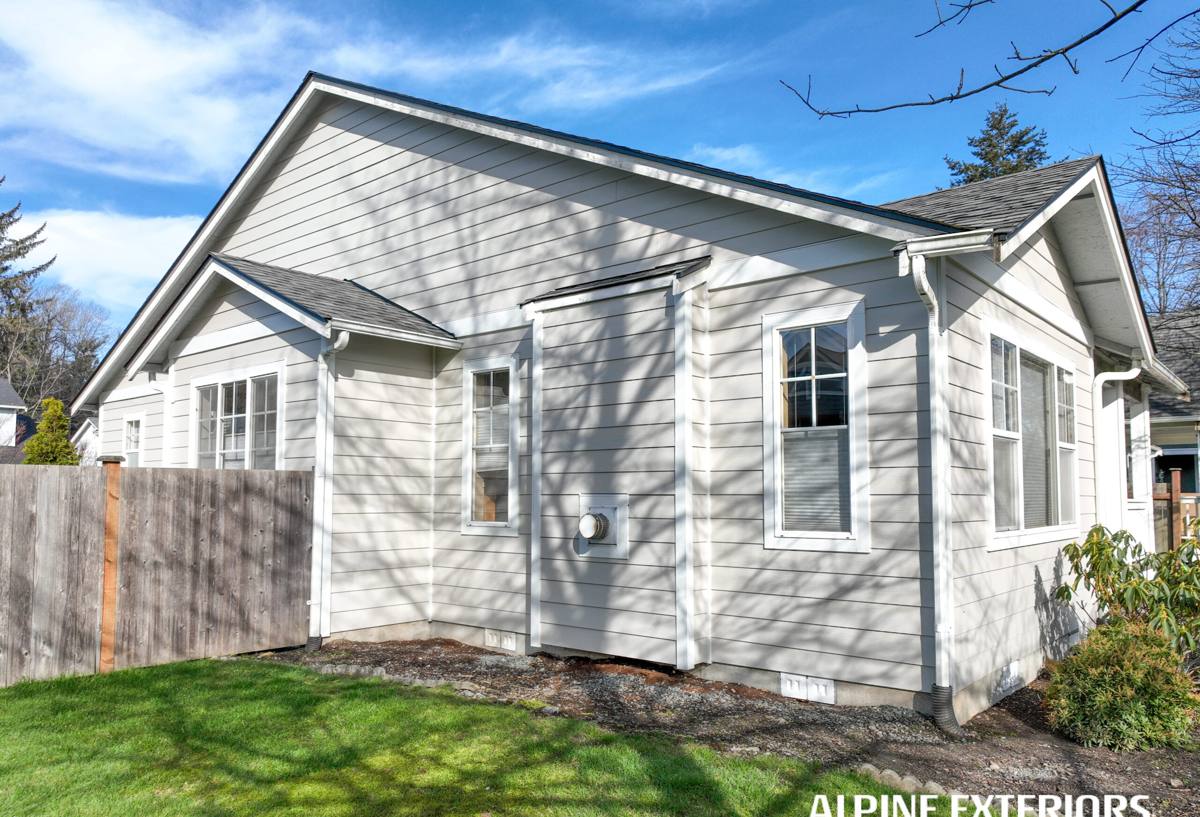
What Salt Air, Driving Rain, and Moss Actually Do to Siding
Salt Air and Fastener Corrosion
Air carrying salt content accelerates corrosion in standard fasteners, flashing, and metal trim components. It's a slow process — you won't see it in year one — but over a decade or more, standard-grade hardware in a coastal-influenced climate like Cordata's tends to corrode well before a properly specified fastening system would. When fasteners weaken or corrode, the siding panels they're holding can loosen, shift, or pull away from the wall, letting water in behind material that otherwise still looks serviceable.
Wind-Driven Rain
Rain that falls straight down is relatively easy for a wall assembly to shed. Rain that's being pushed sideways by wind — which is common during storms moving through this part of Whatcom County — finds every gap, every under-lapped piece of flashing, and every poorly sealed joint. A siding system built for calmer, drier conditions elsewhere often doesn't account for that lateral pressure, which is why flashing sequencing and joint detailing matter more here than in a lot of the country.
A Long Moss and Mildew Season
Cool, damp conditions that persist for much of the year are exactly what moss and mildew need to establish and spread. Shaded walls and north-facing elevations are usually the first to show it, since they get the least direct sun to dry out between wet spells. Moss itself doesn't destroy siding the way rot does, but it holds moisture directly against the surface for extended periods, and on porous or moisture-absorbent materials, that sustained contact accelerates whatever deterioration process is already underway.
Signs a Cordata Home Needs Siding Replacement
Siding problems in this climate tend to develop quietly, behind a surface that can still look reasonably intact from a distance. A closer look, especially at ground level and at wall sections that stay shaded, usually tells a more accurate story. Common signs include:
- Soft, spongy, or crumbling material when pressed, especially near the bottom courses close to grade
- Visible cracking, buckling, or separation at panel joints and corners
- Paint or finish that's peeling, bubbling, or chalking heavily on one or two specific wall faces
- Persistent moss or dark staining that returns quickly after cleaning
- Rust streaking below fasteners or metal trim pieces
- Warping, cupping, or visible gaps that weren't there when the siding was newer
- Interior signs — a musty smell, soft drywall, or staining on an interior wall near an exterior corner
Any one of these on its own might be minor. Several appearing together, or appearing on the same shaded wall face, usually means moisture has been getting behind the siding for a while and the material is no longer doing its job.
Why We Install Only James Hardie Fiber Cement
We used to install a wider range of siding products. We narrowed to one — James Hardie fiber cement — after seeing, repeatedly, which materials actually held up to years of Whatcom County's coastal weather and which ones quietly failed underneath a finish that still looked fine on the surface. That decision came from tear-offs and service calls, not from a supplier relationship.
- Non-combustible core: Fiber cement doesn't feed a fire the way wood-based siding can, which matters for both safety and, often, insurance considerations.
- Factory-applied ColorPlus finish: The color is baked on in a controlled factory process rather than brushed on after installation, and it resists fading, chalking, and moisture intrusion far longer than field-applied paint — a meaningful advantage on walls that stay damp for extended stretches.
- Climate-engineered HZ product lines: Hardie's HZ5 formulation is built specifically for regions with heavy moisture exposure and freeze-thaw cycling, which describes Cordata's conditions well.
- Dimensional stability: Fiber cement doesn't swell, cup, or warp through repeated wetting-and-drying cycles the way wood-based or wood-fiber products can.
- A strong, transferable warranty: Hardie backs its products with one of the more substantial warranty structures in the industry, provided the installation follows their published specifications.
We don't install LP SmartSide, vinyl siding, Cemplank, Allura, primed spruce, or cedar. Each has legitimate uses, and plenty of homeowners elsewhere are happy with them. But for a climate that puts this much sustained moisture pressure on a wall, we made a professional call to stand fully behind one system rather than offer a lower-cost option that quietly shifts long-term maintenance risk onto the homeowner. That's a standard we hold to on every Cordata job, not a sales position.
What a Correct Siding Replacement Involves
Full Tear-Off, Not an Overlay
Installing new siding directly over old siding is sometimes technically possible, and it lowers upfront labor cost. But it also means whatever moisture damage, rot, or failed flashing already exists behind the old material stays hidden and unaddressed. In a climate where water works its way behind walls slowly and often invisibly, we treat a full tear-off to the sheathing as the standard approach, not an upgrade — it's the only way to actually verify the wall behind the siding is sound before committing new material to it.
Sheathing and Framing Inspection
Once the old siding is off, the sheathing and framing underneath get inspected directly. Rotted or delaminated sheathing, water-damaged framing around windows and penetrations, and compressed or wet insulation are all things that only become visible at this stage — and all things that need to be corrected before new siding goes on, not covered over.
Water-Resistive Barrier and Drainage Plane
A new water-resistive barrier goes on the sheathing before siding installation begins, and on a home dealing with sustained coastal moisture, correct drainage-gap detailing behind the panels matters as much as the barrier itself. That gap gives incidental moisture a path to drain and evaporate instead of sitting trapped against the back of the siding.
Flashing Sequencing
Every window, door, and roof-to-wall transition needs flashing that's lapped in the correct order — each piece overlapping the one below it — so water is directed out and away from the wall rather than behind it. This is one of the details that separates a siding job that holds up to wind-driven rain from one that develops leaks within a few seasons.
Correct Fasteners and Corrosion-Resistant Hardware
Given the corrosion pressure that salt-influenced air puts on standard hardware, we use fastener and flashing materials rated for a coastal, high-moisture environment. This isn't an optional upgrade in Cordata — it's what keeps the fastening system from failing years before the siding itself would otherwise need attention.
Installation to Manufacturer Specification
Fiber cement only performs the way it's engineered to when it's installed to Hardie's published specifications: correct fastener type, spacing, and penetration depth; proper clearance from grade, roofing, and other transitions; and properly sealed, correctly lapped joints. A loosely installed product will develop moisture problems here regardless of how good the material itself is — installation quality and material quality both have to be right.
Our Process, Start to Finish
- On-site assessment: We walk the exterior and look closely at how moisture, shade, and salt exposure have affected different wall faces, since that varies more from one side of a Cordata home to another than most homeowners expect.
- Written scope and estimate: Before any work begins, you get a clear scope covering material, tear-off versus overlay, and what happens if hidden damage is found once the old siding is off.
- Tear-off and inspection: Old siding comes off, sheathing and framing get inspected, and any needed repairs are addressed and documented before moving forward.
- Barrier, drainage, and flashing installation: The water-resistive barrier, drainage gap, and flashing at every penetration and transition go in according to Hardie's specifications, sequenced correctly for wind-driven rain.
- Siding and trim installation: Panels, trim, and corner detailing are installed with corrosion-resistant fasteners, following manufacturer spacing and clearance requirements.
- Final walkthrough: We go over the finished job with you, confirm everything meets spec, and handle manufacturer warranty registration.
Comparing Siding Materials for a Cordata Home
| Material | Moisture Behavior | Maintenance in This Climate | Typical Longevity Here |
|---|---|---|---|
| James Hardie fiber cement | Dimensionally stable; resists swelling and warping | Low; factory finish resists fading, chalking, and moisture-driven finish failure | 30+ years with correct installation |
| Vinyl siding | Can trap moisture behind panels in poorly ventilated wall assemblies | Low upfront cost, but seams and panels can distort with temperature swings | Variable; often shorter on exposed, wind-driven wall faces |
| LP SmartSide / engineered wood | Wood-fiber core sensitive to moisture at cut edges and joints | Moderate to high; edge sealing and caulk maintenance matter more here | Depends heavily on installation quality and upkeep |
| Cedar / primed wood | Absorbs and releases moisture readily | High; needs regular refinishing to hold up to salt air and driving rain | Shorter without consistent, ongoing maintenance |
Cost Factors for a Cordata Siding Replacement
Every home prices differently, but the factors that move a Cordata siding estimate up or down are fairly consistent:
- Home size and wall complexity: More corners, gables, and roof transitions mean more cutting, fitting, and flashing work per square foot.
- Story count and access: Multi-story homes require more scaffolding and fall-protection setup, which adds labor time.
- Condition of the sheathing underneath: Rot or water damage discovered during tear-off adds repair cost that can't be fully known until the old siding is off.
- Window and door count: Every opening needs to be trimmed and flashed individually, which adds labor regardless of total wall area.
- Drainage and flashing detailing: Correct rainscreen gaps and flashing sequencing for this climate take more time to install than a simplified approach, but they're what keeps the wall dry over the long run.
- Material and product line: Different Hardie profiles and finishes carry different material costs, and choosing the right HZ line for your home's exposure is part of what we walk through during the estimate.
Why a Local Crew Matters
A contractor who already works throughout Cordata and the surrounding Whatcom County area has already seen how salt air, driving rain, and a long moss season affect wall assemblies here specifically — not in a general sense, but on the actual roof pitches, wall orientations, and exposure levels common to this area. That experience shows up in the details that matter most: knowing which wall faces need extra drainage attention because they rarely see direct sun, sequencing flashing correctly for wind-driven storms rather than straight-down rain, and specifying fastener grades that hold up to sustained salt exposure instead of failing early. Those aren't things you can fully learn from a manufacturer's install manual alone — they come from doing the work in this specific climate, repeatedly, and paying attention to what actually holds up.
A Quick Checklist Before Hiring for Siding Replacement
- Ask what siding material they install and why, and whether they'll put a written warranty behind it
- Confirm current Washington contractor licensing and active liability insurance
- Ask whether the quote includes a full tear-off or an overlay, and what happens if hidden damage is found
- Ask how they handle fastener and flashing selection for salt-air and wind-driven-rain exposure
- Get a clear, written scope of work — material, product line, drainage detailing, and warranty registration — before signing anything
Maintenance After Installation
Correctly installed James Hardie siding needs relatively little upkeep compared to wood-based alternatives, but "low maintenance" doesn't mean "no attention." In Cordata's climate, an occasional gentle wash to keep moss and mildew from establishing on shaded walls, a yearly look at caulking around windows and trim for any separation, and prompt attention to any physical damage from storms or debris will keep a Hardie installation performing the way it's designed to for decades. None of that comes close to the repainting, caulk renewal, and edge-sealing schedule that wood-based or wood-fiber sidings typically require in this same environment.
If you're weighing a siding replacement for a Cordata home and want a straight, honest read on what your specific property needs, we're happy to walk the exterior with you and explain what we see. Reach out below for a free, no-pressure estimate.