 Sudden Valley Siding
 Why Composite Decking Makes Sense in Cordata
Cordata sits in a part of Whatcom County that gets a steady diet of coastal moisture, long gray winters, and shaded lots that hold onto damp longer than open ground does. A deck out here isn't decorative — it's outdoor living space that has to survive months of standing wet weather every year. Composite decking earns its place in this climate because it doesn't absorb water the way solid wood does, doesn't need annual staining to stay sound, and holds up better against the moss and algae that colonize anything shaded and damp for long enough.
That said, "composite" isn't one product — it's a category with real differences in how boards are capped, how they drain, and how they age. Picking the right board and installing it the right way matters more here than it would in a drier climate, because any shortcut gets tested by the weather almost immediately.
Rain Load and Moisture Cycles
Whatcom County doesn't get dramatic downpours as often as it gets long, low-intensity rain that soaks everything for days at a stretch. For a deck, that means the substructure — joists, beams, ledger board, fasteners — spends a large part of the year at or near saturation. Composite boards themselves shrug this off, but the wood framing underneath them doesn't, unless it's properly flashed and given somewhere for water to go.
Salt Air and Coastal Exposure
Proximity to Puget Sound air brings a low but constant level of salt exposure to fasteners, brackets, and any exposed metal hardware. Over years, uncoated or poorly rated hardware corrodes faster here than it would inland. This is a fastener and hardware decision as much as a decking decision, and it's one of the first things we check on any deck built or repaired in this area.
The Long Moss Season
Shaded yards, tree cover, and damp air add up to a moss season that can run most of the year on north-facing or heavily shaded decks. Moss on a walking surface isn't just unsightly — wet moss is slick and can trap moisture against the board surface longer than open sun-exposed areas. Board texture, drainage gaps between boards, and airflow underneath the deck all affect how much moss becomes a problem and how easy it is to keep off.
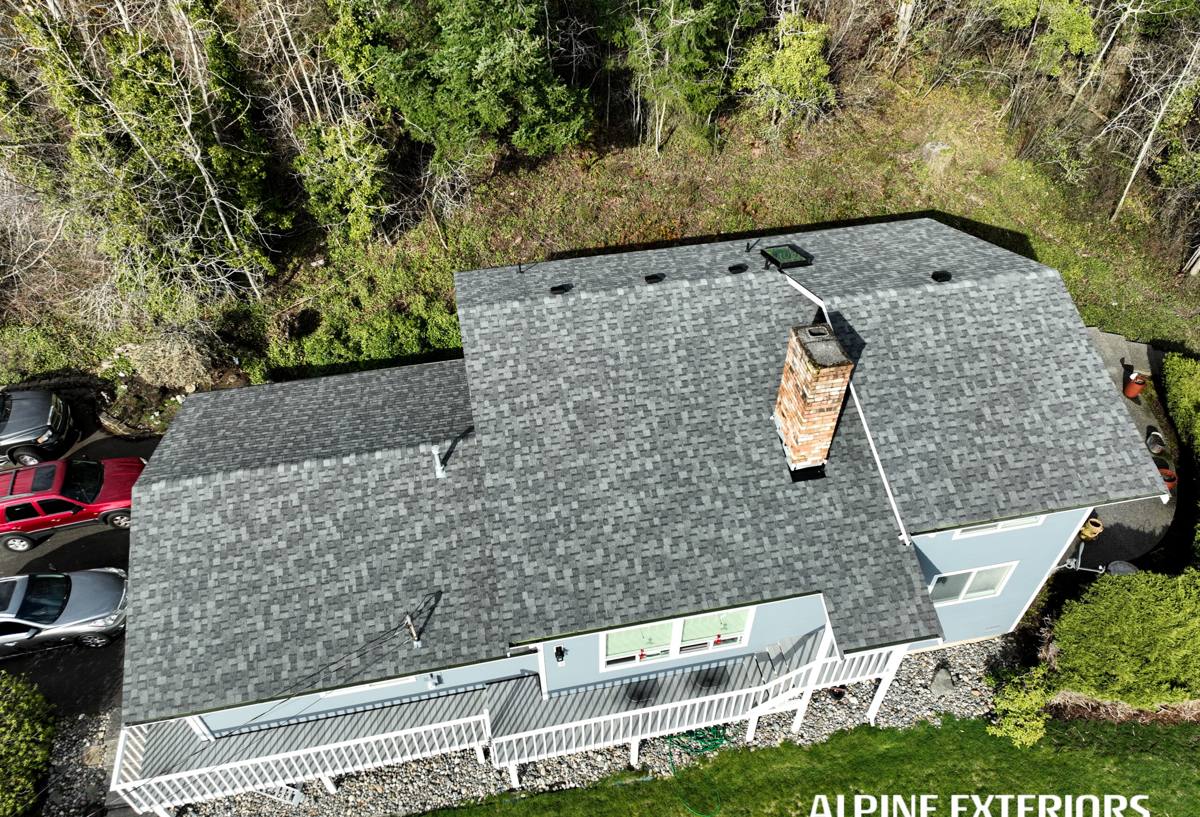
What a Correct Composite Deck Install Actually Involves
A composite deck is only as good as what's underneath it. Most of the failures we get called out to inspect in this area trace back to substructure or flashing issues, not the decking material itself. A correct install includes:
- Pressure-treated or naturally durable framing, sized and spaced for the specific composite board being installed — composite deflects differently than wood and manufacturers publish joist-spacing requirements that vary by product
- Ledger board flashing that sheds water away from the house band joist, not into it — this is the single most common point of hidden rot on older decks tied into a house
- Joist tape over the top of every joist to protect the wood from standing water and slow long-term rot at the fastener penetrations
- Corrosion-resistant, manufacturer-approved fasteners and hidden fastener clips rated for coastal or high-moisture exposure
- Proper gapping between boards for drainage and seasonal expansion — composite moves with temperature more than people expect
- Adequate ventilation and clearance underneath the deck so the framing can dry out between rain events instead of sitting wet
- Correct slope away from the house on any deck surface tied to a structure, so water doesn't pool against the foundation or siding
Composite vs. Other Decking Materials
Homeowners in Cordata often ask us to compare composite against pressure-treated wood or PVC before committing. Each has real tradeoffs — none of them is universally "better," and the right choice depends on budget, maintenance tolerance, and how the deck will be used.
| Material | Maintenance in This Climate | Typical Lifespan | Upfront Cost |
|---|---|---|---|
| Pressure-treated wood | Needs regular cleaning, sealing, and re-staining to resist moss and moisture — more demanding here than in drier regions | 10–15 years before major boards need replacing | Lowest |
| Capped composite | Occasional wash-down; no staining or sealing; resists moisture absorption and moss staining better than wood | 25–30 years, often with a manufacturer warranty | Mid to upper-mid |
| PVC decking | Very low maintenance; fully synthetic, no wood fiber to hold moisture, but can feel and look less natural | 25–30+ years | Highest |
We install and stand behind capped composite for most Cordata homes because it balances upfront cost against the maintenance burden this climate actually creates. We're upfront when a homeowner's budget or goals point toward wood or PVC instead — the right product depends on the project, not on what's easiest for us to sell.
Our Process on a Composite Decking Project
- On-site assessment of the existing deck or build area, including drainage, sun/shade exposure, and any signs of moisture damage to the house at the ledger point
- Material and color selection walkthrough, with honest tradeoffs explained for board type, fastening system, and railing options
- Written estimate covering scope, materials, and timeline before any work starts
- Demo of the old deck (if applicable) with attention to what condition the ledger and framing are in underneath
- Framing and flashing work, including joist tape and corrosion-resistant hardware suited to coastal exposure
- Composite board installation with manufacturer-specified spacing, fastening, and expansion gaps
- Final walkthrough covering care instructions specific to this climate — cleaning frequency, what to avoid, and what's still under warranty
What's Different About Building Decks in Cordata Specifically
Every deck project has to answer to the lot it sits on, and Cordata lots vary a lot in how much tree cover and afternoon shade they get. A deck on the shaded side of a heavily treed lot needs more attention to underside ventilation and board drainage gaps than a deck getting full sun most of the day. We also see a fair number of older decks in this area that were built to code decades ago but never accounted for how much moisture the framing would sit in year after year — those often need substructure work done at the same time as a composite resurface, not just a board swap.
Whatcom County's building requirements for deck ledger attachment, guardrail height, and stair geometry apply the same way here as anywhere else in the county, and we pull permits and build to code on every project regardless of deck size.
Maintaining a Composite Deck Through a Wet Whatcom County Winter
Composite decking is low-maintenance, not no-maintenance. In a climate with this much rain and shade, a little seasonal attention goes a long way toward keeping a deck looking and performing the way it should for its full warranty life.
- Sweep off leaves and debris regularly in fall — trapped organic material holds moisture against the board surface and feeds moss growth
- Wash the deck surface at least once or twice a year with a soft-bristle brush and a composite-safe cleaner, especially on shaded sections
- Keep gutters and downspouts near the deck clear so runoff isn't dumping extra water directly onto or under the deck
- Check underneath the deck occasionally for standing water or blocked ventilation gaps, particularly after heavy rain stretches
- Avoid pressure-washing at close range or high pressure — it can damage the cap layer on composite boards over time
- Address any loose boards, fasteners, or railing hardware promptly rather than waiting for a full season of wet weather to make it worse
Why Local Experience with This Area Matters
A composite decking install is a set of decisions — joist spacing, fastener rating, flashing detail, drainage slope — that all have to be made correctly for the specific conditions the deck will sit in. A crew that works Cordata and the surrounding Whatcom County area regularly already knows how shaded lots here behave, what moisture damage on an older ledger board typically looks like before it's found, and which fastener and flashing choices actually hold up through a full wet season rather than just looking good on install day. That local pattern recognition is the difference between a deck that needs attention again in a few years and one that goes the distance on its warranty.
If you're planning a new composite deck or replacing worn decking in Cordata, we're happy to take a look and walk you through what your specific lot and layout call for. Reach out for a free, no-pressure estimate using the form below.