 Sudden Valley Siding
 Siding Replacement Built for the Columbia Area's Weather
Homes in and around the Columbia area near Sudden Valley sit inside one of the wetter, greener corners of Whatcom County. That's part of what makes the area beautiful, and it's also exactly what wears siding down faster than homeowners expect. Marine-influenced air moving through the county, driving rain that comes in sideways during fall and winter storms, and a moss season that can stretch for months all put steady pressure on whatever material is covering your exterior walls. Siding replacement here isn't a cosmetic upgrade — it's the thing standing between your framing and a climate that doesn't let up for long.
When we talk about siding replacement in this area, we mean a full removal-and-reinstall job done to correct water management at every seam, not a patch job that covers up a problem for a season or two. This page walks through what that actually looks like, why it matters here specifically, and how we handle it.
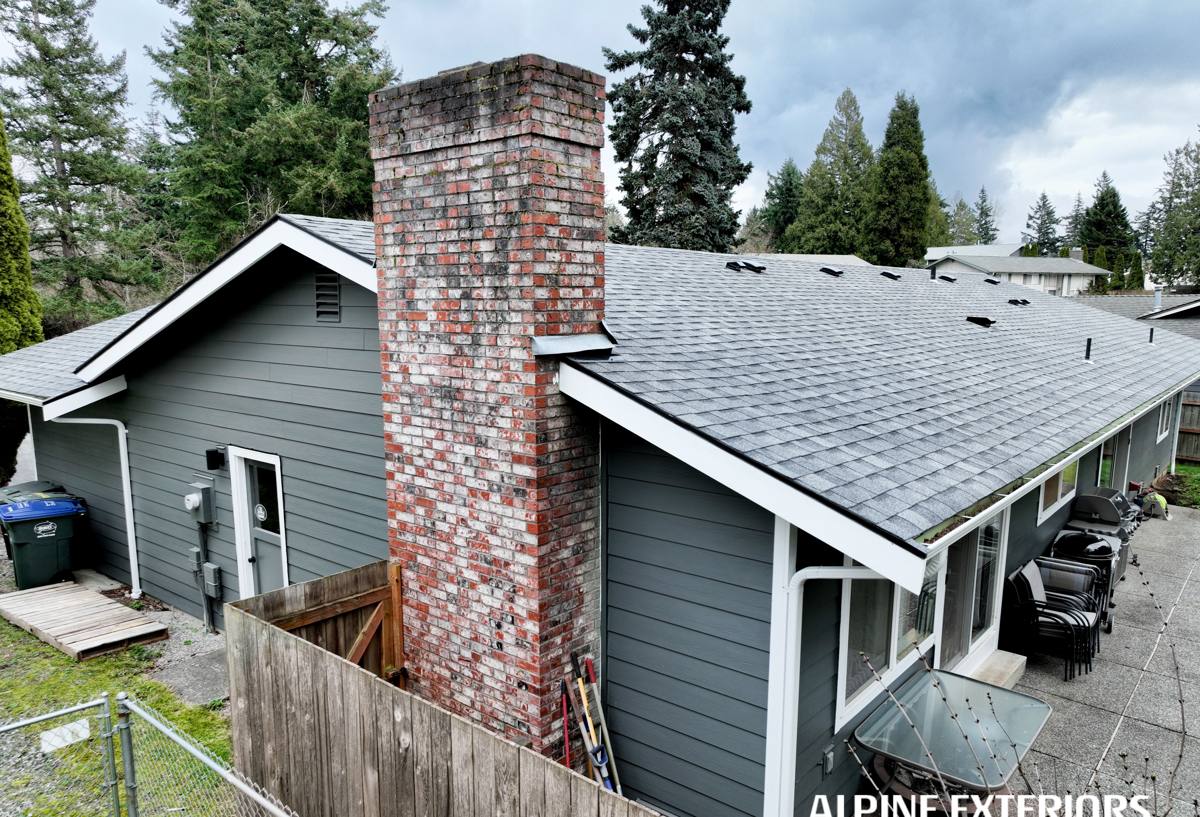
Why Siding Fails Faster in This Part of Whatcom County
Moisture That Doesn't Dry Out Quickly
Coastal and lake-adjacent air in Whatcom County stays humid for long stretches, which means siding that gets wet doesn't always get a chance to dry out fully before the next rain arrives. Wood-based and wood-derivative products absorb that moisture at cut edges, seams, and fastener points. Over years, that cycle of swelling and drying is what causes paint failure, soft spots, and eventually rot — even on siding that looked fine from the street.
Moss, Algae, and Constant Shade
Tree cover and shaded north- and west-facing walls around Columbia hold moisture against siding longer than open, sunny walls do. That's the setup moss and algae need to take hold. On porous or textured materials, moss roots into the surface itself. On a non-porous, factory-finished material, it sits on top and rinses off — a real difference in long-term maintenance.
Driving Rain and Wind-Driven Water
Storms coming off the water don't just fall straight down — they push rain sideways into wall assemblies, seams, and trim joints. Siding that isn't installed with the right laps, flashing, and clearances will let that water find its way behind the cladding, where it can sit against sheathing for months without anyone noticing until there's a soft spot or a musty smell inside.
Signs a Columbia-Area Home Needs Replacement, Not Repair
- Soft or spongy spots when you press on the siding, especially near the bottom courses and around windows
- Paint that keeps failing within a couple of years no matter how often it's repainted
- Persistent moss or dark streaking that comes back within weeks of cleaning
- Visible gaps, warping, or buckling at panel seams
- A musty smell near exterior walls, or interior drywall staining below window sills
- Siding that's original to a home built more than 20–25 years ago, especially if it's wood or an older composite product
A single rotted board or a damaged section near a downspout can sometimes be repaired. But once moisture damage shows up in multiple spots, or the underlying water-resistive barrier is compromised, patching becomes a losing game — you're chasing the same problem around the house one board at a time instead of fixing how the whole wall manages water.
What a Correct Siding Replacement Job Actually Involves
The material on the wall gets most of the attention, but the material is only part of the job. A siding replacement done right addresses everything underneath it too.
Full Tear-Off and Sheathing Inspection
We remove the existing siding down to the sheathing so we can actually see the condition of the wall, not guess at it. Any rotted sheathing or framing gets identified and repaired before anything new goes back on — covering up existing damage is how homes end up with the same problem again in five years.
Water-Resistive Barrier and Flashing
A new weather-resistive barrier goes on correctly lapped, and flashing gets installed at every window, door, and penetration so water is directed out and away from the wall assembly, never trapped behind it. This is the part of the job that's invisible once it's finished — and the part that determines whether the siding lasts.
Manufacturer-Spec Installation
Fastener type, fastener spacing, panel clearances off the ground and roofline, and caulking at the right joints (and not others) all matter. Installed outside of spec, even a good material will fail early and can void its warranty.
Why We Install Only James Hardie Fiber Cement
We made a deliberate decision to install one siding system — James Hardie fiber cement — and nothing else. Not vinyl, not LP SmartSide, not primed spruce or cedar, not other fiber cement brands. That's not a marketing angle; it's a standard we hold because of what we see coming off houses in this climate.
Wood and engineered-wood siding products can look and perform well when new, but they depend on paint film and sealant staying intact to keep moisture out of the substrate — a maintenance burden that's tough to keep up with in a climate this wet. Vinyl sheds water fine but flexes, fades, and can crack in cold snaps, and it doesn't hold up structurally the way a rigid material does. James Hardie fiber cement is non-combustible, dimensionally stable, and factory-finished with ColorPlus technology, so the color coat is baked on before it ever reaches your wall rather than depending on a field-applied paint job to keep working year after year. Hardie's HZ5 product line is engineered specifically for climates with freeze-thaw cycles and sustained moisture exposure — which describes Whatcom County well. It also carries a strong transferable warranty, which matters if you ever sell the home.
We're not the right contractor for a homeowner set on a different material. We're the right contractor if you want a wall assembly and a cladding material matched to what this climate actually does to a house.
Our Siding Replacement Process
- On-site assessment. We look at your current siding, trim, and any visible moisture damage, and talk through what we find in plain terms.
- Written estimate. A clear scope and price before any work starts — no vague allowances.
- Tear-off and inspection. Old siding comes off, sheathing gets inspected, and any rot or damage gets addressed and documented.
- Weather barrier and flashing. Installed to manufacturer spec at every window, door, and penetration.
- Hardie installation. Panels, fasteners, and clearances installed to James Hardie's published specifications.
- Trim, caulking, and cleanup. Final detailing, a full site cleanup, and a walkthrough so you know exactly what was done.
What Siding Replacement Typically Costs
Every home is different, but these are the factors that move the price the most on a real replacement job — not just material selection.
| Cost Factor | Why It Matters |
|---|---|
| Home size and wall complexity | More square footage and more corners, gables, and dormers mean more cutting, flashing, and labor time |
| Extent of hidden damage | Rotted sheathing or framing found during tear-off adds repair cost that can't be fully known until the old siding is off |
| Siding profile chosen | Lap width, shingle-style panels, and board-and-batten each have different material and labor costs |
| Trim and detail work | Window and door trim, corner boards, and fascia detailing add both material and installation time |
| Access and site conditions | Steep grades, tree cover, or tight lot access common in wooded and hillside lots can slow the job down |
We give a firm written number after seeing the home in person — not a phone estimate, and not a number that changes once we're on site unless we find something during tear-off that genuinely wasn't visible before, which we'll always show you before proceeding.
Why Hire a Crew That Already Works This Area
A contractor who works regularly in and around Sudden Valley and the surrounding Whatcom County communities has already seen how homes in this specific climate fail — where moss builds up fastest, which wall orientations take the worst of the driving rain, and how quickly a small flashing gap turns into a real problem here versus in a drier region. That's not something a crew coming from outside the area picks up on the first job. It shows up in the small decisions during installation: where extra flashing gets added even though the manufacturer minimum would technically pass, or which trim details get extra attention because we've seen what happens when they don't.
It also matters for accountability. A local crew is still around next year and the year after — for warranty questions, for a follow-up look at a detail you're curious about, or simply because we live and work in the same weather your siding has to survive.
Keeping New Siding Looking Right
- Rinse siding with a garden hose once or twice a year to clear pollen, dust, and early moss growth — no pressure washer aimed directly at seams
- Keep gutters clear so overflow doesn't run down the wall face and feed moss growth
- Trim back shrubs and low tree branches so walls get some airflow and sun exposure
- Re-caulk high-movement joints (like around trim) if you ever notice gaps, even though ColorPlus finishes don't need repainting
- Have any impact damage looked at promptly rather than waiting — small repairs stay small
If your siding is showing its age or you just want an honest look at what's actually going on behind it, we'll come out, take a real look, and give you a straight answer — along with a free, no-pressure estimate using the form below.