 Sudden Valley Siding
 Siding in Columbia: What the Climate Actually Does to a House
Columbia sits within the broader Sudden Valley area of Whatcom County, where wooded, often hillside lots surround homes on most sides. That setting is part of why people live here, but it also means siding rarely gets much direct sun or wind to dry it out between storms. Combine that with the marine-influenced air that moves through this part of Washington and you get long stretches of damp, shaded wall surface for most of the year.
Three things drive nearly every siding failure we see in this area:
- Driving rain that comes in sideways during fall and winter storms, pushing water into seams, laps, and trim joints instead of just running down the face of the wall.
- A long moss and algae season — shaded, tree-covered lots stay wet longer, and organic growth on siding holds moisture against the substrate far longer than open, sunny exposures would.
- Marine and coastal air moving through Whatcom County, which adds a steady low-level moisture and mineral load that slowly works against paint films, caulk, and any wood-based product over years of exposure.
None of this makes siding installation here impossible — it makes it a job where the details matter more than they would in a drier climate. A product and a crew that cut corners in Arizona might hold up fine there. In Columbia, the same shortcuts show up as soft trim, bubbling paint, and moss-stained walls within a handful of years.
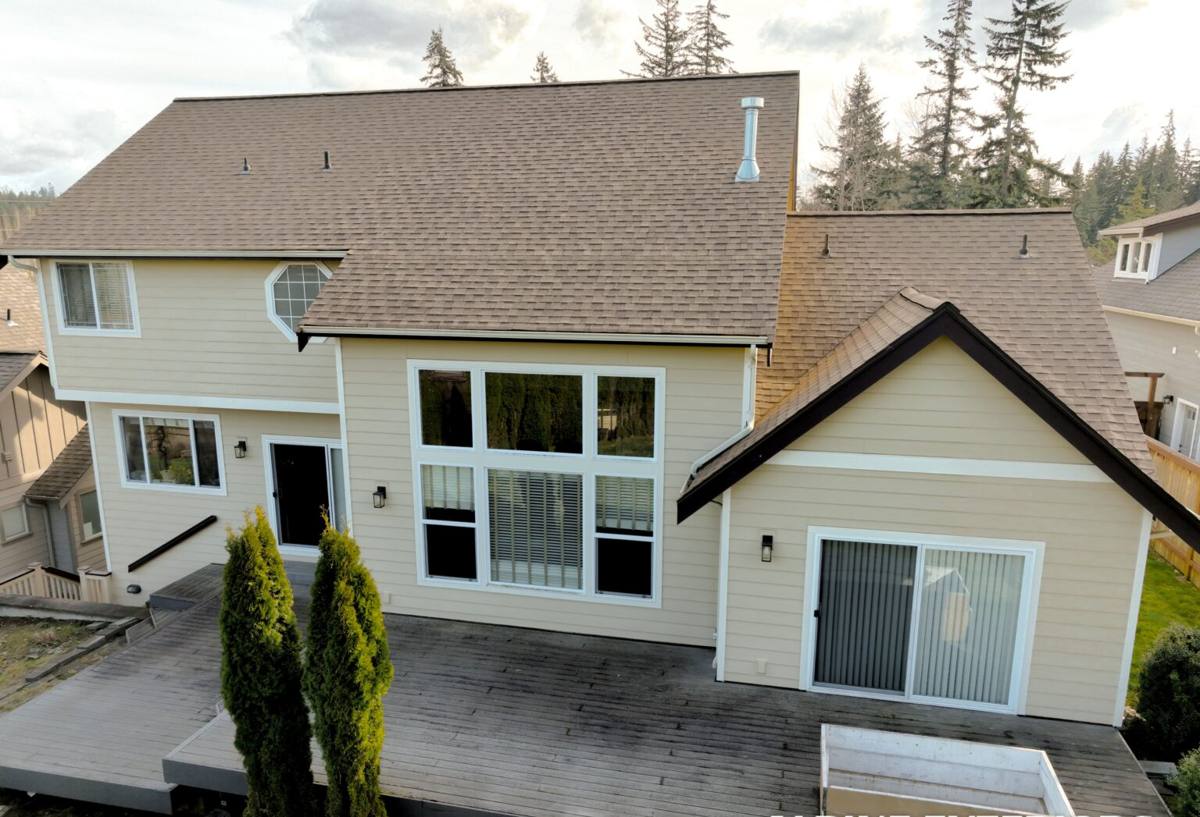
Why We Only Install James Hardie Fiber Cement
We don't install vinyl, LP SmartSide, primed wood, cedar, or other fiber cement brands like Cemplank or Allura. That's a deliberate standard, not a sales pitch, and it comes directly from what we see when we tear old siding off houses in this climate.
Vinyl expands and contracts more than fiber cement, and in a climate with this much sustained moisture, seams and J-channels become long-term entry points for water. Wood-based products, including engineered wood like LP SmartSide, perform well when maintenance stays current, but they depend on an intact paint or sealant film to keep moisture out of the substrate — and in a shaded, damp environment like Columbia, that film gets tested constantly. Once it fails at a cut edge, fastener, or seam, wood-based substrates can swell or soften before anyone notices.
James Hardie fiber cement is cement, sand, and cellulose fiber — it doesn't rot, it isn't a food source for moss and mildew the way wood is, and it holds paint and factory finish far more stably through wet-dry cycles. It's also non-combustible, which matters given how much wildfire smoke and dry-season risk the broader Pacific Northwest has dealt with in recent years. We standardized on Hardie because it's the product we're comfortable standing behind on a house that's going to sit under trees, in shade, and in wet air for the next thirty-plus years.
What This Means for a Columbia Homeowner
When you call us for a quote, you're not getting a menu of siding brands to compare against each other. You're getting one product line, installed correctly, with a crew that has done it enough times in this exact climate to know where water actually gets in. That's a narrower offering than some contractors provide, and it's intentional.
What a Correct Siding Installation Actually Involves
Fiber cement siding fails less often because of the product itself and more often because of how it was installed. The panels themselves are extremely durable; the vulnerable points are always the transitions — where siding meets trim, windows, roof lines, and the ground.
The Parts That Matter Most
- Weather-resistive barrier: A continuous, correctly lapped house wrap or building paper behind the siding, so any water that does get past the cladding has a drainage path instead of a place to pool.
- Flashing at every penetration: Windows, doors, hose bibs, vents, and roof-to-wall transitions all need proper flashing so water sheds outward instead of tracking behind the siding.
- Correct fastener spacing and type: Hardie specifies fastener placement, type, and depth for a reason — under-driven or over-driven nails, or the wrong fastener for the climate zone, create long-term failure points.
- Proper clearance at grade and roofline: Siding installed too close to soil, decking, or roofing traps moisture against the bottom edge of the panel, which is where we most often find damage on older installs.
- Caulked and painted cut edges: Factory ColorPlus finish protects the face of the board, but any field-cut edge needs to be sealed per manufacturer spec, or it becomes the weak point.
Skipping any one of these doesn't usually cause an immediate problem. It shows up three, five, or ten years later as a soft spot, a stain, or a section of siding that has to come off and get redone — often at a higher cost than doing it right the first time.
Our Process for a Columbia Job
- On-site walkthrough: We look at your home's exposure — how much shade it gets, which walls take the most driving rain, current siding condition, and any trim or moisture issues already visible.
- Scope and product selection: We go over the Hardie product line and profile that fits the house (lap, shingle, or panel), and the ColorPlus color or field-paint option that makes sense for the setting.
- Removal and inspection: Old siding comes off and we inspect the sheathing underneath. In a climate this wet, hidden sheathing damage from a prior installation is common enough that we plan for it rather than assume the wall behind is sound.
- Weather barrier and flashing: New house wrap, flashing at every window, door, and penetration, installed to manufacturer and code spec before a single piece of siding goes up.
- Installation to spec: Correct clearances, fastener schedule, and joint treatment throughout — not just on the parts of the house that are easy to see from the road.
- Final walkthrough: We go over the finished job with you and point out anything you should watch for or maintain going forward.
Cost Factors on a Columbia Siding Job
Every house is different, but the variables that actually move the price on a job in this area tend to be consistent. We'll always give you specifics after seeing the house, but here's what typically drives the range:
| Factor | Why It Matters Here |
|---|---|
| Amount of hidden sheathing damage | Common on older homes in shaded, wet-exposure lots; found once old siding is removed |
| House access and terrain | Sloped or wooded Sudden Valley lots can limit staging and scaffolding compared to flat, open sites |
| Trim and window count | More penetrations mean more flashing detail work, which takes time to do correctly |
| Siding profile chosen | Lap, shingle, and panel styles differ in labor and material cost |
| Factory finish vs. field paint | ColorPlus factory finish costs more upfront but holds up longer against this climate's wet-dry cycling |
Signs a Columbia Home Needs New Siding
Because so much of this area's siding damage happens gradually and out of direct view, it's worth knowing what to check for before small problems become structural ones.
- Persistent moss, algae, or dark streaking that returns quickly after cleaning
- Soft or spongy spots when you press on siding, especially near the bottom courses or under windows
- Paint that's bubbling, peeling, or chalking heavily on shaded walls
- Visible gaps, warping, or buckling at seams and corners
- A musty smell near exterior walls inside the home, which can indicate moisture getting past the cladding
- Siding that's original to a home built more than 20-25 years ago, particularly if it's a wood-based product
Why Local Experience in This Area Matters
Sudden Valley's mix of tree cover, hillside lots, and lakeside microclimate doesn't behave like an open subdivision in flatter, drier parts of Whatcom County. A crew that's worked houses in Columbia and the surrounding neighborhoods already knows which walls tend to hold moisture longest, where moss builds up fastest, and which older installations in this area were done without proper flashing or clearance. That's the kind of thing you only learn by doing the work here repeatedly, not from a general contracting checklist.
It also means a shorter, more useful first conversation. Instead of starting from zero, we can typically tell you within the first walkthrough what's driving whatever siding issue brought you to us, because we've seen the same pattern on other homes nearby.
Questions Worth Asking Any Siding Contractor
- Are you a certified or approved installer for the product you're proposing, and can you show it?
- What's your fastening and flashing detail at windows and roof-to-wall transitions?
- Will you inspect and address sheathing condition once old siding is removed, or is that a change order?
- What warranty covers the material, and separately, what warranty covers your labor?
- Can you walk me through why you're recommending this specific product for a shaded, high-moisture lot?
If your Columbia home is due for new siding, or you want a second opinion on moss staining, soft trim, or an aging installation, we're glad to walk the property with you and give you a straight assessment. The estimate is free, there's no pressure, and you'll get a clear answer on what your house actually needs.