 Sudden Valley Siding
 Why Roofs Near Bellingham Wear Differently Than Roofs Inland
A roof twenty miles inland and a roof near Bellingham Bay are not aging the same way, even if they're the same age and the same material. Homes closer to the water pick up salt-laden air that works on exposed fasteners, flashing, and any metal component faster than a dry-climate roof ever sees. Add the driving rain that comes sideways off the water during a fall or winter system, and you get wind-driven moisture finding its way under shingles and around penetrations that would stay dry in a straight-down rain. Then there's the tree cover — a lot of Whatcom County roofs sit under fir and cedar, which means shade, damp debris, and a moss season that can run eight months out of the year if nobody's keeping it in check.
None of that means a Bellingham-area roof needs exotic materials or a different building code. It means the repair has to account for how the roof actually fails here, not how a generic roofing guide says roofs fail in general. That's the difference between a patch that lasts through one more winter and a repair that actually holds.
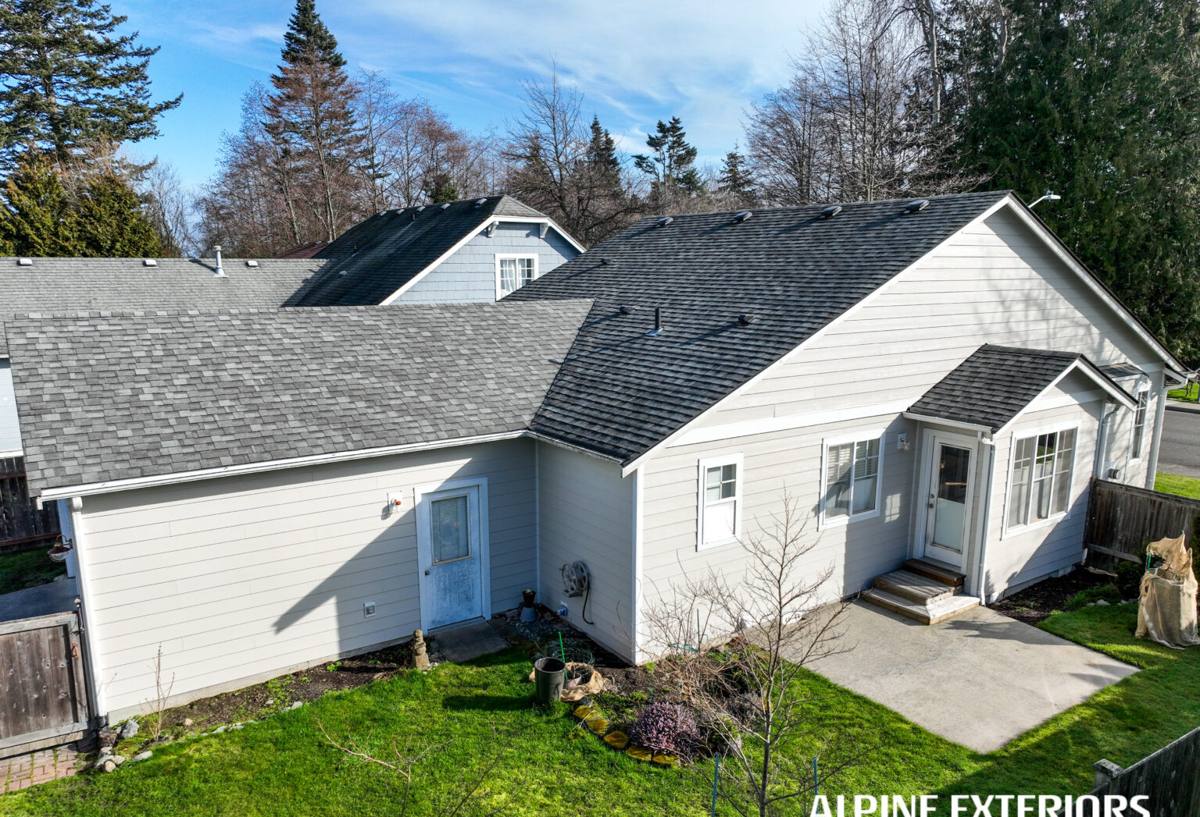
What "Roof Repair" Covers — and What It Doesn't
Repair vs. Replacement
Roof repair means fixing a defined problem — a leak, a damaged section, failed flashing, moss-related deterioration — without tearing off and redoing the whole roof. It's the right call when the roof's underlying structure and majority of the field are still sound and the issue is localized. If a roof is failing broadly (multiple leak points, widespread granule loss, soft decking in more than one area), repair becomes a stopgap, and we'll tell you that plainly instead of billing you for patches that won't hold.
Common Repair Categories We See in This Area
- Flashing repair or replacement — around chimneys, skylights, and wall-to-roof transitions where wind-driven rain finds gaps
- Valley repair — valleys collect the most water and the most moss-holding debris, so they fail before the open field does
- Moss-damaged shingle replacement — moss lifts shingle edges and holds moisture against the surface, accelerating granule loss
- Ridge and hip cap repair — often the first place fasteners back out under wind load
- Localized leak tracing and decking repair where water has already gotten through
- Gutter and drip edge correction where water is being directed back under the roof instead of away from it
Signs a Bellingham-Area Roof Needs Repair Now
Most roof damage here doesn't announce itself with a dramatic leak on day one. It shows up as small signals first, and those are the cheapest ones to act on.
- Dark streaking or a green-black tint on north-facing slopes or under tree cover — early moss and algae growth
- Granules collecting in gutters or at downspout outlets after a hard rain
- Shingle edges that look lifted or curled, especially where moss has taken hold
- Any ceiling stain, even a small one that seems to have stopped growing
- Visible daylight or gaps around chimney or vent flashing from the attic
- Sagging or a soft feel anywhere on the roof deck when walked (we check this, not something to test yourself)
- Rust streaking or corrosion on exposed metal flashing or fasteners
If you're seeing more than one of these, it's worth getting a look before the next big system rolls through — repairs found early are smaller repairs.
What a Correct Repair Actually Involves
A repair done right isn't just matching shingles and nailing them down. It starts with figuring out how water is actually moving, because the spot where a stain shows up inside is often not the spot where water is getting in — it can travel along rafters or underlayment before it drips. That means tracing the path, not just patching the visible damage.
Materials and Method Matter
Underlayment, flashing metal, and fastener choice all affect how long a repair holds in a wet, salt-influenced climate. We use materials suited to sustained moisture exposure — self-adhered underlayment at vulnerable transitions, corrosion-resistant flashing, and fasteners rated for the exposure — rather than whatever's fastest to install. It costs a little more up front and saves a callback in two years.
Moss Removal Is Part of the Repair, Not an Extra
If moss is present, removing it and treating the surface is part of a correct repair — leaving moss in place around a fresh patch just means the new material starts degrading on the same timeline as the old. We remove moss carefully (pressure-washing shingles is a good way to strip granules and shorten roof life, so we don't do that) and apply zinc or copper-based treatment where it makes sense to slow regrowth.
| Situation | Typical Approach | What Drives the Decision |
|---|---|---|
| Single leak, small area, sound decking | Targeted patch repair | Isolated damage, structure intact |
| Failed valley or flashing, rest of roof sound | Section repair/replacement | Localized wear point, common failure area here |
| Moss damage across several slopes | Moss removal + treatment + spot shingle replacement | Surface damage without structural compromise |
| Multiple leak points, soft decking in more than one spot | Larger repair or partial re-roof discussion | Damage has moved past a single fix |
| Roof near or past its material lifespan | Repair as a stopgap, replacement conversation | Age and cumulative wear, not just the current issue |
How We Handle a Repair Call
- Inspection first. We look at the roof, the attic where accessible, and the specific area you're concerned about — not a drive-by estimate.
- Honest diagnosis. We tell you what's actually wrong, what caused it, and whether it's a repair or something bigger. If it's not worth fixing the way you asked, we say so.
- Written scope and price range. You know what's being done and roughly what it costs before work starts.
- The repair itself. Matched materials where possible, correct flashing and underlayment detail, moss addressed if present.
- Cleanup and a final check. Debris cleared, work area checked, and we walk you through what was done.
Why a Crew That Already Works This Area Matters
A roofer who's worked Whatcom County roofs for a while already knows which valley details fail first on the pitches common around here, which flashing tends to corrode faster this close to the water, and how aggressive the moss season really gets under heavy tree cover. That's not a marketing point — it changes what gets checked during an inspection and what gets prioritized in a repair. It also means faster response when weather is the reason you're calling: a crew based locally isn't driving in from two counties over during the same storm that's affecting everyone else's roof too.
We also know that a lot of homes in this area sit close together with shared driveways, tree cover overhanging multiple roofs, and drainage patterns that depend on the property next door as much as your own. A repair plan that ignores that context is a repair plan for a different kind of neighborhood.
What Repairs Typically Cost — and What Changes the Price
We don't publish a price list because roof repair pricing depends heavily on what's actually found, but the honest range for most single-issue repairs in this area runs from a few hundred dollars for a small, accessible patch up to a couple thousand for a larger section repair involving decking replacement or extensive moss remediation. Roofs with steep pitch, difficult access, multiple stories, or hidden decking damage discovered mid-repair will run higher. We'd rather give you a real range after looking at the roof than a number over the phone that doesn't hold up.
After the Repair: Keeping Moss and Moisture From Coming Back
A repair holds longer with a little seasonal attention, especially here. Clearing gutters and valleys of needles and debris before the fall rains start, keeping overhanging branches trimmed back so shingles get some sun and airflow, and doing a visual check after any major windstorm all extend the life of the work we just did. None of that requires getting on the roof yourself — a lot of it can be checked from the ground or handled during a routine maintenance visit.
If you're dealing with a leak, moss buildup, or damaged flashing on a roof in the Bellingham area, we're glad to come take a look. The estimate is free, there's no pressure to move forward, and you'll get a straight answer about whether it's a repair or something more — just fill out the form below.