 Sudden Valley Siding
 Roofing Built for Bellingham's Weather, Not Just Any Weather
Bellingham sits close enough to the water that salt air is a real factor on a roof, and Whatcom County's rain doesn't just fall straight down — driving rain off Bellingham Bay pushes sideways under poorly lapped shingles and flashing. Add a moss season that runs most of the year in the shade of mature evergreens, and you have a roofing environment that punishes shortcuts. A shingle roof that would hold up fine in a dry inland climate can fail early here if it wasn't installed with this specific weather in mind.
This page is about one job, done right, for homes in and around Bellingham: asphalt shingle roofing — new installations and full replacements. We're not going to walk you through every roofing material on the market. We're going to explain what a correct asphalt shingle roof looks like on a Bellingham home, why local conditions change how it should be built, and how we handle the work from estimate to final walkthrough.
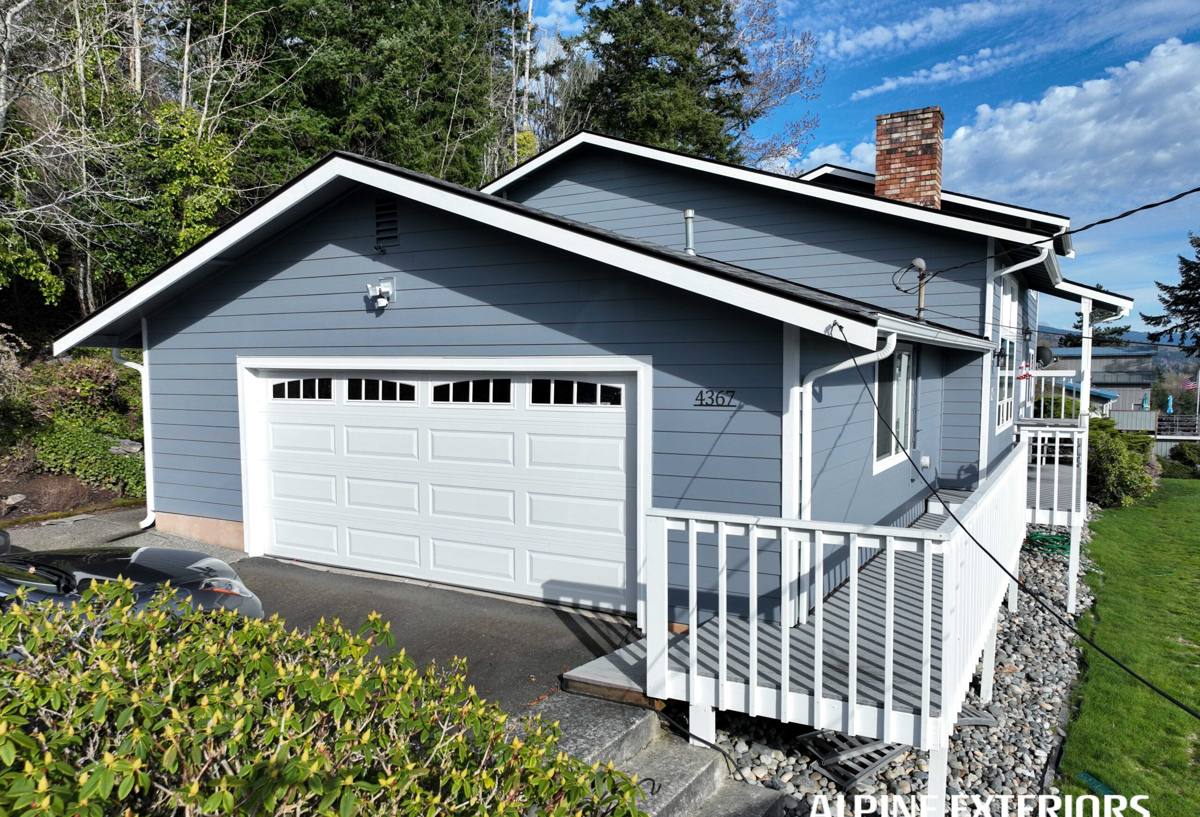
What Bellingham Homes Actually Need From a Shingle Roof
Moisture Management Comes First
In a marine climate like this, the biggest threat to a shingle roof isn't usually wind — it's sustained moisture. Roofs here spend long stretches damp, not just wet during a storm and dry the next day. That means underlayment quality, proper overlap, and ventilation matter more in Bellingham than they would in a drier region. A roof that's technically "up to code" but built with minimum-spec materials will show its age faster here than the same roof would somewhere with a shorter wet season.
Salt Air Accelerates Wear on Metal Components
Asphalt shingles themselves aren't heavily affected by salt air, but the metal parts of a roofing system — flashing, drip edge, nails, vents — are. Standard galvanized fasteners and flashing can corrode faster in a coastal-influenced climate than they would inland. We factor that into what we spec for flashing and fastener material on homes closer to the water.
Moss Isn't Cosmetic — It's Structural Over Time
A little moss on a roof is common around here and not an emergency by itself. Left to spread, though, moss holds moisture against the shingle surface, lifts shingle edges as it grows, and works its way toward fasteners and flashing seams. On heavily shaded lots — common around Sudden Valley and other tree-covered parts of Whatcom County — moss pressure is one of the top reasons we see shingle roofs fail years ahead of their rated lifespan.
What a Correct Asphalt Shingle Installation Involves
A shingle roof is a system, not just a layer of shingles nailed to plywood. Skipping any one part of the system shortens the life of the whole roof, even if the shingles themselves are a good product.
- Tear-off and deck inspection — we remove the old roofing down to the deck (rather than layering over it) so we can check for soft spots, rot, or delamination that a re-cover would hide
- Ice-and-water or synthetic underlayment at eaves, valleys, and other vulnerable spots, sized for our rain volume, not the bare code minimum
- Properly lapped felt or synthetic underlayment across the full deck, shingled correctly so water sheds downhill at every layer
- New flashing at chimneys, walls, skylights, and valleys — reused old flashing is a common shortcut that leads to leaks within a few years
- Balanced attic ventilation (intake and exhaust) so moisture doesn't get trapped under the deck and cause rot or premature shingle failure from underneath
- Correct nailing pattern — shingles nailed high, low, or with too few fasteners fail wind and warranty ratings even if everything else looks fine from the ground
- Starter strip and ridge cap detailing done to manufacturer spec, since these are the first places wind-driven rain finds a way in
Our Process, Start to Finish
1. On-Site Assessment
We look at the current roof, the deck condition where visible, attic ventilation, and how much shade and moss exposure the property has. That last part matters more here than most homeowners expect — a north-facing, tree-shaded section of roof ages differently than a sun-exposed south side on the same house.
2. A Clear, Written Estimate
You get a scope of work and a price before anything is scheduled — what's being torn off, what underlayment and flashing are being used, and what shingle product is being installed. No vague allowances you find out about later.
3. Scheduling Around Bellingham Weather
We plan installation windows around forecasted dry stretches where possible. A shingle roof can be installed in cooler, damp conditions if the crew knows how to manage it, but we don't rush a tear-off into an exposed deck when heavy rain is inbound.
4. Installation and Daily Cleanup
Tear-off, deck repair as needed, underlayment, flashing, shingles, ventilation, and cleanup — including magnetic sweeps for nails and hauling old material off site.
5. Final Walkthrough
We walk the finished roof and the site with you before calling the job done, and go over any warranty paperwork tied to the manufacturer and the installation.
Choosing the Right Shingle for This Climate
Asphalt shingles come in a few performance tiers. The right choice depends on your budget, your roof's exposure to wind and shade, and how long you plan to stay in the home.
| Shingle Type | Typical Lifespan | Wind Rating | Best Fit |
|---|---|---|---|
| 3-Tab (economy) | 15–20 years | Lower | Budget-focused projects, rental properties, shorter hold times |
| Architectural / Dimensional | 25–30 years | Moderate–High | Most Bellingham homes — the standard we recommend for value and durability |
| Premium / Designer | 30+ years | High | Homeowners prioritizing appearance and maximum longevity |
For most homes in this area, we steer people toward architectural shingles rather than 3-tab. The thicker laminate construction handles wind-driven rain and freeze-thaw cycling better, and the extra material gives moss less of a foothold at the tab edges. It's not that 3-tab shingles are a bad product — it's that the added durability of an architectural shingle tends to pay for itself here faster than in drier climates, given how much moisture exposure a Whatcom County roof deals with over a year.
Maintenance That Actually Extends Roof Life Here
A well-installed shingle roof still needs a bit of seasonal attention in this climate. Most of it is simple and doesn't require a professional every time.
- Keep gutters and downspouts clear so water isn't backing up under the shingle edge, especially before the fall rains pick up
- Trim back overhanging branches to cut down on shade and debris — less standing moisture means less moss growth
- Have moss treated or gently removed before it spreads across a full slope, rather than after
- Check attic ventilation isn't blocked by insulation or debris, since trapped moisture damages a roof from underneath
- Have flashing around chimneys, skylights, and valleys checked every few years — these are the first spots to fail, long before the shingle field does
- Walk the roofline visually after major windstorms for lifted or missing shingles rather than waiting for a leak to show up inside
Why a Crew That Already Works Bellingham Roofs Matters
A lot of roofing problems we get called out to fix aren't from bad shingles — they're from installation choices that made sense somewhere drier but don't hold up here. A crew that hasn't dealt with this region's rain volume, salt-influenced air, and moss pressure might use standard-spec underlayment, skip extra flashing detail at valleys, or overlook ventilation balance because it "usually" doesn't matter. Here, it matters.
Working Sudden Valley, Bellingham, and the rest of Whatcom County regularly means we're not guessing at how a roof will hold up through a Pacific Northwest winter — we've seen how the shortcuts fail and we build around them from the start.
Repair or Replace? Signs to Watch For
Not every roofing issue means a full replacement. A few common signs can help you figure out which conversation you need to have with a contractor.
- Isolated leak, roof under 12–15 years old — usually a repair, often flashing-related
- Granules collecting heavily in gutters — a sign shingles are aging past their effective lifespan
- Widespread curling, cracking, or bald spots — typically points to replacement rather than patching
- Heavy, established moss across multiple slopes — worth a professional look even if there's no visible leak yet
- Soft spots or sagging in the deck — a sign moisture has gotten past the shingles and needs more than a surface fix
If you're not sure which category your roof falls into, that's a normal thing to ask us to look at — you don't need to already know the answer before reaching out.
If your Bellingham home is due for a new asphalt shingle roof or you're not sure whether a repair will hold, we're happy to take a look and give you a straight answer. Fill out the form below for a free, no-pressure estimate.