 Sudden Valley Siding
 Siding Installation Built for the Barkley Climate
Homes in the Barkley area near Sudden Valley sit in one of the tougher climates in Whatcom County for exterior siding. The combination of moisture-laden marine air, long stretches of driving rain off the water, and heavy tree cover creates a shaded, damp microclimate where siding rarely gets a chance to fully dry out between storms. Add in a moss season that can run most of the year in the shadier lots, and you have conditions that punish the wrong material and reward correct, climate-specific installation.
This page is about one thing: what it actually takes to install siding correctly on a Barkley-area home, and why the details matter more here than they would in a drier inland town.
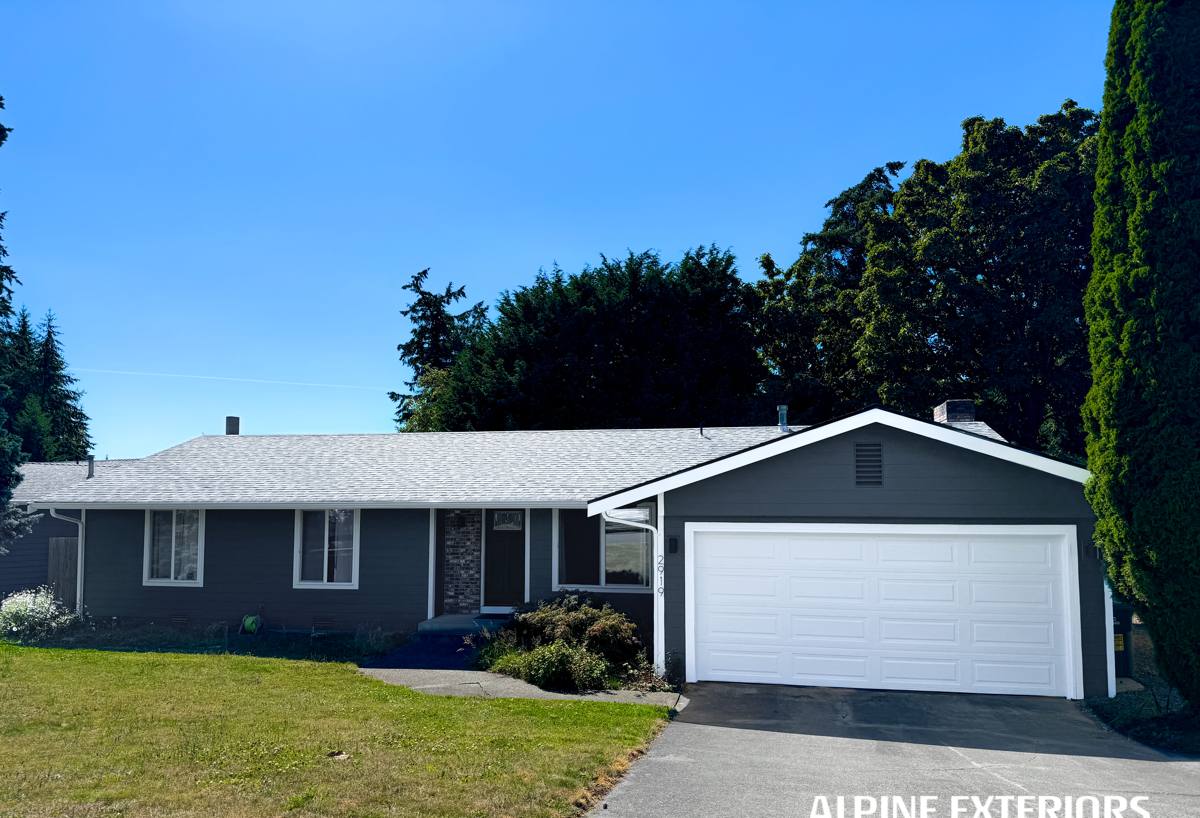
Why Local Homes Need More Than a Standard Install
A siding job that would hold up fine in a dry climate can fail early here if it's installed to a generic standard instead of one built around moisture. Three local factors drive almost every siding failure we see in this area:
- Sustained moisture exposure — driving rain combined with tree shade means siding surfaces and the wall cavity behind them stay damp longer after every storm.
- Salt-laden marine air — coastal Whatcom County air carries enough salt to accelerate corrosion on fasteners, flashing, and trim if the wrong hardware is used.
- Moss and algae growth — shaded, north-facing walls and roof-adjacent siding stay wet enough, long enough, for organic growth to take hold and hold moisture against the surface.
None of these factors are exotic — they're just persistent, year-round, and cumulative. A siding system and installation method that ignores them will look fine for a year or two and then start showing problems that are expensive to trace back to a bad install.
What a Correct Siding Installation Actually Involves
Good siding installation is mostly invisible once the job is done — it's in the layers you don't see. For a Barkley-area home, we treat the following as non-negotiable, not optional upgrades:
Moisture Management Behind the Siding
Every wall gets a continuous weather-resistive barrier, properly lapped and taped at seams, with flashing integrated at every window, door, and horizontal trim transition so water is directed out and down rather than trapped behind the cladding. On a home in this climate, this layer does more long-term work than the siding itself.
Rainscreen and Drainage Gaps
Fiber cement siding needs a way for incidental moisture to drain and for the wall to breathe. We maintain proper clearances at the bottom of the siding, around penetrations, and at butt joints, and use furring where conditions call for a true drainage gap. Skipping this step is one of the most common shortcuts we see on older installs in wet climates — it's also one of the hardest problems to fix after the fact.
Fastening to Manufacturer Specification
Fastener type, spacing, and placement are not a matter of preference — they're engineered by the manufacturer for the specific climate zone and product line. Corrosion-resistant fasteners are mandatory this close to the coast; anything less is a warranty problem waiting to happen.
Sealing and Caulking Done Right
Caulking is a maintenance item, not a substitute for correct flashing. We use it where the manufacturer specifies it and avoid relying on it to do a flashing detail's job — a common failure point on homes that were "fixed" with caulk instead of proper trim work.
Why We Install James Hardie Fiber Cement — and Nothing Else
We standardized on James Hardie fiber cement siding for every home we work on, including in the Barkley area, and we don't install vinyl, LP SmartSide, Cemplank, Allura, or primed wood siding. That's a deliberate professional standard, not a sales pitch:
- Non-combustible — fiber cement doesn't feed a fire the way wood-based or vinyl products can, which matters on wooded lots with limited emergency access.
- Engineered for this climate — Hardie's HZ10 product line is formulated for the wet, moderate Pacific Northwest climate zone specifically, unlike general-purpose siding products.
- Factory-applied ColorPlus finish — baked-on, not field-painted, which holds up far better against sustained damp and UV exposure than site-applied paint.
- Dimensionally stable — fiber cement doesn't expand, contract, or absorb water the way wood-based composite products do, which matters when a wall stays damp for days at a time.
- A real, transferable warranty — backed by the manufacturer, not just the installer, and it stays with the house if it sells.
Every one of those points matters more in a shaded, high-moisture setting than it would somewhere drier. We'd rather turn down a job than install a product we don't think will hold up on a Barkley-area home for the long haul.
Our Installation Process for Barkley Homes
- On-site assessment — we look at existing siding condition, sheathing and moisture damage, tree cover and shade patterns, and wind/rain exposure specific to the lot.
- Tear-off and substrate inspection — old siding comes off and we inspect the sheathing underneath; any soft or water-damaged sections get repaired before anything new goes on.
- Weather barrier and flashing installation — the drainage plane and flashing details go in first, and this is where most of the long-term performance of the job is decided.
- Hardie panel or plank installation — installed to manufacturer fastening specs, with correct clearances and joint treatment for this climate zone.
- Trim, caulking, and touch-up — factory-finished color matched trim and touch-up paint, applied only where the manufacturer calls for it.
- Final walkthrough and warranty registration — we document the install and register the manufacturer warranty so it's on file if you ever need it.
What Drives the Cost of a Siding Installation
Every home is different, but the same handful of factors determine most of the cost on a Barkley-area project:
| Cost Factor | Why It Matters |
|---|---|
| Home size and wall area | More square footage means more material and labor hours, the biggest single driver of total cost. |
| Existing siding removal | Tear-off, disposal, and any sheathing repair add time before new siding can go on. |
| Siding profile and trim complexity | Lap siding, panel systems, and detailed trim packages each take different amounts of labor. |
| Color and finish selection | Factory ColorPlus finishes vs. field-applied paint affect both cost and long-term maintenance. |
| Site access and lot conditions | Steep, wooded, or tight-access lots common around Sudden Valley can add setup and staging time. |
| Moisture or structural repairs found | Any rot or sheathing damage uncovered during tear-off is addressed before installation continues. |
We give straight, itemized estimates so you know what you're paying for and why — no vague lump-sum numbers.
Maintaining Siding in a High-Moisture, Moss-Prone Climate
Correctly installed Hardie siding is low-maintenance, but "low" isn't "none" in this climate. A short annual routine keeps it performing the way it's designed to:
- Rinse siding annually to remove dirt, pollen, and early moss growth before it takes hold, especially on shaded or north-facing walls.
- Keep gutters and downspouts clear so water is directed away from the wall line instead of running down the siding face.
- Trim back tree limbs and vegetation that keep siding sections shaded and slow to dry after rain.
- Inspect caulking at trim and penetrations once a year and have any cracked or failed sections redone.
- Address any moss or algae staining promptly rather than letting it establish — it's far easier to remove early.
- Have a professional check flashing and clearances if you notice staining, bubbling paint, or soft spots anywhere on the exterior.
Signs Your Barkley-Area Home May Need New Siding
Because moisture problems in this climate tend to develop behind the siding before they're visible on the surface, it pays to know the early warning signs:
- Persistent moss or algae staining that comes back shortly after cleaning
- Soft, spongy sections when pressed, which usually indicates trapped moisture behind the siding
- Visible cracking, warping, or separation at seams and corners
- Paint that's peeling or bubbling faster than it should on a properly finished product
- Rising heating bills that suggest the wall assembly is no longer performing as insulation
- Visible gaps or damage around window and door trim
Any one of these is worth a professional look before it turns into a sheathing or framing repair.
Why Hiring a Crew That Already Works in Barkley Matters
Whatcom County's building requirements and inspection process are the same countywide, but the practical details of a job change block by block. A crew that already works the Barkley area around Sudden Valley knows the tree cover and shade patterns that drive moss growth, the wind and rain exposure on lake-adjacent and wooded lots, and the site-access realities of narrow driveways and sloped yards common to the area. Many homes here are also part of planned communities with design and color review requirements, so it helps to work with a contractor who's used to navigating that process instead of learning it for the first time on your job.
That local familiarity shows up in small decisions — where extra flashing is worth the effort, which walls need a closer look at drainage, how to stage material and equipment on a tight lot — that add up to a siding job built for the specific conditions of your home, not a generic install.
Get a Straight Answer on Your Barkley Home's Siding
If you're seeing early moss staining, aging siding, or you're just planning ahead, we're happy to take a look and give you an honest assessment — no pressure, no upsell. Use the form below to request a free estimate for your Barkley-area home.