 Sudden Valley Siding
 Why Siding Choice Matters More in Barkley Than in Drier Parts of the Country
Homes around Barkley and Sudden Valley sit in one of the wetter, greener corners of Whatcom County. That's part of why people live here — but it's hard on exterior building materials. Between the marine air moving in off the Sound, months of driving rain, and shaded, tree-lined lots that stay damp long after a storm passes, siding here works harder than siding almost anywhere inland. A product that performs fine in a dry climate can fail early once it's asked to shed water, resist salt-laden moisture, and hold up under moss and algae pressure year after year.
This page is specifically about installing James Hardie fiber cement siding on homes in the Barkley area. It's not a general siding overview — it's what this climate actually demands, what a correct installation looks like, and how we approach the job on homes in this part of the county.
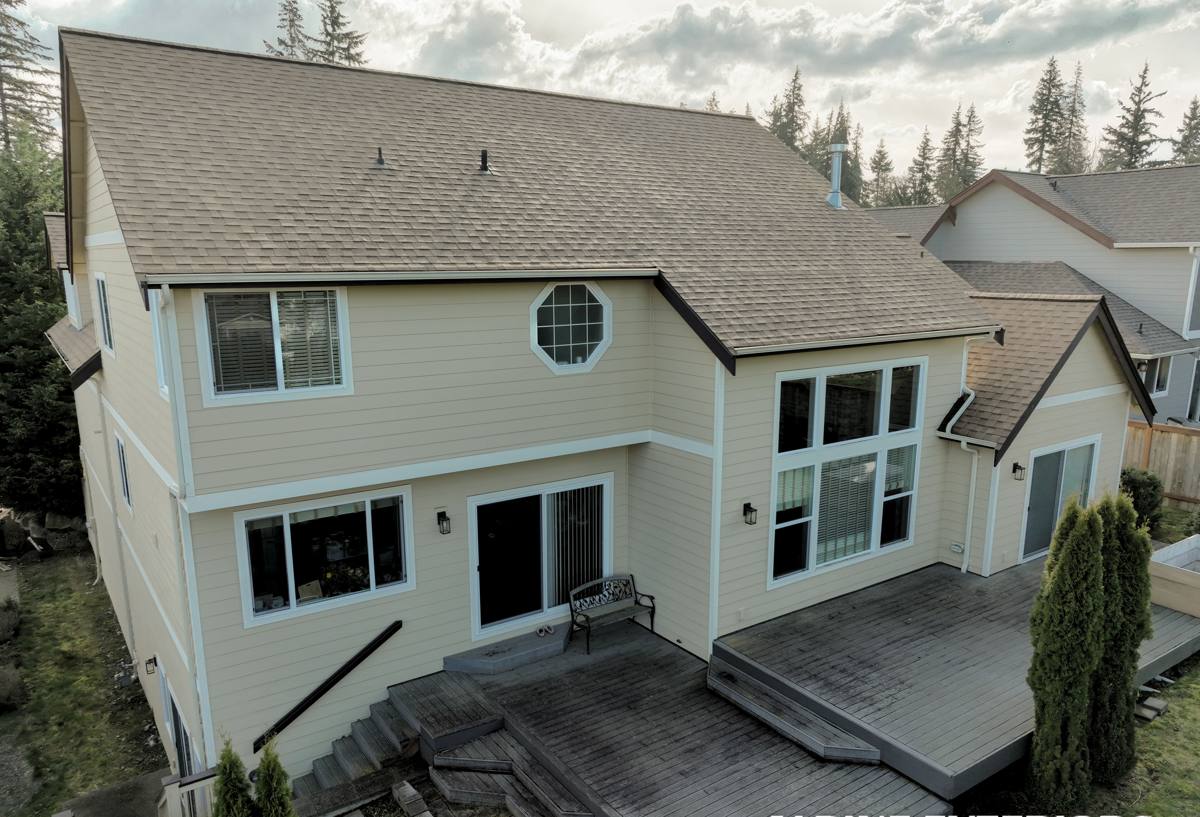
What This Climate Does to Exterior Walls
Salt Air
Proximity to salt water accelerates corrosion on fasteners, flashing, and any metal trim components. It also breaks down some paint and coating systems faster than they'd wear in a dry inland town. Siding materials and finishes that aren't rated for coastal-adjacent exposure tend to chalk, fade, or lose adhesion sooner here than the manufacturer's general warranty language might suggest.
Driving Rain
Whatcom County doesn't just get rain — it gets wind-driven rain that hits walls at an angle, not straight down. That matters enormously for siding, because it means water is being pushed up and under laps, into seams, and behind trim, not just running down the face of the wall. A siding system that only manages vertical water flow will let moisture in here.
Moss and Algae Season
Between the shade cover common on wooded lots and the number of damp, low-sun months each year, moss and algae get a long runway to establish themselves on any surface that stays wet and doesn't fully dry between rains. Wood-based sidings and some composite products give moss something to root into over time. Fiber cement doesn't feed organic growth the way wood does, but it still needs a finish and installation detail that keeps water from sitting against the surface.
Why We Standardized on James Hardie for Homes Like These
We install James Hardie fiber cement siding exclusively — we don't offer vinyl, LP SmartSide, primed spruce, cedar, or other fiber cement brands. That's a deliberate call, not a sales preference, and it matters most in climates like this one.
- James Hardie's HZ5 product line is engineered specifically for climates with freeze-thaw cycling and sustained moisture exposure — the Pacific Northwest falls squarely in that category.
- Fiber cement is non-combustible and dimensionally stable; it doesn't swell, cup, or split the way wood-based sidings can when they take on repeated moisture.
- ColorPlus factory-applied finish is baked on under controlled conditions and backed by a separate finish warranty, rather than relying on field-applied paint that has to cure correctly in a wet climate to perform.
- It carries a long, transferable product warranty that matters to future buyers if the home ever sells.
We're not going to tell you every other siding product is worthless — some have real strengths. But given what this specific area does to exterior materials over 15, 20, 30 years, we don't think it's honest to install something on a Barkley or Sudden Valley home that we wouldn't stand behind for that long.
What a Correct James Hardie Installation Actually Involves
The siding board itself is only part of the story. Most siding failures we get called out to inspect trace back to installation shortcuts, not the material. In a climate that drives water sideways into walls, these details aren't optional extras — they're what separates a system that lasts decades from one that fails in five years.
Drainage Plane and Rain Screen Gap
Behind the siding, there needs to be a proper weather-resistive barrier and, ideally, a small gap or drainage mat that lets any moisture that does get behind the boards drain and dry out instead of sitting against the sheathing. On a house exposed to driving rain, this layer is doing a lot of the real work.
Flashing at Every Penetration
Windows, doors, hose bibs, light fixtures, deck ledgers — every penetration through the siding plane is a place water can find its way in if it isn't flashed correctly. This is detail work, and it's where rushed installs go wrong most often.
Clearances
James Hardie specifies minimum clearances from the ground, roof lines, decks, and patios for a reason — those gaps let the bottom edge of the siding dry out between rain events instead of wicking moisture continuously. Skipping these clearances to save a few inches of board is one of the most common corner-cuts we see on older installs in this area.
Fastening
Fiber cement needs to be fastened per the manufacturer's spec — correct fastener type, spacing, and penetration into solid framing, not just into sheathing. Under-fastened or improperly spaced boards can work loose or crack over time, especially with the wind exposure this area gets.
Caulking and Joints
Butt joints, corners, and trim intersections need the right sealant, applied correctly, with room for the material to move seasonally. Over-caulking or using the wrong product traps moisture instead of shedding it.
Our Process on Barkley-Area Homes
- On-site assessment. We walk the exterior, check the existing siding and sheathing condition, look at drainage patterns around the foundation, and note anything — tree cover, north-facing walls, low ground clearance — that affects how the new siding needs to be detailed.
- Tear-off and sheathing check. Once the old siding is off, we inspect the sheathing underneath for any moisture damage before anything new goes on. Covering a rot problem with new siding just hides it — we address it first.
- Weather barrier and drainage layer. We install the water-resistive barrier and drainage gap correctly before a single piece of Hardie board goes up.
- Installation to spec. Boards, fasteners, flashing, and clearances go in per James Hardie's published installation requirements — not shortcuts that happen to look fine on day one.
- Final walk-through. We review the finished job with the homeowner and point out anything they should know for long-term care.
Why It Matters to Hire a Crew That Already Works This Area
Siding installation isn't identical everywhere. A crew that mostly works in a dry, low-wind climate can do a technically fine install and still miss details that matter specifically here — like which walls take the worst of the driving rain, how much shade a lot gets and what that means for moss pressure, or how close is really safe for ground clearance given how wet the soil stays. A crew that regularly works Barkley, Sudden Valley, and the surrounding parts of Whatcom County has already seen how these homes age under this climate and installs accordingly, not by the book alone.
It's also worth knowing that many communities in this part of the county have design guidelines or approval processes for exterior changes. A local crew is used to working within those requirements as a normal part of the job, rather than treating it as a surprise mid-project.
What Drives the Cost of a Hardie Siding Job
| Factor | Why It Matters |
|---|---|
| Home size and wall complexity | More corners, gables, and dormers mean more cutting, trim, and labor time. |
| Existing siding condition | Tear-off and sheathing repair add time if there's hidden moisture damage from the old material. |
| Siding profile and trim package | Lap width, shake-style accents, and trim detail level all affect material and labor cost. |
| Color and finish | ColorPlus factory finishes cost more upfront than field-primed boards but remove the field-painting risk this climate creates. |
| Site access and lot conditions | Tree cover, slope, and tight lot access can add setup and staging time. |
We give real, project-specific numbers on-site rather than ballpark figures over the phone — too much of the cost depends on what we find once we're looking at the actual walls.
Questions Worth Asking Any Siding Contractor Before You Hire
- Are you installing to the manufacturer's published specifications, including clearances and fastening pattern — and will you show me those specs?
- What weather-resistive barrier and drainage detail are you using behind the siding?
- How will you handle flashing around my windows, doors, and any deck or porch attachments?
- What does the warranty actually cover — material, finish, and labor — and is any part of it transferable if I sell the home?
- Have you worked on homes in this specific area before, and do you know how the local weather patterns affect the install?
A contractor who answers these clearly and specifically, rather than vaguely, is a good early signal.
Signs Your Current Siding Is Already Losing the Fight
If you're not sure whether it's time to replace, a few signs are worth walking your exterior to check for: soft or spongy spots when you press on the siding, visible moss or algae that keeps coming back after cleaning, paint that's peeling or bubbling rather than just fading, gaps opening up at seams or corners, and any staining on interior walls near exterior corners. None of these are emergencies by themselves, but together they usually mean the current siding has stopped doing its job of keeping water out.
If you're in Barkley, Sudden Valley, or nearby and want a straight answer on whether your siding needs attention, we're happy to take a look. A free, no-pressure estimate gets you a clear picture of the condition of your home's exterior and what correct James Hardie installation would look like for your specific house — use the form below to get started.