 Sudden Valley Siding
 Why Barkley's Climate Is Hard on Siding
Barkley sits in one of the wetter, greener corners of Whatcom County, and that's exactly why siding choices matter more here than in drier parts of the state. Homes in this area deal with three things at once, year after year: salt-laden marine air drifting in off the Sound, driving rain that comes in sideways during fall and winter storms, and a moss season that can run eight or nine months out of the year thanks to tree cover and shade. Most siding materials are only built to handle one or two of those stressors well. Fiber cement is one of the few that handles all three without a lot of babysitting.
Salt air
Salt-laden air corrodes fasteners, pits factory finishes, and accelerates the breakdown of anything with exposed wood grain or a paint film that isn't built to take it. It's a slow process — you don't see the damage in year one — but over a decade it's the difference between siding that still looks tight and siding that's chalking, cracking, and pulling away from the wall.
Driving rain
Whatcom County doesn't just get rain, it gets wind-driven rain, and wind-driven rain finds every gap in a siding system that wasn't installed with real attention to flashing and clearances. Water that gets behind the siding and can't get back out is what causes rot, mold, and sheathing damage — problems that show up years later and cost far more to fix than they would have cost to prevent at install time.
Moss season
Shaded lots and consistent moisture mean moss and algae get a long runway to establish themselves on north-facing walls, under eaves, and anywhere airflow is limited. Organic materials — real wood, wood composites — give moss something to root into over time. A dense, factory-finished fiber cement surface doesn't give it the same foothold, which matters a lot on a property that stays damp most of the year.
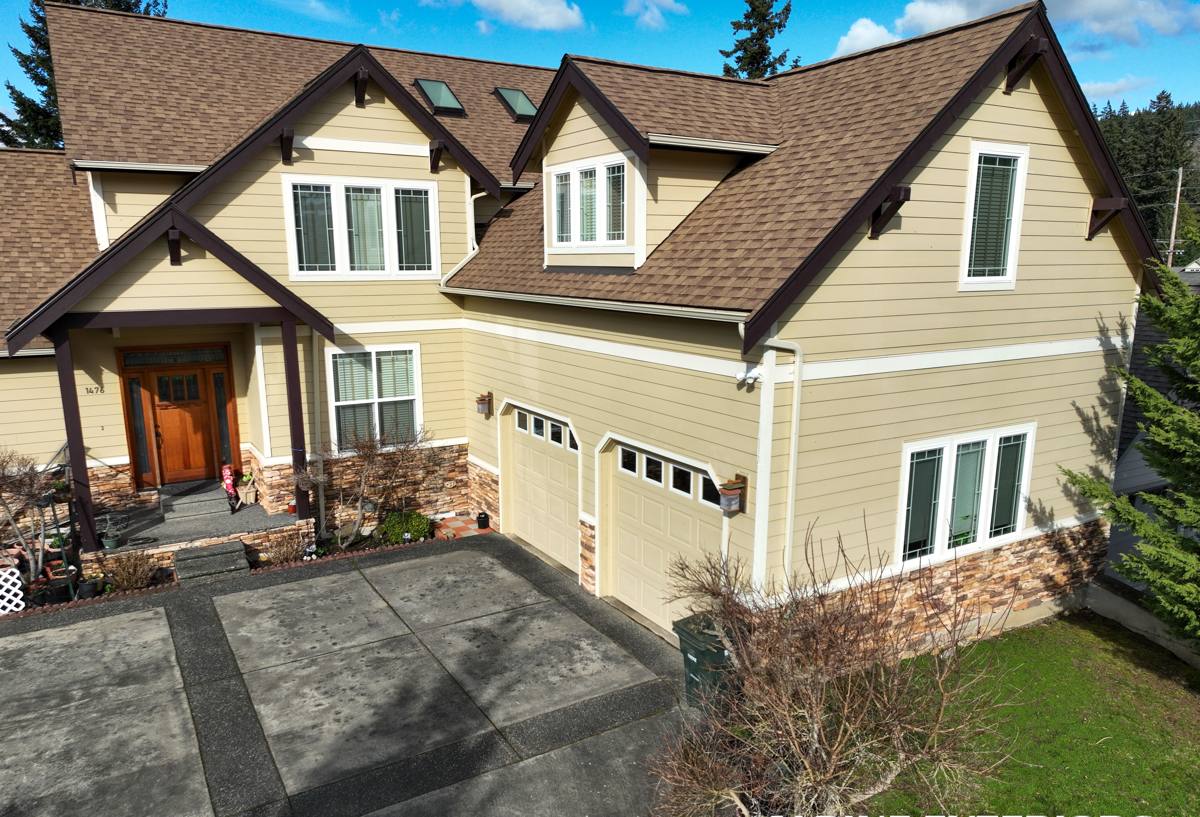
Why Fiber Cement Is the Right Material for This Area
Fiber cement is a cement, sand, and cellulose fiber composite, and it behaves nothing like wood or vinyl once it's on a wall. It doesn't absorb water the way wood-based products do, it doesn't warp or expand and contract the way vinyl does in temperature swings, and it's non-combustible — a real consideration anywhere in Washington now that wildfire smoke and ember exposure are a bigger part of the conversation than they used to be. For a neighborhood like Barkley, where salt exposure, rain volume, and moss pressure are all working against a home's exterior at the same time, fiber cement gives you a material that's engineered to shrug off all three rather than compromise on one to handle another.
What We Install — and Why We Don't Install Anything Else
We install James Hardie fiber cement siding exclusively. We don't offer vinyl, LP SmartSide, primed wood, cedar, or other fiber cement brands like Allura or Cemplank, and that's a deliberate standard, not a limitation on what we're capable of installing.
Vinyl is affordable and low-maintenance in the short term, but it's a plastic product — it softens and warps in direct heat, gets brittle in cold snaps, and its color is baked into a relatively thin material that fades unevenly over the years. LP SmartSide and other engineered-wood products perform reasonably well when perfectly maintained, but they're wood-based at the core, which means the same moisture sensitivity that makes cedar a maintenance commitment. Primed spruce and cedar are honest, attractive materials, but they ask a lot of a homeowner in a climate like this one — regular repainting, caulk inspections, and vigilance about any spot where the finish has worn through.
James Hardie's ColorPlus factory-applied finish, its climate-engineered HZ product lines, and its long transferable warranty are why we standardized on it. It's not the cheapest material on the market, but it's the one we're willing to put our name behind on a house that has to stand up to Whatcom County weather for the next several decades.
What a Correct Fiber Cement Installation Actually Involves
Fiber cement is only as good as the installation behind it. The material itself is durable, but a rushed or shortcut install can undo most of that durability within a few years. There's a right way to do this, and it isn't complicated — it's just easy to skip steps that don't show up in a final walkthrough.
Flashing and moisture management
Every window, door, and horizontal trim piece needs proper flashing so water is directed out and away from the wall assembly, not trapped behind it. This is the single most common place corners get cut on a siding job, and it's the one that causes the most expensive damage later — because you don't see a flashing failure, you see the rot it caused two or three years afterward.
Fastening and clearances
Hardie panels and lap siding have specific fastening patterns and minimum clearances from grade, roof lines, and decks that are spelled out in the manufacturer's installation requirements. Those clearances exist so water can drain and the material can't wick up moisture from the ground or a roof surface. Ignoring them is one of the fastest ways to void a warranty and shorten the life of an otherwise excellent product.
Caulking and the ColorPlus finish
ColorPlus finish is factory-baked, which is part of why it holds color and resists fading better than field-applied paint. But joints, cuts, and touch-ups still need to be handled correctly with compatible caulk and touch-up products so the factory finish isn't compromised at the seams — those seams are exactly where salt air and driving rain go to work first.
Our Process for Barkley Homes
- Walkthrough and assessment — we look at your current siding, check for existing moisture or rot damage, and note anything the local climate has already been doing to the house.
- Written estimate — a clear scope of work and cost, no surprise add-ons buried in fine print.
- Prep and tear-off — removing old siding, inspecting and repairing sheathing where needed, and correcting any flashing or moisture issues found underneath before anything new goes up.
- Weather barrier and flashing installation — the part of the job that determines whether the new siding actually keeps water out for the next 30-plus years.
- Hardie panel or lap installation — installed to manufacturer clearance and fastening specs, not shortcuts.
- Final detailing — caulking, touch-up, and trim work finished to a standard that matches the factory finish.
- Walkthrough and cleanup — we go over the finished work with you and leave the property clean.
What Fiber Cement Siding Costs in Barkley
Cost depends on the size and shape of the home, how much prep work is needed underneath the old siding, and which Hardie product line and profile you choose. The table below covers the factors that move the number most, without pretending to give you a fixed price — every house is different, especially once we see what's actually under the existing siding.
| Cost Factor | Why It Matters |
|---|---|
| Home size and wall complexity | More square footage, more corners, dormers, and roof lines mean more cutting, flashing, and labor time. |
| Condition of the sheathing underneath | Rot or moisture damage found during tear-off adds repair work before new siding can go on — common on older homes in wet climates. |
| Product line and profile | Lap siding, panel siding, and shingle-style profiles carry different material costs, as do different HZ climate zone formulations. |
| Trim and detail work | Homes with more windows, trim boards, and architectural detail take more labor to flash and finish correctly. |
| Access and site conditions | Sloped lots, mature landscaping, and limited equipment access can add time on properties throughout Whatcom County's wooded neighborhoods. |
Why Hire a Crew That Already Works in Barkley
A crew that's worked around Sudden Valley and Barkley already knows what this specific stretch of Whatcom County does to an exterior — where moss builds up fastest, which wall orientations catch the worst of the driving rain, and how much extra attention salt-exposed fasteners and trim need compared to a home twenty miles inland. That local knowledge shows up in small decisions during the job: where to pay extra attention to flashing, which clearances to be strict about, and how to sequence the work around this area's weather windows. It also means we're not learning the neighborhood's quirks on your project — we're applying what we already know.
Maintaining Your New Siding
Fiber cement is low-maintenance, not no-maintenance. A little attention once or twice a year keeps it performing the way it's designed to in this climate.
- Rinse siding gently once or twice a year to keep salt residue and grime from building up, especially on walls facing prevailing wind and rain.
- Keep gutters clear so water isn't overflowing and running down the siding face.
- Trim back vegetation and tree limbs that keep walls shaded and damp, which is what gives moss its foothold.
- Check caulking at joints, trim, and penetrations every year or two and have any gaps resealed before water gets behind the siding.
- Address any paint chips or damage at cuts promptly with compatible touch-up product so the factory finish stays sealed.
- Have a professional take a look every few years, especially after major storms, to catch flashing or fastener issues early.
Get a Free, No-Pressure Estimate
If your Barkley home's siding is showing its age — chalking, gapping, soft spots, or moss that won't quit — we're happy to take a look and give you an honest read on what's going on and what it would take to fix it right. Reach out for a free estimate; there's no pressure and no obligation, just a straight answer about your options.