 Sudden Valley Siding
 Deck Repair Built for Barkley's Conditions
Homes in the Barkley area of Sudden Valley sit close to Lake Whatcom, surrounded by mature evergreens, and squarely in the path of the marine air that moves through this part of Whatcom County most of the year. That combination is hard on decks. Shade from the trees keeps surfaces damp longer after rain, moss and algae take hold fast, and the freeze-thaw cycles we get in the colder months work their way into any joint or fastener that isn't sealed properly. We've repaired enough decks in this neighborhood to know the failure points aren't random — they show up in the same spots, for the same reasons, on house after house.
This page covers what deck repair actually looks like when it's done right for a Barkley property: what typically fails first, how a proper repair is diagnosed and carried out, and what to expect if you call us for an estimate.
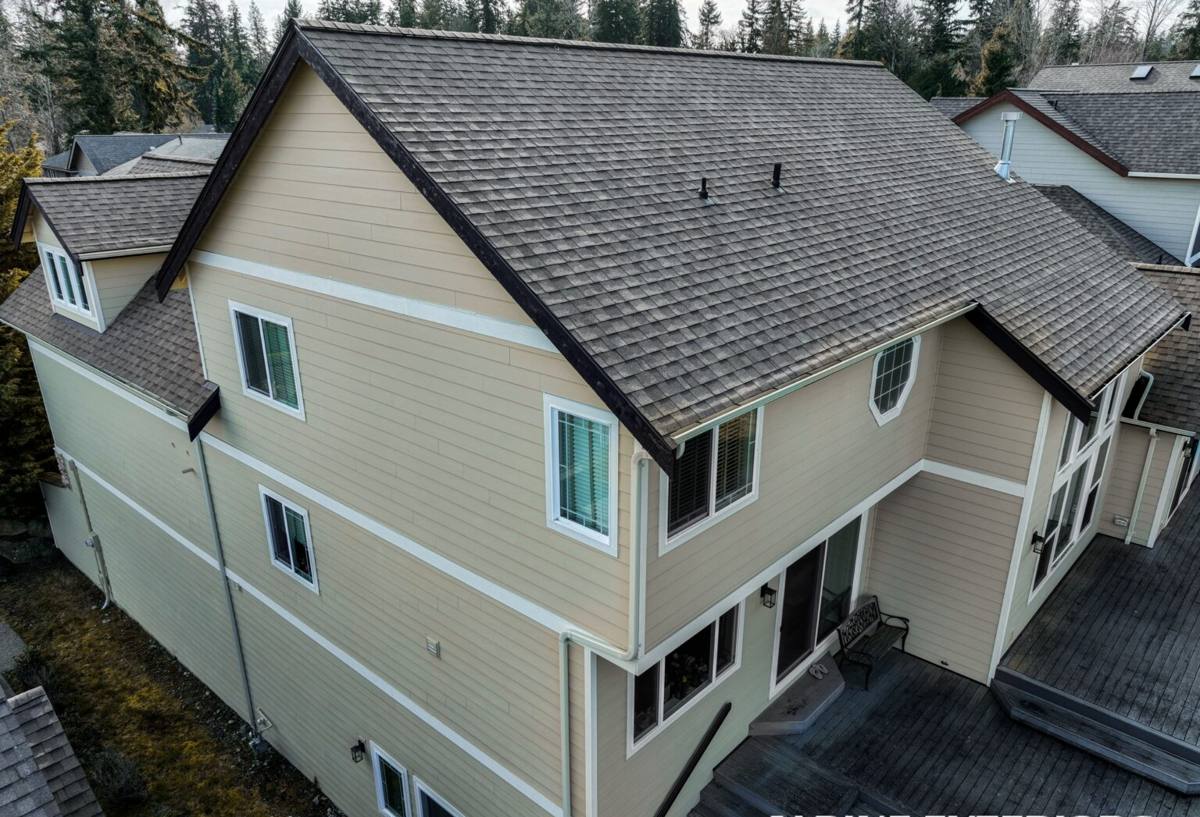
Why Decks Fail Faster Here Than in Drier Climates
Whatcom County doesn't get extreme weather often, but it gets a lot of moderate, sustained moisture — and that's actually harder on wood and fasteners than the occasional hard freeze or heat wave. A deck near Lake Whatcom deals with:
- Long moss season. From fall through spring, shaded decking stays damp enough for moss and algae to establish. Once moss holds moisture against the board surface, the wood underneath starts breaking down even if the top looks fine.
- Driving rain and wind-blown moisture. Rain doesn't just fall straight down here — wind pushes it sideways into ledger boards, under railings, and into any gap where flashing has failed.
- Salt and mineral-laden air. Proximity to the water and general Pacific Northwest air quality accelerates corrosion on fasteners, brackets, and any exposed metal hardware.
- Freeze-thaw cycling. Even mild freezes expand trapped moisture in wood fibers and concrete footings, widening cracks that started as something minor.
None of this means decks in Barkley are doomed — it means they need materials and details chosen for these specific conditions, not whatever a builder used because it was on the truck.
The Most Common Failure Points We See
On repair calls in this area, the damage almost always shows up in a short list of predictable places:
- Ledger board attachment to the house — especially where flashing was skipped or installed incorrectly
- Post bases and footings, where standing water and soil contact rot the post from the bottom up
- Joist hangers and fasteners that have rusted or corroded to the point of losing holding strength
- Railing posts, which take structural stress every time someone leans on them and often loosen at the base first
- Board edges and end grain, which absorb water faster than the flat face and rot from the outside in
- Stair stringers, which sit low to the ground and catch splashback and standing water
What a Correct Deck Repair Actually Involves
A lot of "deck repair" in this trade is really just cosmetic patching — replacing a visibly bad board and calling it done. That approach almost always leads to a repeat call within a year or two, because the board that failed was usually a symptom of moisture getting in somewhere else, not the root cause. Our process is built around finding that root cause first.
1. Structural Inspection
Before we touch anything, we check the framing, not just the decking surface. That means probing joists, ledger connections, post bases, and stair stringers for soft spots, checking fastener condition, and looking for water paths — places where rain is getting behind or under the structure instead of running off it.
2. Moisture and Rot Assessment
Surface rot and structural rot look different once you know what to check. We identify how far rot has spread through a board or post — sometimes a section looks bad but is still structurally sound, and sometimes a board that looks fine on top is compromised underneath. This determines whether we're replacing a board, a section of framing, or doing a full rebuild of a portion of the deck.
3. Correcting the Cause, Not Just the Symptom
If a ledger board is rotting because flashing was never installed correctly, replacing the ledger without fixing the flashing just resets the clock on the same failure. Proper repair means addressing drainage, flashing, ventilation under the deck, and grading around posts and footings — whatever let water in to begin with.
4. Rebuilding to Match Local Conditions
Repaired sections get treated, fastened, and detailed to handle this specific climate — stainless or coated fasteners resistant to the corrosion that marine air causes, proper gapping between boards for drainage and airflow, and flashing details that account for driving rain rather than just vertical rainfall.
Repair vs. Replacement: How We Make the Call
Not every deck problem needs a full rebuild, and not every deck is worth patching. Here's generally how the decision breaks down:
| Condition | Typical Approach | Why |
|---|---|---|
| Isolated board rot, framing sound | Board replacement | Localized damage with no structural compromise underneath |
| Rotted ledger board or flashing failure | Ledger repair + reflashing | Root cause of ongoing moisture intrusion, must be corrected properly |
| Multiple rotted joists or post bases | Partial structural rebuild | Framing failure affects safety and load capacity, not just appearance |
| Loose or wobbly railings | Post and hardware repair | Often a fastener or post-base issue, not a full railing replacement |
| Widespread rot across deck age 20+ years | Full rebuild | Patching an aging deck piecemeal often costs more over time than rebuilding once |
We'll always tell you honestly which category your deck falls into. If a repair will genuinely hold up, we recommend the repair — a full rebuild isn't the right answer just because it's more work for us.
Materials That Hold Up in This Environment
Material choice matters more here than in drier parts of the state. Pressure-treated lumber is common and cost-effective, but it still needs proper sealing and maintenance to perform well under Whatcom County's rain and moss exposure. Composite decking resists rot but isn't immune to problems — moisture can still cause issues at fastener points, board ends, and substructure framing if those details aren't handled correctly. Cedar looks good and resists rot naturally to a degree, but it's softer and needs more attentive maintenance in a shaded, damp setting like much of Barkley.
For hardware, we lean toward stainless steel or heavy hot-dip galvanized fasteners and brackets rather than standard coated hardware, because standard coatings break down faster in this air. It costs a bit more upfront and pays for itself by not needing replacement in five years.
Maintenance That Actually Extends Deck Life Here
A repaired deck still needs upkeep suited to the local climate. A short, realistic maintenance checklist for a Barkley-area deck:
- Clear moss and debris from board surfaces and gaps at least twice a year — more often in shaded areas
- Check for standing water after storms; water that doesn't drain within a day indicates a slope or gap problem
- Inspect railing posts annually for movement at the base
- Reseal or restain wood decking on the manufacturer's recommended schedule, not just when it looks faded
- Look under the deck once a year for signs of moisture, rot, or pest activity at the framing and post bases
- Keep gutters and downspouts near the deck clear so runoff isn't dumping directly onto it
Why It Matters That We Already Work in Barkley
A crew that's repaired decks throughout Sudden Valley and the surrounding Lake Whatcom area already knows which failure patterns to expect on a given lot — whether a property sits in heavier shade, catches more wind off the lake, or has drainage quirks common to the area's terrain. That local familiarity means less time spent diagnosing and more time spent fixing the actual problem correctly the first time. We're not guessing at how this climate behaves; we see its effects on decks in this neighborhood regularly.
What to Expect When You Call Us
We start with an honest, no-pressure assessment of your deck's condition. We'll walk the structure, check the framing where we can access it, and give you a straight answer on whether you're looking at a targeted repair or something more involved. You'll get a clear explanation of what failed, why it failed, and what it will take to fix it properly — no upselling into a full rebuild you don't need, and no underselling a structural issue to win the job cheap.
If you're noticing soft spots, loose railings, visible rot, or persistent moss buildup on your deck, it's worth having it looked at before a cosmetic issue becomes a structural one. Reach out for a free, no-pressure estimate using the form below, and we'll come take an honest look at what your deck actually needs.