 Sudden Valley Siding
 Building a Deck That Actually Holds Up in Barkley
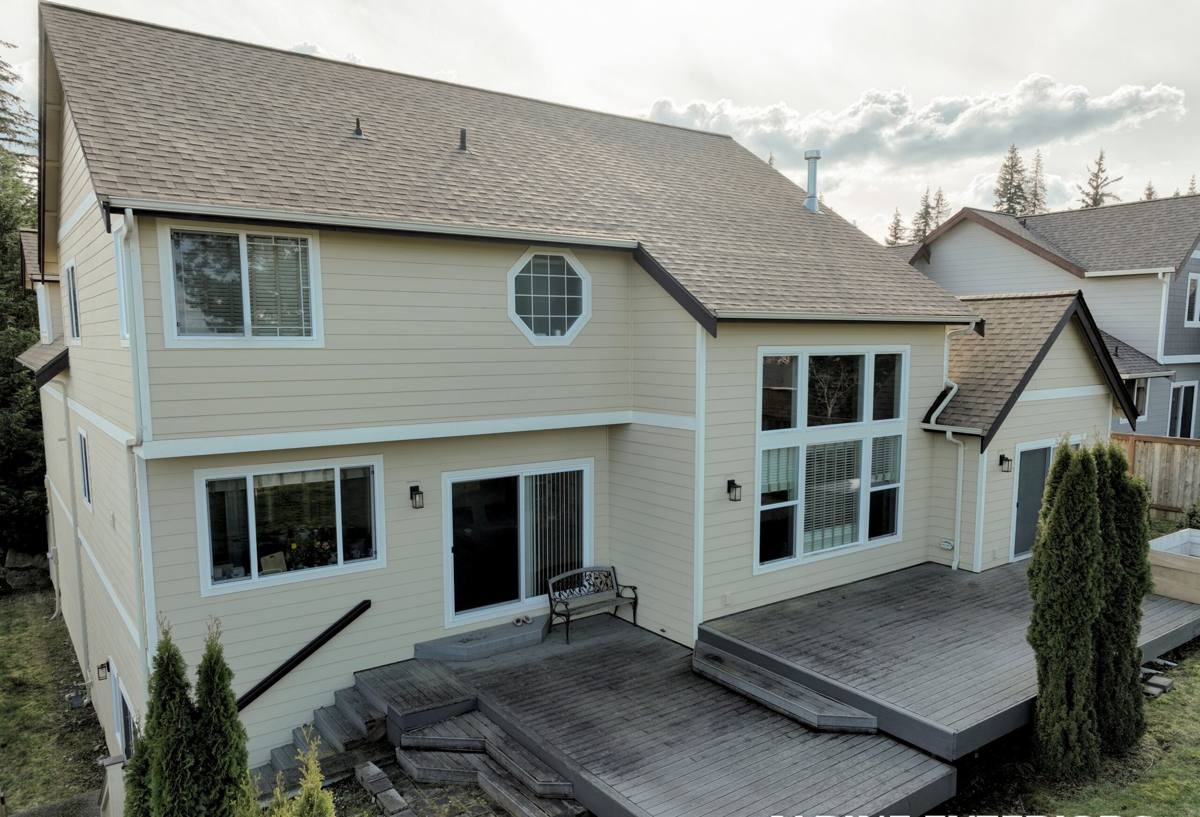
A deck in Barkley has a harder job than most people assume. It's not just a place to put a grill and a couple of chairs — it's a structure that sits outside year-round, absorbing everything the Whatcom County weather throws at it. Between the driving rain that rolls through for months at a stretch, the salt-laden air that moves in off the water, and a moss season that can run longer than the dry season, a deck built to a generic spec sheet starts showing problems within a few years. One built for this specific climate doesn't.
This page is about custom deck construction specifically for homes in and around Barkley, near Sudden Valley. We'll cover what the local conditions actually do to decking materials and hardware, what a correctly built deck involves from the footings up, and how our process works when we take on a project in this area.
What the Local Climate Does to an Outdoor Deck
Driving Rain and Standing Moisture
Rain here doesn't just fall straight down — wind-driven storms push water sideways, into gaps and joints that a deck in a drier climate would never have to deal with. That means ledger board connections, stair stringers, and any point where two pieces of material meet need real flashing and drainage detail, not just a coat of sealant. Water that gets trapped instead of shed is the single biggest reason decks in this region fail early — through rot in wood framing, delamination in lower-grade composite, or corrosion in fasteners.
A Long Moss Season
Shaded, north-facing, or tree-covered decks in Barkley can stay damp for months, and moss doesn't need much more than that to take hold. Beyond looking bad, moss and algae hold moisture against the deck surface and turn boards slick and dangerous underfoot. Once moss establishes in the gaps between boards, it's a maintenance problem for the life of the deck unless the deck was designed to shed water and dry out between rains.
Salt Air and Metal Fatigue
Homes closer to the water deal with a slow, steady exposure to salt-laden air that most inland decks never see. Salt air accelerates corrosion in anything less than a properly rated fastener or bracket — screws, joist hangers, railing hardware, even nail heads. Corrosion doesn't just look bad; a rusted-through hanger or fastener is a structural failure waiting to happen, and it's usually hidden until something gives.
Decking Material Options for Barkley Homes
There's no single "best" decking material — there's a best material for a given budget, sun/shade exposure, and how much upkeep a homeowner actually wants to do. Here's how the common options hold up under Sudden Valley's conditions specifically.
| Material | Moisture Behavior | Maintenance | Typical Lifespan |
|---|---|---|---|
| Pressure-treated wood | Absorbs and releases moisture; prone to cupping and checking if not sealed regularly | Annual cleaning and re-sealing/staining | 10–15 years before major boards need replacing |
| Cedar | Naturally moisture- and insect-resistant, but still needs a protective finish in this rainfall | Periodic cleaning, re-oiling or staining every 1–2 years | 15–20 years with upkeep |
| Composite (capped) | Doesn't absorb water into the core; resists moss staining better than wood | Occasional wash-down; no sealing or staining | 25+ years, backed by manufacturer warranty |
| PVC decking | Fully moisture-resistant; won't rot or support wood-boring insects | Lowest upkeep of the common options | 25–30 years |
Choosing Between Them
Wood is still the right call for homeowners who want a natural look and don't mind the yearly maintenance — and a properly finished cedar deck can look excellent for decades. Where we push back is on lower-grade, uncapped composite boards in heavily shaded or lake-adjacent settings: they can trap moisture at the core in ways that solid wood or fully capped composite don't, which shows up as swelling or discoloration well before the warranty period ends. That's a professional judgment call based on how the product behaves in wet climates, not a knock on any single brand — it's why we walk every homeowner through the trade-offs for their specific site before recommending a product.
Getting the Structure Right: Footings, Framing, and Ledger Attachment
Footings in Local Soil
Whatcom County soil holds water longer than sandier soils elsewhere in the state, which matters for footing depth and drainage around post bases. Footings that aren't set below frost depth and properly drained can shift over a wet winter, which is what causes decks to develop a slight lean or squeak at the connections a few years in.
Ledger Board Flashing
The ledger board — where the deck attaches to the house — is the single most common point of failure on decks in wet climates, because it's the hardest joint to keep water out of. A correct installation uses flashing that directs water away from the house sheathing, not just caulk or sealant, which degrades over time. This is the detail that separates a deck that lasts decades from one that causes hidden water damage to the house itself.
Joist Spacing and Board Movement
Wood and composite both expand, contract, and in wood's case, cup with moisture cycling. Joist spacing needs to match the decking material's actual span rating, not just a generic 16-inch layout, and gaps between boards need to account for how much a given material swells when it's saturated for weeks at a time — which, in this region, is most of the winter.
Railings, Fasteners, and Hardware That Won't Corrode
Everything holding a deck together matters as much as the decking boards themselves. In an area with salt air exposure, we specify stainless steel or hot-dip galvanized fasteners and structural hardware — not the cheaper coated screws that are fine inland but start showing rust streaks within a couple of seasons here. Railing systems get the same scrutiny: aluminum and properly coated steel hold up; uncoated or lightly finished hardware doesn't.
This is also where cutting corners is hardest to spot after the fact — a rusting hanger is usually hidden under the decking, and by the time it's visible, it's already failing. It's one of the reasons we don't treat hardware as an afterthought on the materials list.
Designing for Drainage and Moss Control
Board Gaps and Under-Deck Airflow
A deck that can't dry out between storms will grow moss no matter what it's built from. Proper board spacing, and — on lower decks — clearance and venting underneath, let air move through and let the structure actually dry instead of staying damp for weeks. This single design choice does more to prevent moss buildup long-term than any cleaning product.
Coordinating With Gutters and Grading
A deck built right under a roofline without gutter coordination will take a constant stream of runoff onto one section of decking, which is exactly where moss and staining show up first. Where it makes sense, we look at how roof drainage and ground grading interact with the new deck's footprint before we finalize the design, not after the moss problem shows up.
What a Correct Barkley Deck Build Looks Like, Start to Finish
Site Visit and Design
We start on-site, looking at sun exposure, shade patterns, existing drainage, and how the deck will connect to the house. This is where material recommendations get tailored to the actual lot, not a standard package.
Permitting
Most custom deck projects require a permit, and requirements vary by size, height, and attachment method. We handle the permitting process as part of the job rather than leaving homeowners to navigate it separately.
Construction
Footings and framing go in first, inspected before decking is installed. Ledger flashing, joist layout, and fastener selection all follow the standards above — not shortcuts based on what's fastest.
Final Walkthrough
Before we consider a project finished, we walk the deck with the homeowner, check railing stability, board spacing, and finish work, and go over basic care specific to the materials chosen.
Cost Factors for a Barkley Deck Project
Every deck is priced around its own footprint and materials, so we don't quote a flat number until we've seen the site — but these are the main factors that move a project's cost up or down.
| Factor | Why It Affects Cost |
|---|---|
| Size and shape | Larger footprints and multi-level or curved designs require more framing and labor |
| Decking material | Wood costs less upfront; composite and PVC cost more initially but less over the deck's life |
| Height off grade | Taller decks need deeper footings, more bracing, and often stairs or additional railing |
| Railing style | Cable, glass, and custom railing systems cost more than standard baluster railing |
| Site access and grading | Sloped lots or limited access near the lake can add labor time for footings and material staging |
Keeping a New Deck Looking Right for Years
Whatever material a deck is built from, a little seasonal attention goes a long way in this climate. A basic maintenance routine for the wet months looks like this:
- Sweep leaves and debris off the deck surface regularly through fall — trapped organic matter is what feeds moss growth
- Rinse or lightly scrub board gaps once or twice a year to clear out dirt and moss spores before they establish
- Check railing posts and stair connections annually for any looseness or movement
- Re-seal or re-stain wood decking on the schedule the finish product calls for — don't wait until it's visibly gray or worn
- Keep gutters and downspouts near the deck clear so runoff isn't concentrating on one section
- Look underneath the deck once a year for any signs of standing water, rust on hardware, or soft framing
Why a Crew That Already Works in Barkley Matters
A contractor who's built decks throughout Barkley and the wider Sudden Valley area already knows how the local rain patterns, shade cover, and soil behave on real projects — not just in theory. That local track record shows up in the details: the right fastener spec without having to be asked, footing depths that account for this soil, and material recommendations based on how products have actually performed on decks in this exact climate, not just a manufacturer's general claims. It also means faster, more realistic permitting since we're familiar with what Whatcom County jurisdictions expect on residential deck projects.
If you're weighing a new deck or replacing one that's showing its age, we're happy to take a look and talk through what makes sense for your home. The estimate is free, there's no pressure attached, and you'll get a straight answer about what your project actually needs — just fill out the form below to get started.