 Sudden Valley Siding
 Decks in Alger Face a Different Set of Conditions
A deck built to a generic national spec doesn't hold up the same way here as it might inland. In Alger and the surrounding Sudden Valley service area, decks deal with salt-tinged air, long stretches of driving rain, and a moss season that can run from fall through spring. None of that is exotic — it's just the Pacific Northwest doing what it does — but it changes what "correctly built" actually means. A deck that looks fine on installation day can start showing soft spots, rust streaks, or slick green film within a couple of seasons if it wasn't built with this climate in mind.
We build and repair decks with that reality baked into every decision, from the fasteners we choose to how a board is spaced against its neighbor. This page covers what that looks like in practice, what a correct job involves, and how we approach deck projects for homeowners in this part of Whatcom County.
Where Deck Failures Actually Start
Most deck problems we get called out for didn't start with the decking boards themselves — they started underneath, at the connections and structure most homeowners never look at closely.
Ledger Board & Flashing
The ledger board — where the deck attaches to the house — is the single most common failure point in this climate. If the flashing behind it isn't installed correctly, or is missing entirely, water works its way behind the board and into the house's wall framing. Because rain here tends to come in long, steady soakings rather than short bursts, a poorly flashed ledger doesn't fail fast — it fails slowly, over years, which is exactly why it's so often missed until there's real rot to deal with.
Fasteners & Hardware
Salt-tinged marine air accelerates corrosion on fasteners that would last much longer in a drier, inland climate. Standard galvanized screws and joist hangers can start rusting and losing holding strength well before the wood around them shows any wear. We use hardware rated for the chemicals in modern treated lumber and for coastal-influenced exposure, which costs a little more up front and saves a full hardware failure down the line.
Airflow & Drainage Underneath
A deck built too close to the ground, or without any slope or gap for water to escape, traps moisture underneath. That trapped moisture is what feeds rot in joists and beams long before the surface boards show a problem. Proper clearance and drainage under the structure matter as much as anything visible from the yard.
Choosing Decking Material for a Wet, Mossy Climate
There's no single "best" decking material — there's a best material for your budget, your maintenance appetite, and how much shade and moisture your specific lot holds onto. Here's how the common options actually behave in this climate:
| Material | Moisture Behavior | Maintenance | Typical Lifespan |
|---|---|---|---|
| Pressure-treated lumber | Resists rot chemically but still absorbs water; grain can cup or check if not sealed | Annual cleaning and periodic sealing/staining | 15-20 years with upkeep |
| Cedar | Naturally rot-resistant, sheds water well, but softer surface | Regular cleaning; sealing every 1-2 years to hold color and repel moss | 15-20 years with upkeep |
| Composite (capped) | Doesn't absorb water or rot; can still grow surface algae/moss film in shade | Occasional washing, no sealing or staining | 25-30+ years |
| Uncapped composite (older style) | Some moisture absorption at the core over time | Low, but more than capped composite | 15-25 years |
In heavily shaded, moss-prone spots, we lean toward capped composite or well-sealed cedar because both shed surface moisture faster than raw pressure-treated lumber. On sunnier sites with good airflow, quality pressure-treated decking is still a reasonable, budget-conscious choice as long as it's sealed on a real schedule — not just when it starts to look gray.
Our Deck Building Process
Design & Site Assessment
We start by walking the actual site — slope, drainage patterns, tree cover, and how much direct sun the deck will realistically get through the year. A deck tucked under dense evergreen canopy needs different material and airflow decisions than one that gets afternoon sun most of the year, even on the same street.
Permits
Most new decks and many rebuilds attached to the house require a permit, and requirements vary depending on height, size, and whether it's attached or freestanding. We handle the permit process as part of the job so you're not the one deciphering code requirements — the goal is a deck that's built to code the first time, not one that gets flagged later.
Construction & Walkthrough
We build in a set order for a reason: footings and framing get inspected and squared away before decking goes down, flashing gets installed and checked before the ledger is closed up, and hardware gets torqued and verified before railings go on. Once it's done, we walk the finished deck with you so you know what maintenance it actually needs — not a generic pamphlet, but what your specific deck and site will require.
Structural Details We Don't Skip
Some of what makes a deck last isn't visible once it's finished, which is exactly why it's worth spelling out:
- Footings set to proper depth and bearing for our soil and frost conditions, not just poured to a minimum spec
- Joist spacing sized for the actual decking material and expected load, not a one-size-fits-all layout
- Corrosion-resistant fasteners and connectors throughout, not just at points that are easy to inspect later
- Consistent slope away from the house so water sheds instead of pooling against the ledger
- Adequate clearance and airflow beneath the deck to let framing dry out between rain events
Railings, Stairs, and Slip Safety in Moss Season
A deck's surface is a safety feature, not just an aesthetic one. In shaded, damp spots, horizontal surfaces — deck boards, stair treads, and even top rail caps — can grow a thin film of algae or moss that gets slick fast, especially in the shoulder seasons when temperatures hover near freezing overnight and everything stays damp longer. Grooved or lightly textured board profiles help, as does spacing that lets water and debris pass through rather than sit on the surface. Railings and baluster spacing are also code-regulated for a reason, and we build to those specs regardless of whether the inspector will ever measure them — it's the standard we hold ourselves to.
What a New Deck Costs in the Alger Area
Deck pricing swings a lot based on a handful of factors, and it's worth understanding what actually drives the number before you start comparing quotes:
| Factor | Why It Moves the Price |
|---|---|
| Size and footprint | More square footage means more material, more footings, and more labor hours |
| Decking material | Composite costs more upfront than pressure-treated lumber but less over its lifetime in maintenance |
| Height and stairs | Taller decks need more substantial framing, additional footings, and code-compliant stair and rail systems |
| Attached vs. freestanding | Attached decks need ledger flashing work tied into the house's existing siding and sheathing |
| Site access | Sloped lots, tree removal, or tight side-yard access add labor time |
| Permit complexity | Larger or higher decks may trigger more detailed engineering and inspection requirements |
Rather than quote a blanket price range that doesn't mean much without seeing your site, we walk your property and give you a real number based on your specific footprint, material choice, and site conditions.
Keeping a Deck Ahead of Moss and Moisture
Whatever material you choose, a little seasonal attention goes a long way toward avoiding an early rebuild. A simple routine that works for most decks in this climate:
- Sweep leaves and needles off regularly — trapped organic debris holds moisture and feeds moss growth
- Wash the deck surface at least once a year with a cleaner appropriate for your material; pressure washing wood too aggressively can damage the grain
- Reseal or stain wood decking on a real schedule, not just when it starts looking faded
- Check the ledger board area and any visible flashing once a year for staining, soft spots, or gaps
- Trim back overhanging branches where possible to reduce shade and let the surface dry between rains
- Look over railing posts and stair stringers for movement or soft wood at ground contact points
Why Local Experience in Alger and Sudden Valley Matters
A crew that only occasionally works in this part of Whatcom County is guessing at a lot of things a local crew already knows — how a shaded, tree-covered lot behaves through moss season, what soil and drainage conditions are common on sloped sites near the lake and surrounding communities, and which permit offices need what documentation. We work in Alger and Sudden Valley regularly, which means fewer surprises mid-project and a deck that's designed for how this specific area actually behaves through the year, not a generic template. It also means we're still around after the job is done if a question comes up — not a name from an out-of-area lead-generation site.
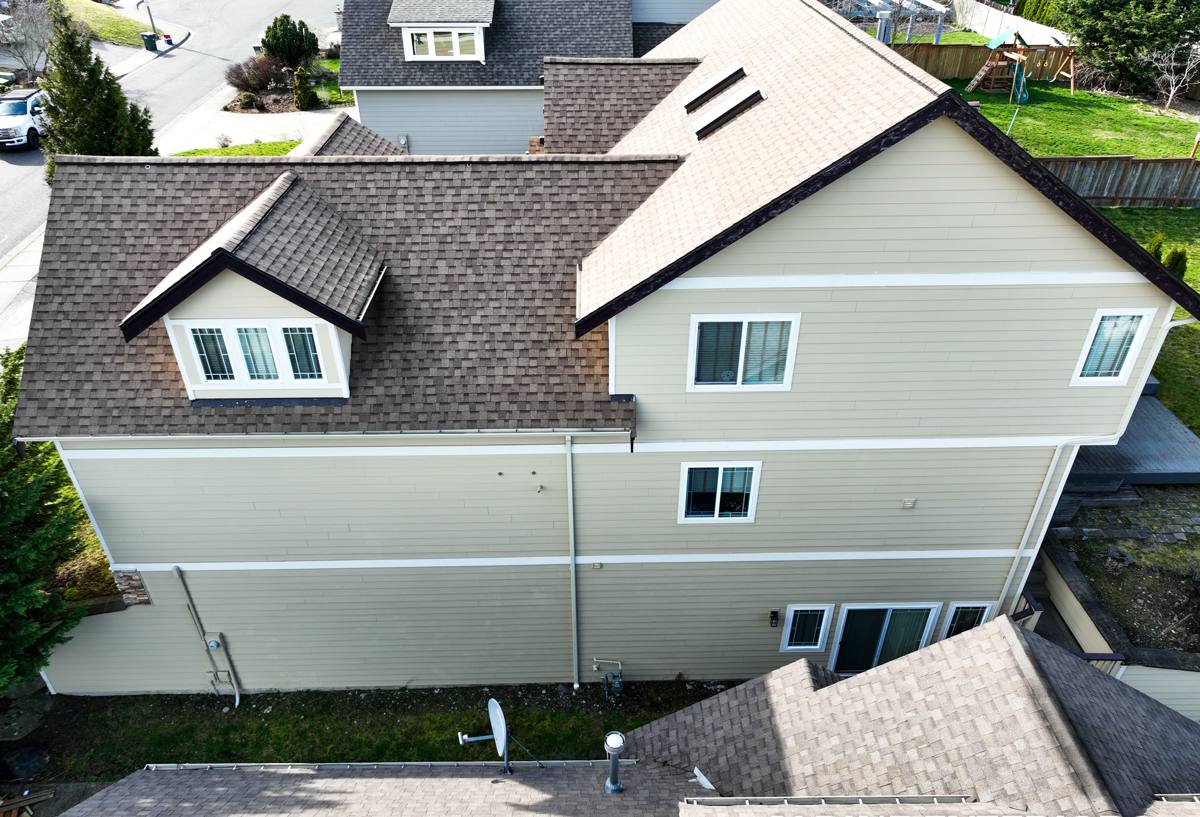
Since we work on exterior siding as much as decks, we also look at how your deck ties into the rest of your home's exterior envelope — flashing details, water management, and material choices that work together instead of against each other.
If you're thinking about a new deck, a rebuild, or just want an honest opinion on whether your current deck's problems are cosmetic or structural, we're happy to take a look. Reach out for a free, no-pressure estimate using the form below.