 Sudden Valley Siding
 Decks Built for Acme's Wet, Wooded Corner of Whatcom County
Acme sits in one of the wetter, more heavily shaded stretches of Whatcom County, not far from Sudden Valley. Homes here deal with long stretches of standing moisture through fall and winter, heavy tree canopy that keeps decks and railings shaded most of the day, and the kind of driving, sideways rain that finds every gap in a poorly detailed structure. Add in the salt-laden air that moves inland off the Sound during storm systems, and you have a climate that is genuinely hard on outdoor wood structures. A deck built with generic, one-size-fits-all methods will show problems here faster than it would in a drier part of the state.
This page is specifically about building decks for Acme conditions — not a general overview of decking. If you're planning a new deck, replacing an old one, or trying to figure out why a deck that's only a few years old is already showing soft spots or black staining, the details below explain what actually matters in this environment.
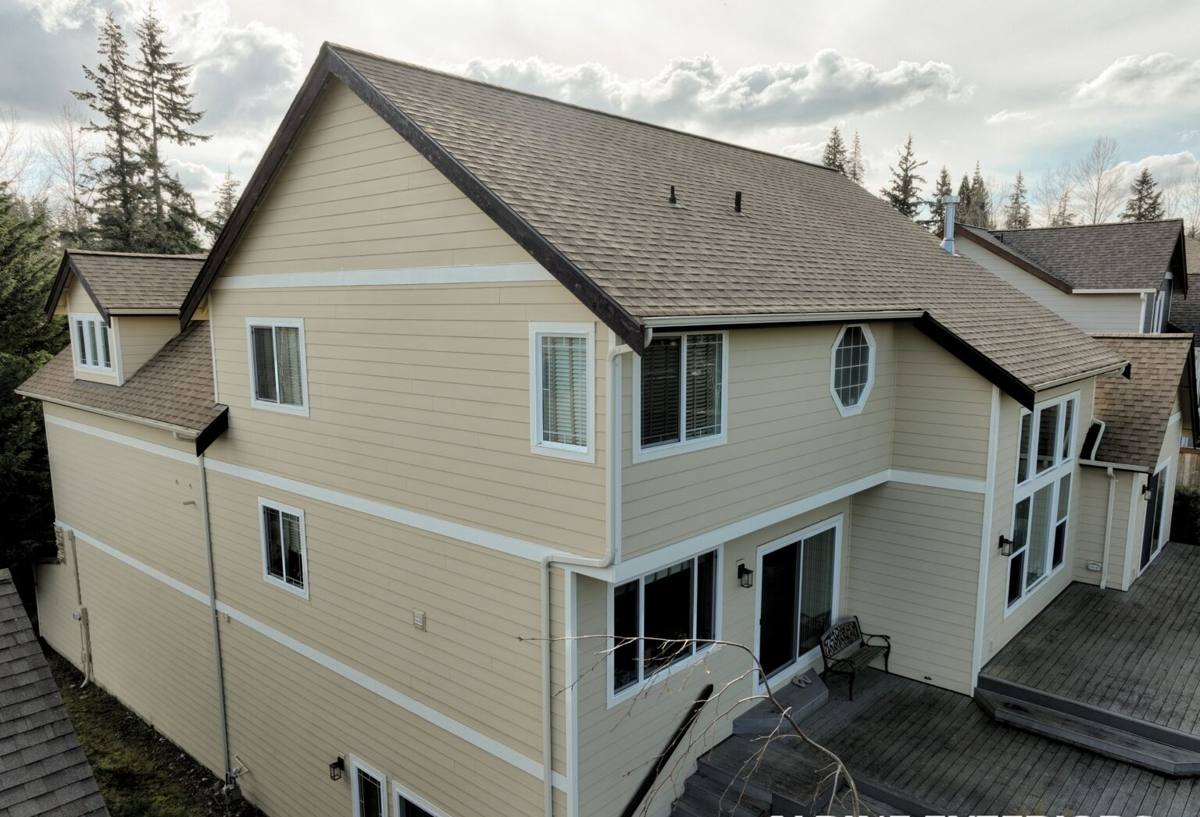
What Goes Wrong When a Deck Isn't Built for This Climate
Most deck failures we see in this area aren't dramatic structural collapses — they're slow, moisture-driven problems that start small and get expensive if ignored. The usual pattern:
- Ledger boards that were fastened to the house without proper flashing, letting water track behind the siding and rot the rim joist
- Joists and beams with tight or non-existent airflow underneath, holding moisture against the wood for weeks at a time under shade
- Standard fasteners that were never rated for damp, mixed-corrosive conditions, leaving black streaking and eventually failing hardware
- Decking boards installed tight together with no drainage gap, trapping needles, moss spores, and debris that hold water against the board
- Footings poured without accounting for the way sloped, wooded Acme lots actually shed water
None of these are exotic problems. They're the predictable result of building a deck the same way you'd build one in a dry, open-sun location and expecting it to hold up under a long moss season and near-constant winter dampness.
What a Correctly Built Deck Requires Here
Framing and Fasteners
We use fasteners and structural connectors rated for wet, corrosive-prone service — not because it's a marketing point, but because standard hardware visibly corrodes within a few seasons in this climate and weakens the joints it's supposed to hold. Joist spacing and beam sizing follow standard structural code requirements for the actual span and load, not the tightest spacing a crew can get away with. On shaded lots we also pay attention to airflow under the frame; a deck that can't breathe underneath stays wet longer after every rain.
Ledger Attachment and Flashing
The ledger board — where the deck attaches to the house — is the single most common source of hidden rot on any deck, anywhere. Done right, it involves proper flashing that sheds water away from the house framing, correct fastener spacing and pull-out rating for the actual load, and a gap or drainage path so water isn't trapped between the ledger and the siding. This is not a place to cut corners, and it's not something you can inspect from a photo after the siding is closed back up — it has to be done correctly the first time.
Footings and Drainage on Sloped, Wooded Lots
A lot of Acme properties aren't flat. Footings on sloped ground need to go below the frost line and bear on undisturbed soil, and on wooded lots that often means dealing with root systems and inconsistent soil conditions across a single footprint. We also think about where the deck will shed water once it's built — a deck that dumps runoff straight against a foundation or into a low, shaded spot is just relocating a moisture problem instead of solving it.
Choosing a Decking Material for Acme Conditions
There's no single "right" decking material — it's a trade-off between upfront cost, maintenance commitment, and how the material actually behaves under long-term moisture and shade. Here's how the common options compare for this specific climate:
| Material | Moisture Behavior | Maintenance | Typical Lifespan |
|---|---|---|---|
| Pressure-treated wood | Absorbs and releases moisture; prone to cupping/checking if not sealed regularly | Needs cleaning and re-sealing every 1–2 years, more often in full shade | 10–15 years with upkeep |
| Cedar | Naturally more rot- and insect-resistant than PT pine, but still absorbs moisture and grays without sealing | Similar sealing schedule to PT; more forgiving if maintenance slips occasionally | 15–20 years with upkeep |
| Composite decking | Doesn't rot, but can hold surface moisture and grow moss/algae in heavy shade if not cleaned | No sealing needed; periodic washing to stay ahead of moss and pollen buildup | 25+ years, varies by product warranty |
| PVC/capped decking | Fully moisture-resistant surface; least prone to staining and moss adhesion | Lowest maintenance; occasional washing | 25+ years, varies by product warranty |
In heavily shaded, moss-prone spots — which describes a lot of Acme's tree-covered lots — composite or capped boards generally give you fewer maintenance headaches over the life of the deck. Wood costs less up front and can look great, but it asks more of the homeowner in regular cleaning and sealing, especially where sun exposure is limited and boards stay damp longer between rains.
How Our Deck Building Process Works
- Site visit and design conversation. We look at slope, drainage, tree cover, sun exposure, and how the deck ties into the house before we talk materials or layout.
- Structural plan. Footing locations, framing layout, ledger attachment method, and load requirements get worked out based on the actual site, not a generic template.
- Permitting. We handle the permit application and coordinate any required inspections through Whatcom County so you're not chasing paperwork.
- Footings and framing. Footings are set below frost depth on solid bearing soil; framing goes up with corrosion-rated hardware and proper spacing for airflow underneath.
- Ledger flashing. This step gets done carefully and inspected before decking goes down — it's the part you won't be able to check later.
- Decking and railing installation. Boards are spaced for drainage; railings and stairs are built to current code for height and baluster spacing.
- Final walkthrough. We go over the finished deck with you, including what maintenance (if any) the material you chose will need going forward.
What Affects the Cost of a Deck Here
Every deck is priced around the specific site and materials, but a few factors consistently move the number up or down more than homeowners expect:
| Factor | Why It Matters |
|---|---|
| Slope and access to the build site | Sloped, wooded lots often need deeper or more complex footings, and material has to be carried in if equipment access is limited |
| Decking material chosen | Pressure-treated is the lowest upfront cost; composite and PVC cost more up front but less in maintenance over time |
| Deck height and railing requirements | Taller decks trigger stricter railing and guard requirements, which adds material and labor |
| Ledger and structural attachment complexity | Older homes or unusual framing sometimes need extra work to attach a ledger safely and correctly |
| Stairs and landings | Multiple stair runs or a mid-level landing add framing, material, and code compliance work |
As a general starting point, a straightforward pressure-treated deck typically runs less per square foot than a composite or PVC build of the same footprint — but that gap narrows once you account for years of sealing and re-staining on the wood option. We'll walk through the real trade-offs for your specific site during the estimate rather than quoting a number that doesn't account for slope, access, or material choice.
Keeping a New Deck Ahead of Moss and Moisture
Even a correctly built deck needs some ongoing attention in a climate like this. A few habits go a long way toward protecting the investment:
- Sweep off needles, leaves, and debris regularly, especially in shaded corners where they hold moisture longest
- Rinse or wash the deck surface once or twice a year to knock back early moss and algae growth before it gets established
- Check that gaps between boards stay clear so water can actually drain through instead of pooling
- Trim back overhanging branches where practical to let more light and air reach the deck surface
- If you chose wood, keep to a sealing schedule rather than waiting until graying or checking is already visible
- Walk the underside of the deck occasionally to check for staining or soft spots near the ledger and posts
Permits, Setbacks, and Whatcom County Requirements
Most elevated decks in Whatcom County require a building permit, and the requirements can shift depending on deck height, proximity to property lines, and whether the site has any slope or critical-area considerations. Sudden Valley and the surrounding area also has its own set of community and site-specific factors that can affect setbacks and design. Rather than guessing at what applies to your property, we pull the actual requirements for your address as part of the process and handle the permit application directly, so the deck you get is one that's built to what the county actually requires — not just what looks right.
Why It Matters That We Already Work in Acme and Sudden Valley
A deck built for this part of Whatcom County isn't the same project as a deck built in a dry, open-sun subdivision somewhere else. The framing details, fastener choices, drainage planning, and material recommendations all shift based on local rain patterns, tree cover, and how long moisture sits on a structure between dry spells. A crew that already works Acme and Sudden Valley has already seen how ledgers fail here, which spots on a given lot stay wet longest, and how fast moss establishes itself on the wrong material in full shade. That's not something you can fully substitute with a generic checklist — it comes from building and maintaining decks in this specific climate, on this kind of terrain, repeatedly.
If you're planning a new deck or need an honest opinion on one that's already showing problems, we're happy to take a look and walk you through what we're seeing and why. Reach out for a free, no-pressure estimate using the form below.