 Sudden Valley Siding
 Roofing Built for the Yew Street Stretch of Sudden Valley
Homes along Yew Street sit inside one of the wetter, greener corners of Whatcom County, and the roof over your head has to work harder here than it would almost anywhere else in the state. Between the salt-tinged air moving in off the water, the driving rain that comes sideways during winter storms, and a moss season that can run eight months or longer under the tree cover common to Sudden Valley, a roof here is under near-constant pressure. A new roof installation done right for this stretch of Whatcom County isn't just about swapping old shingles for new ones — it's about building a roof system that's matched to what this specific climate throws at it.
We've replaced enough roofs in and around Sudden Valley to know which failure points show up again and again on Yew Street homes, and we build every new install to address them directly rather than hoping a standard installation holds up.
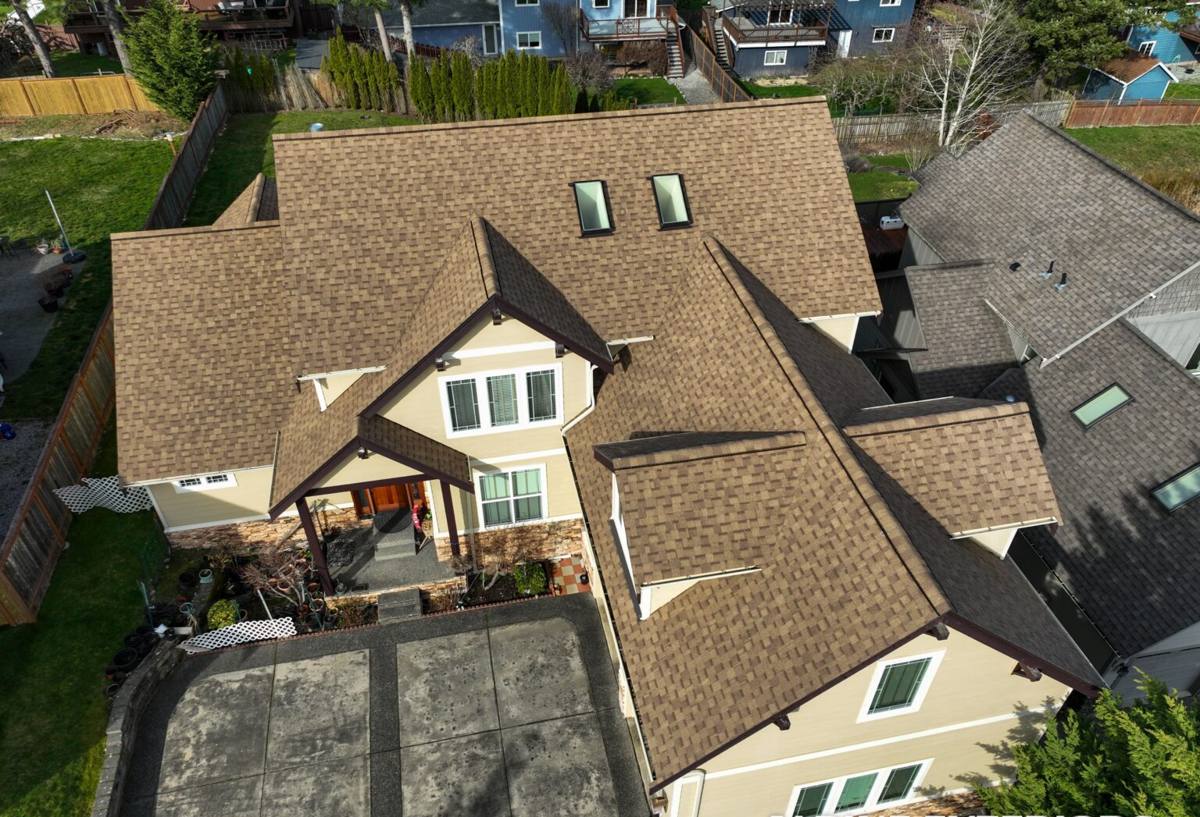
What Actually Wears Out a Roof in This Part of Sudden Valley
Moss and Organic Growth
Shaded lots, moisture-holding tree cover, and long stretches of overcast, damp weather make this one of the most moss-prone environments a roof can sit in. Moss doesn't just look bad — it lifts shingle edges, traps water against the roof deck, and slowly works its way under the shingle mat. Left unchecked over a few seasons, moss growth shortens a roof's usable life by years, not months.
Wind-Driven Rain
Whatcom County storms rarely arrive as simple straight-down rain. Wind pushes moisture sideways and up under shingle laps, flashing, and vent boots. A roof that's fine in a light drizzle can still leak in a hard, wind-driven storm if the underlayment, flashing, and shingle overlap weren't installed with that in mind.
Salt Air and Metal Fasteners
Salt-laden air accelerates corrosion on any exposed metal — nail heads, flashing, vent stacks, and gutter hardware. Standard, uncoated fasteners and thin flashing metal corrode faster here than they would inland, which is why material selection on the metal components matters as much as the shingle brand.
Signs a Yew Street Roof Needs Replacing, Not Just Patching
Not every roof problem calls for a full tear-off. But there's a point where repairs stop making financial sense and a new installation becomes the honest recommendation. Look for:
- Granules collecting in gutters or at downspout outlets in noticeable amounts
- Shingles that are cupping, curling at the edges, or cracking when touched
- Moss or dark algae staining that keeps coming back within a season of cleaning
- Soft spots or slight sag when walking the roof deck (a sign of moisture reaching the sheathing)
- Daylight visible through the roof deck from inside the attic
- Repeated leaks in different spots after previous patch repairs
- A roof older than 20-25 years for asphalt shingle, regardless of visible damage
If you're seeing two or more of these, a full replacement is usually the more cost-effective path — repeated repairs on an aging roof rarely add up to less than one correctly done replacement.
What a Correct New Roof Installation Actually Involves
Tear-Off and Deck Inspection
We remove the old roofing down to the deck rather than layering over it. This is the only way to actually see the condition of the sheathing underneath — and on homes in wetter parts of Whatcom County, it's common to find sections of deck that have softened from long-term moisture intrusion. Any compromised sheathing gets replaced before anything new goes down; installing new roofing over a weak deck just hides the problem.
Underlayment and Water Barrier
Given how much wind-driven rain this area sees, we don't treat underlayment as an afterthought. A synthetic underlayment across the full roof, with self-adhered ice-and-water barrier at eaves, valleys, and around every penetration, gives the roof a second line of defense if wind ever pushes water past the shingle layer itself.
Ventilation
A roof that traps heat and moisture in the attic ages faster from the inside, and poor ventilation also feeds condensation that shows up as staining or rot over time. We check intake at the soffits and exhaust at the ridge or roof vents and correct the balance where the existing setup falls short, rather than just reusing whatever ventilation was there before.
Flashing and Penetrations
Chimneys, skylights, vent stacks, and wall-to-roof transitions are where most leaks actually start — not in the open field of shingles. We install new flashing at every penetration and step-flash any wall intersections rather than relying on sealant alone, which breaks down over time and isn't a substitute for correctly lapped metal.
Roofing Material Options for a Sudden Valley Climate
There's no single "best" roofing material for every home — the right choice depends on your budget, roof pitch, and how much long-term maintenance you're willing to do. Here's how the common options compare for this specific climate:
| Material | Moss/Moisture Resistance | Typical Lifespan | Maintenance Needs |
|---|---|---|---|
| Standard 3-tab asphalt shingle | Fair — needs regular moss treatment | 15-20 years | Moderate; moss/gutter checks yearly |
| Architectural (laminate) asphalt shingle | Good — heavier mat sheds moisture better | 25-30 years | Moderate; same moss vigilance |
| Standing seam metal | Very good — moss struggles to hold on smooth metal | 40-50+ years | Low; periodic fastener/seam checks |
| Composite/synthetic shingle | Good to very good, depending on product | 30-50 years | Low to moderate |
For most Yew Street homes, we recommend architectural asphalt shingle as the practical middle ground — it holds up well against this climate's moss and rain when installed with the right underlayment system, without the upfront cost jump of metal. Metal roofing is worth serious consideration on steeper pitches or for homeowners planning to stay long-term, since the reduced moss adhesion and long lifespan offset the higher installation cost over time.
Our Process for a Yew Street Roof Installation
- On-site inspection — we walk the roof, check the attic, and look at gutters and fascia for early signs of moisture damage before quoting anything.
- Written estimate — a clear breakdown of material, labor, and scope, with no vague allowances hiding surprise costs later.
- Material selection — we walk through the options above based on your roof's pitch, sun exposure, and budget, not a one-size pitch.
- Tear-off and deck repair — old roofing removed, deck inspected, any soft or rotted sheathing replaced.
- Underlayment, flashing, and shingle installation — installed to manufacturer spec plus the additional water-barrier detailing this climate calls for.
- Final walkthrough — we review the finished roof with you, including gutter and downspout function, before calling the job complete.
What Drives the Cost of a New Roof Here
Every roof is different, so we don't quote sight-unseen numbers, but the main variables that move the price on a Yew Street project are:
- Roof size and complexity — square footage plus the number of valleys, hips, and penetrations
- Pitch — steeper roofs take longer and require more safety setup
- Layers to remove — tearing off one layer of old roofing costs less than removing two or three
- Deck condition — sheathing replacement is priced once it's actually exposed and inspected
- Material choice — from standard asphalt through architectural shingle to metal
- Access — steep driveways, limited staging area, or tree cover can affect labor time
Broadly speaking, a full asphalt shingle replacement on an average-size home runs into the mid-five-figure range on the low end, with metal roofing and larger or steeper homes running higher. We'll give you an exact number after seeing the roof — not a range pulled out of thin air.
Why It Matters That We Already Work This Neighborhood
A roofing crew that's worked Yew Street and the surrounding Sudden Valley streets knows the local patterns before they ever climb a ladder — which lots hold moisture longest, which roof orientations get hit hardest by wind-driven rain off the lake, and which material choices have actually held up over a decade of this specific climate versus which ones struggled. That local track record shapes real decisions on your project: how much extra water-barrier detailing a north-facing, tree-shaded section needs, or whether a particular roof's pitch and exposure make metal worth the added upfront cost. A crew unfamiliar with Whatcom County's moss-and-rain cycle is more likely to install to generic spec and leave you dealing with the consequences a few winters in.
Keeping a New Roof Performing After Installation
A correctly installed roof still benefits from basic upkeep in this climate. We recommend clearing debris from valleys and gutters at least twice a year, keeping overhanging branches trimmed back to reduce shade and moss pressure, and having the roof looked at if you notice granule buildup, moss returning, or any staining on interior ceilings. None of this requires a service contract — it's just the kind of maintenance that lets a well-installed roof reach the upper end of its expected lifespan instead of the lower end.
If your Yew Street roof is showing its age, or you just want an honest opinion on whether repair or replacement makes more sense, we're glad to take a look. Use the form below to request a free, no-pressure estimate.