 Sudden Valley Siding
 Deck Repair Built Around Sehome's Weather, Not a National Checklist
A deck in the Sehome area takes a different kind of beating than a deck in a dry climate. It isn't one big storm that wrecks a deck out here — it's the accumulation. Whatcom County gets long stretches of steady rain, a marine air layer that carries salt and moisture inland, and a moss season that can run from fall through spring. None of that is dramatic on its own, but stacked year after year it finds every weak point in a deck's structure and finish. We repair decks in this area regularly enough to know which failures show up first, which ones are cosmetic, and which ones mean the deck isn't safe to use until it's fixed.
This page is specifically about repairing existing decks for homes in and around Sehome, not building new ones. Repair work is its own discipline — you're matching into existing framing, working around whatever was done (or not done) correctly the first time, and making judgment calls about what to replace versus what to reinforce.
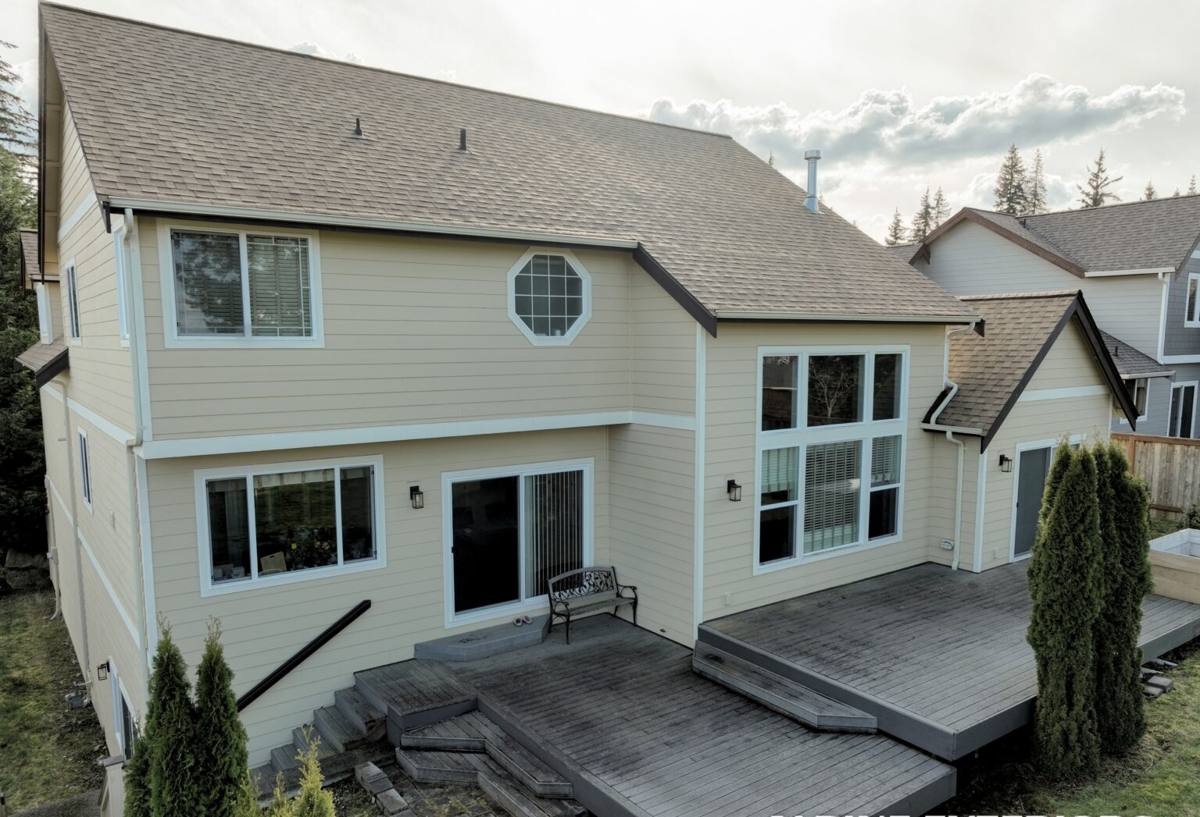
What Sudden Valley's Climate Actually Does to a Deck
Three environmental factors drive almost every repair call we get in this area:
Driving Rain and Standing Moisture
Wind-driven rain doesn't just fall on a deck surface — it gets pushed sideways into ledger connections, under flashing, and into any gap where two pieces of material meet. Combined with our long wet season, that means wood assemblies rarely get a full dry-out period. Moisture that would evaporate quickly in a drier climate can sit in a joint for weeks.
Salt Air
Proximity to Puget Sound and Bellingham Bay puts a fine layer of salt in the air across much of this region. Salt air accelerates corrosion on any exposed metal — nail heads, screw threads, joist hangers, and structural bolts — well beyond what you'd see on the same deck built inland. Corroded fasteners are one of the most common reasons a structurally sound-looking deck turns out to be unsafe underneath.
Extended Moss Season
Shaded decks, north-facing decks, and decks under tree canopy in this area grow moss for a good part of the year. Moss holds moisture against decking boards and framing far longer than bare wood would ever stay wet on its own, which speeds up rot in exactly the spots you can't always see from a casual look.
Common Deck Problems We Find on Sehome-Area Homes
Most of the repair calls we get fall into a short list of recurring issues:
- Soft, spongy, or spalling decking boards, especially near the house or in shaded corners
- Rust streaking or rust-colored stains coming from screw heads or nail holes
- Moss or dark algae buildup that hides the true condition of the boards underneath
- A ledger board (where the deck attaches to the house) that's separating, cracked, or missing proper flashing
- Joists or beams that feel spongy or show discoloration when probed
- Railings or posts that have developed play or wobble at the base
- Stair stringers showing rot at the point where they contact the ground or a concrete pad
Signs It's Repair, Not Full Replacement
Not every deck with problems needs to be torn out. If the main framing — posts, beams, and most joists — is still sound, and the damage is limited to surface boards, a handful of joists, fasteners, or the ledger connection, targeted repair is usually the honest recommendation. We're not in the business of upselling a full rebuild when a repair will hold up.
When Repair Isn't Enough
If rot has spread through multiple structural members, if the deck was undersized or under-fastened to begin with, or if the ledger attachment was never properly flashed and has been feeding water into the house's rim joist for years, repair can become a patch on a bigger problem. In those cases we'll tell you plainly that a rebuild is the more honest long-term answer, even if it's not what you were hoping to hear.
What a Correct Deck Repair Actually Involves
Ledger Board and Flashing
The ledger connection is where a deck meets the house, and it's the single most common source of hidden rot in this climate. A correct repair means pulling back decking near the ledger, checking the flashing (or installing it correctly if it's missing or failing), and confirming the ledger itself and the rim joist behind it are sound before anything gets reattached. Skipping this step and just re-fastening a rotten ledger is one of the most common shortcuts we see from past work — and one of the most expensive to fix later if it's ignored.
Framing and Structural Repairs
Damaged joists get sistered (reinforced with a new joist fastened alongside the old one) or fully replaced, depending on how far the rot has progressed. We check post bases and beam connections at the same time, since these are often overlooked during surface-level repairs but carry the actual structural load.
Decking Boards and Fasteners
Replacement boards get matched as closely as possible to the existing material, with proper gapping for drainage and seasonal movement. Fasteners are a real decision point in this climate — we default to stainless steel or coated fasteners rated for exterior and coastal exposure, because standard hardware corrodes faster here than it would inland. It costs a little more upfront and saves a callback in a few years.
Railings, Stairs, and Ground Contact Points
We check railing post attachment (a common code and safety issue on older decks) and inspect stair stringers where they meet grade or a concrete pad, since that contact point traps moisture and is a frequent rot location that's easy to miss from a quick visual check.
Repair vs. Replacement: How We Help You Decide
| Factor | Leans Toward Repair | Leans Toward Replacement |
|---|---|---|
| Extent of rot | Isolated to a few boards or joists | Spread across most of the structure |
| Ledger condition | Sound once flashed properly | Rotted or feeding moisture into the house |
| Age of original build | Newer, otherwise well-built deck | Old deck built to outdated framing standards |
| Fastener condition | Localized corrosion | Widespread rust throughout structure |
| Your plans for the deck | Keeping current size and layout | Wanting a different footprint or upgraded materials |
These are general guidelines, not a strict formula — every deck we look at gets an actual hands-on inspection before we give you a recommendation either way.
Our Process for a Sehome-Area Deck Repair
- On-site inspection. We walk the deck, probe suspect boards and framing, and check the ledger connection, since that's where the most consequential problems tend to hide.
- Written scope and estimate. You get a clear breakdown of what's being repaired, what materials we're using, and why — no vague line items.
- Repair work. Framing and structural fixes happen first, then decking, then railings and finish details.
- Fastener and flashing check. Before we call it done, we confirm every connection point that touches moisture is properly flashed or sealed.
- Walkthrough and cleanup. We show you what was done and why, and leave the site clean.
Materials We Use, and the Honest Trade-Offs
For framing repairs, pressure-treated lumber rated for ground contact where applicable is our standard — it's a proven, cost-effective choice for structural members that won't be visible day to day. For decking surfaces, the choice between wood and composite comes down to maintenance tolerance more than anything else.
Wood decking costs less upfront and is easy to spot-repair board by board, but it needs regular cleaning and refinishing to hold up against moss and moisture in this climate. Composite decking costs more initially and resists moss and rot better, but it's less forgiving to repair piecemeal, and quality varies a lot between products, so we only recommend it when the whole deck surface is being addressed rather than patched. We'll walk you through both options honestly rather than pushing whichever is easier for us to install.
After-Repair Maintenance Checklist
A repair holds up longer with a little seasonal attention. This is the same list we'd give any homeowner in this area:
- Sweep debris and standing leaves off the deck surface before fall rains set in
- Clean moss and algae off the surface at least once a year, more often on shaded decks
- Check the ledger flashing area visually once a year for gaps or separation
- Look for rust streaking around fastener heads as an early warning sign
- Keep planters and other water-trapping items from sitting directly on decking boards
- Re-seal or refinish wood decking on the schedule the product calls for, not just when it looks bad
Why a Crew That Already Works Sehome Matters
Deck repair in this part of Whatcom County isn't the same job as deck repair somewhere dry. A crew that works this area regularly already knows to check the ledger first, already defaults to corrosion-resistant fasteners without being asked, and already understands how moss hides damage instead of just being a cosmetic nuisance. That local pattern recognition is what keeps a repair from turning into a callback two winters later.
If you're seeing soft boards, rust stains, moss buildup, or a deck that just doesn't feel as solid as it used to, we're happy to take a look and give you a straight answer — repair or replace, no pressure either way. Reach out for a free estimate using the form below.