 Sudden Valley Siding
 Siding Built for Geneva's Lake-and-Rain Climate
Geneva sits in one of the wetter, greener pockets of Whatcom County, tucked near Lake Whatcom with tree cover that keeps homes shaded, damp, and slow to dry out after a storm. That combination — moisture-laden air, long stretches of overcast weather, and heavy shade from evergreens — is exactly the environment where the wrong siding choice shows its weaknesses fastest. Homes here don't just get rained on; they stay damp for days at a time, and that changes what "good siding" actually means.
Add in the driving rain that comes sideways off the lake during fall and winter systems, plus the salt-tinged marine air that reaches inland through the Whatcom County corridor, and you've got a climate that tests every seam, joint, and finish on a house. We install James Hardie fiber cement siding on Geneva homes because it's the one product system we trust to hold up to all three of those stressors at once, year after year, without the maintenance treadmill that other materials demand.
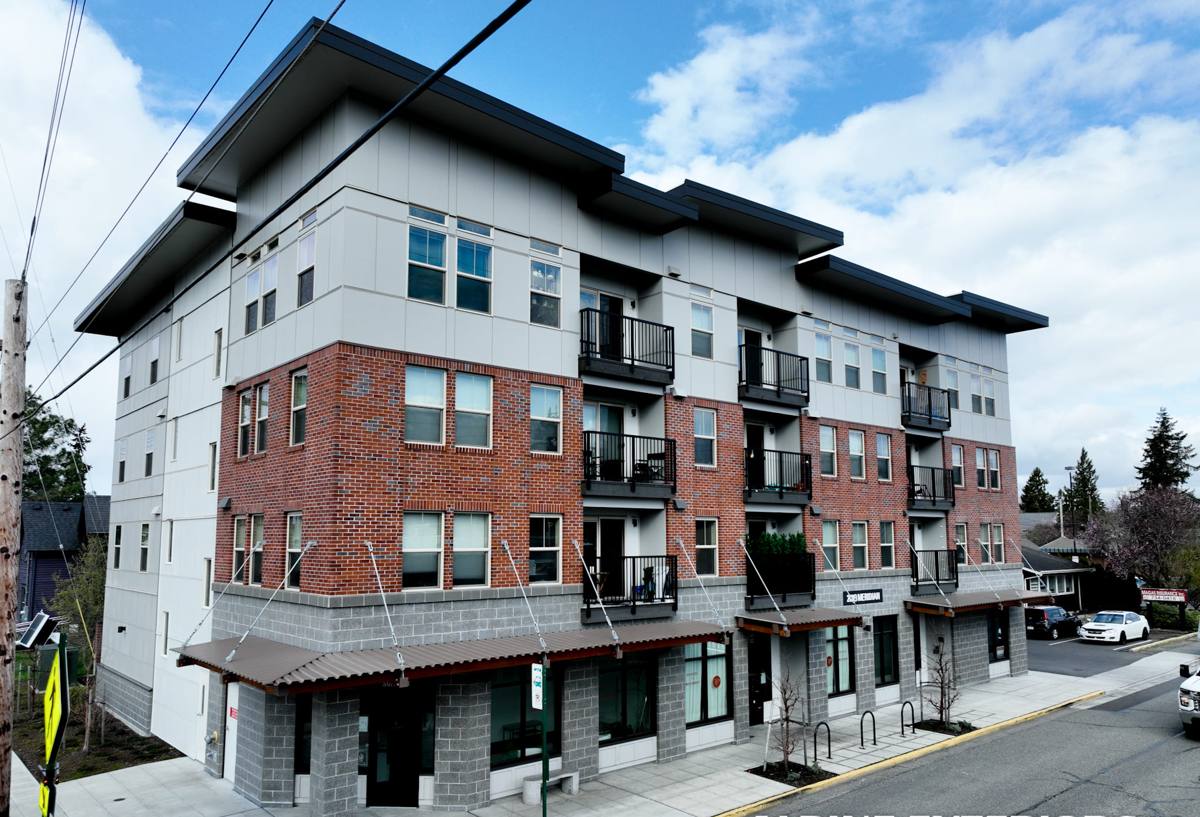
What Geneva Homes Are Actually Up Against
Moss Season Isn't a Season Here — It's Most of the Year
In heavily shaded, lake-adjacent lots like the ones common around Geneva, moss and algae don't wait for a rare wet month. They get a foothold anywhere siding stays damp for more than a day or two, and north-facing walls or sections tucked under tree canopy can stay green almost year-round if the material and installation don't account for it. Wood-based sidings absorb moisture and give moss something to root into; the wrong installation traps water behind the cladding where it can't dry at all.
Driving Rain Finds Every Gap
Wind-driven rain off the lake doesn't fall straight down — it gets pushed sideways into laps, corners, and penetrations. Siding that relies on a tight factory fit rather than genuine water-shedding design will eventually let moisture past the face material, and once it's behind the siding, it's working on your sheathing and framing, not just the paint.
Salt Air Accelerates Everything
Whatcom County's proximity to Puget Sound and Bellingham Bay means the air carries fine salt content further inland than most homeowners expect. Salt air speeds up corrosion on fasteners and trim, and it breaks down lower-quality paint and coatings faster than a dry inland climate would. Any siding job in this region needs to plan for that from the fastener schedule up.
Why We Only Install James Hardie Here
We don't offer vinyl, LP SmartSide, primed spruce, cedar, or other fiber cement brands like Cemplank or Allura — not because those products can't be installed correctly somewhere, but because we've standardized on the one system that matches what Geneva's climate demands without asking the homeowner to compromise.
- Non-combustible core: Hardie's fiber cement composition doesn't feed a fire the way wood-based sidings can, which matters for insurance conversations as much as safety.
- Engineered for moisture, not just painted against it: Hardie's HZ5 product line is formulated for cold, wet climates — it resists moisture absorption at the material level rather than relying entirely on a surface coating.
- ColorPlus factory finish: a baked-on finish applied under controlled conditions holds color and resists fading, chalking, and peeling far longer than field-applied paint typically manages in a damp climate.
- Doesn't feed moss the way wood does: fiber cement doesn't provide the organic material moss and algae root into the way wood fiber can, which matters enormously on shaded Geneva lots.
- Transferable warranty: a real, documented warranty that follows the house if it sells — useful in a market where buyers ask pointed questions about exterior condition.
We're upfront that Hardie costs more upfront than vinyl or engineered wood. What we're selling isn't the cheapest siding — it's the siding that doesn't turn into a five-year maintenance project in a climate that doesn't give materials any breaks.
What Correct Installation Actually Involves
Fiber cement siding is only as good as the installation behind it. A rushed or undertrained crew can install premium Hardie boards and still end up with a wall that traps moisture, because the water management system — not just the visible face material — is what actually keeps a house dry.
The Water-Resistive Barrier and Rainscreen
Every Hardie installation we do starts with a properly lapped water-resistive barrier, correctly integrated with window and door flashing so water is directed out and down, never trapped behind the cladding. On homes in shaded, damp settings like Geneva, we typically recommend a rainscreen gap behind the siding — a small air space that lets any moisture that does get past the face material drain and dry instead of sitting against the sheathing.
Fastening and Clearances
Hardie specifies exact fastener types, spacing, and embedment depth, and specifies minimum clearances from grade, roof lines, and decks. Skipping these isn't a cosmetic shortcut — it's the difference between siding that sheds water for decades and siding that wicks moisture up from the ground or off a roof deck within a few years.
Caulking, Joints, and Trim
Every butt joint, corner, and trim intersection is a place water can find its way in. We follow Hardie's joint treatment specifications rather than just running a bead of caulk and calling it finished — caulk is a backup, not the primary water management strategy.
| Installation Step | Why It Matters in Geneva's Climate |
|---|---|
| Water-resistive barrier + flashing | Directs driving rain out before it reaches sheathing |
| Rainscreen gap | Lets trapped moisture dry instead of feeding moss and rot in shaded areas |
| Correct fastener spec | Resists salt-air corrosion and holds boards tight through wind-driven rain |
| Grade and roof clearances | Keeps ground and roof moisture from wicking into board ends |
| ColorPlus finish, factory-applied | Resists fading and moisture intrusion better than field-painted coatings |
Our Process for Geneva Installations
- On-site assessment: we walk the exterior, checking shade exposure, drainage patterns, existing moisture damage, and how the current siding has performed against the local climate.
- Product and line selection: we recommend the Hardie line and profile that fits the home's exposure — more shaded, moss-prone walls sometimes call for different detailing than sun-exposed elevations.
- Tear-off and sheathing inspection: removing old siding lets us check for hidden rot or moisture damage before it's covered up again — a step that matters more in a wet climate than a dry one.
- Water management installation: barrier, flashing, and rainscreen components go in before a single piece of visible siding is hung.
- Hardie installation to spec: fastening, spacing, and joint treatment follow manufacturer specifications, not shortcuts.
- Final walkthrough: we review the finished exterior with the homeowner and explain any care specific to their home's exposure.
Maintenance: What Geneva Homeowners Should Expect
Hardie siding is low-maintenance, not zero-maintenance, and being honest about that upfront saves homeowners frustration later.
- Rinse the exterior annually, with extra attention to shaded or north-facing walls where moss is more likely to start.
- Keep gutters clear so overflow doesn't run down the siding face repeatedly in one spot.
- Trim back vegetation and tree limbs that keep a wall in constant shade and slow drying time.
- Inspect caulking at trim and joints every year or two, since even backup sealant benefits from a periodic check.
- Watch fastener heads and trim edges for early corrosion signs given the area's salt-tinged air.
Cost Factors for a Geneva Siding Installation
Every home is different, but the same variables drive cost on most Geneva projects:
| Factor | Why It Affects Cost |
|---|---|
| Tear-off complexity | Multiple layers of old siding or hidden moisture damage add labor |
| Home size and wall complexity | More corners, dormers, and trim detail increase installation time |
| Rainscreen inclusion | Adds material and labor but pays off in a climate this damp |
| Product line and profile | HZ5 and specialty profiles vary in material cost |
| Access and site conditions | Sloped, wooded, or lake-adjacent lots can affect staging and equipment access |
We provide a written, itemized estimate after walking the property — not a phone-quote guess — because the variables above genuinely change the number.
Why a Crew That Already Works This Area Matters
A contractor who's worked Geneva and the wider Sudden Valley and Lake Whatcom area already understands the shade patterns, moss pressure, and drainage quirks that come with lake-adjacent, tree-covered lots. That's not a marketing point — it changes real decisions, like where a rainscreen gap earns its keep versus where standard detailing is sufficient, and which elevations need extra attention during the wettest months. It also means shorter response times if a warranty question or follow-up comes up after the job is done.
If you're planning a siding project in Geneva or anywhere around Sudden Valley, we're happy to walk your property, look at how the current siding has held up, and put together a straightforward, no-pressure estimate. Fill out the form below to get started.