 Sudden Valley Siding
 Why Ferndale Roofs Wear Differently Than Roofs Inland
Ferndale sits close enough to Bellingham Bay and the Strait of Georgia that salt-laden air is a real factor in how a roof ages, not just a talking point. Add Whatcom County's long wet season, and you've got a combination that's tougher on roofing material than most homeowners realize until they're dealing with rust streaks, lifted fasteners, or a north-facing slope that never quite dries out between storms.
Three things drive most of the roofing problems we see on Ferndale homes:
- Salt air corrosion — airborne salt accelerates rust on unprotected steel, exposed fasteners, and cheaper coatings, especially on roofs with a clear line to the water or prevailing westerly wind.
- Driving rain — winter storms here don't just fall straight down; wind-driven rain gets pushed sideways into laps, valleys, and fastener penetrations that a calmer climate roof would never test.
- A long moss season — shaded, north-facing, and low-slope sections stay damp for months at a time, which is exactly what moss and algae need to take hold.
None of that means metal roofing is a bad fit for Ferndale — it's actually one of the better answers to all three. But it means the coating, fastener choice, and detailing matter more here than they would in a drier or less coastal part of the county.
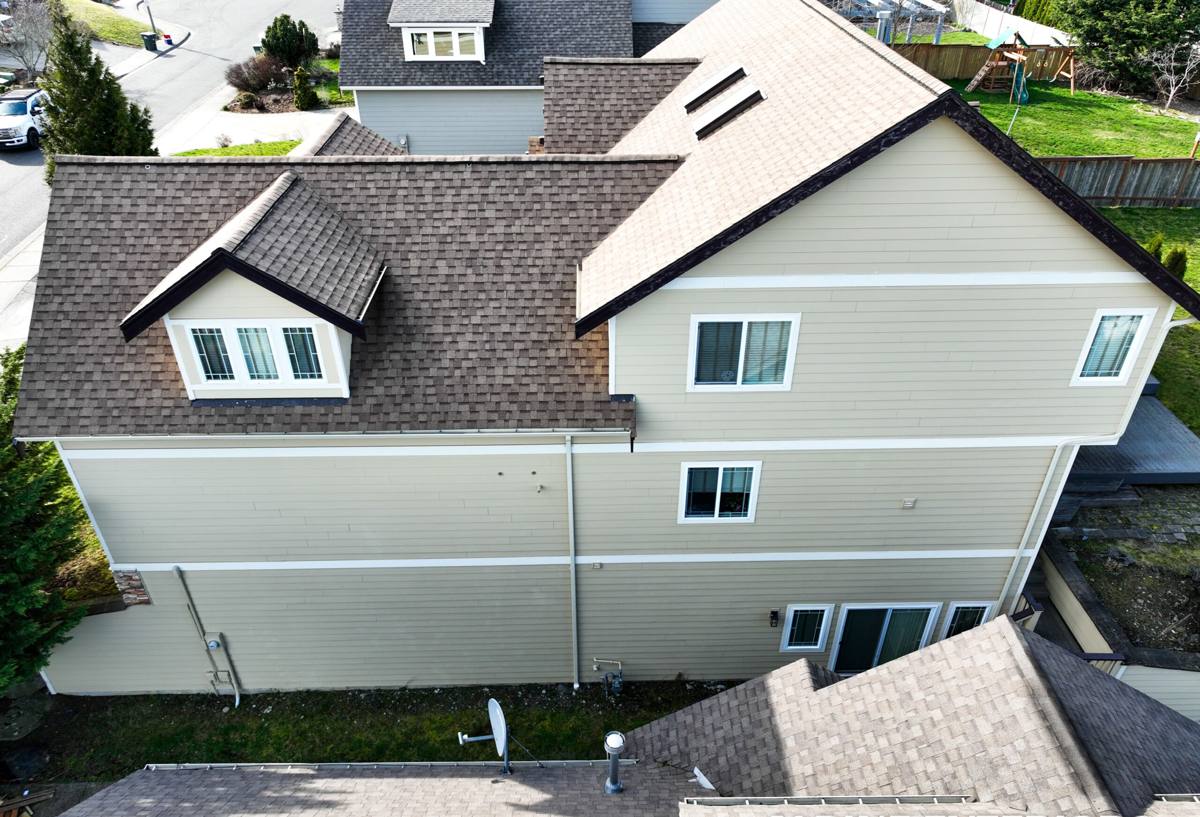
Why Metal Roofing Makes Sense for This Area
Metal roofing handles wind-driven rain better than most other roofing materials because a correctly installed panel system sheds water laterally before it ever gets a chance to work its way under a lap. Standing seam profiles in particular have no exposed fasteners on the field of the roof, which removes one of the most common failure points we see on older roofs in salt-air zones — corroding screws that back out or weep rust over time.
Metal also holds up well against moss compared to organic roofing surfaces. It doesn't give algae and moss the same texture and moisture retention that shingles or wood shakes do, so growth is slower to establish and easier to keep off with routine maintenance. That's a real advantage on the shaded, tree-covered lots common around Ferndale and the surrounding Whatcom County lowlands.
None of this makes metal maintenance-free. It means the material is well matched to the climate, provided the coating and installation are matched to it too.
What a Correct Metal Roofing Job Actually Involves
A metal roof is only as good as the details underneath it. On Ferndale homes, we pay particular attention to a handful of things that matter more here than in a mild inland climate:
Underlayment and Moisture Barrier
A high-quality synthetic underlayment, with self-adhered membrane at eaves, valleys, and any low-slope transitions, is standard on our metal roofs. In a driving-rain climate, the underlayment is your backup plan if wind ever forces water past the panel laps — it should never be treated as an afterthought.
Fastener and Clip Selection
For salt-air exposure, fastener material matters as much as the panel itself. We use fasteners and clips rated for the coastal conditions in this part of Whatcom County, not generic hardware that looks fine on day one and starts streaking rust within a couple of seasons.
Flashing and Penetration Detailing
Chimneys, vents, and valleys are where driving rain finds weaknesses. Properly formed and lapped flashing — installed in the correct sequence with the underlayment, not just caulked on afterward — is what keeps wind-driven rain from working its way in during a January storm.
Ventilation
A vented roof assembly helps the underside of the deck dry out between storms instead of staying damp, which matters for the long-term health of the roof deck in a climate that doesn't give roofs much of a dry spell.
Choosing a Metal System for Salt-Air Exposure
Not every metal roofing product is equally suited to a coastal-influenced climate like Ferndale's. The panel material and coating system are the two biggest variables:
| Option | How It Handles Salt Air | Trade-Offs |
|---|---|---|
| Steel with premium paint coating (PVDF-type finishes) | Strong corrosion resistance when the coating and edge-cut protection are done right | Cut edges and scratches need proper touch-up; coating quality varies by manufacturer tier |
| Aluminum panel systems | Naturally corrosion-resistant, a common choice for close-to-the-water exposures | Softer material, slightly higher material cost, needs careful handling to avoid denting |
| Standard galvanized steel, lower-tier coating | More vulnerable to rust in salt air over time | Lower upfront cost but higher long-term maintenance burden in this climate |
We don't push one brand as the only option — the right call depends on the home's exposure, roof complexity, and budget. What we won't do is put a coastal-grade project together with bargain fasteners or a coating that isn't rated for the exposure the roof will actually see. That's a maintenance headache for the homeowner down the road, not a savings.
Managing Moss and Algae Long-Term
Even a well-installed metal roof benefits from a little seasonal attention in a climate like this one. Moss doesn't damage metal panels the way it can degrade organic shingles, but left unchecked it holds moisture against the surface and can stain the finish over time. We recommend:
- Clearing overhanging branches that keep sections of the roof shaded and damp
- Keeping gutters and valleys free of needles and debris so water keeps moving instead of pooling
- A gentle rinse or soft-wash on shaded slopes if moss starts to establish, rather than pressure-washing, which can damage coatings
- A visual check after major windstorms for any lifted flashing or debris buildup in valleys
Our Process on Ferndale Metal Roofing Projects
We keep the process straightforward because homeowners deserve to know what's happening at each step:
- On-site assessment — we look at the existing roof, deck condition, ventilation, and how exposed the home is to wind and salt air based on its position and surroundings.
- System recommendation — we walk through panel and coating options suited to the home's exposure and the homeowner's budget, without steering everyone toward the same product regardless of fit.
- Written scope and timeline — what's being installed, how the deck and flashing will be handled, and a realistic schedule that accounts for Whatcom County's weather windows.
- Installation — deck inspection and repair as needed, underlayment, panel installation, and flashing detailing done in the correct order, not shortcut.
- Final walkthrough — we go over the finished roof with the homeowner and cover basic maintenance expectations for the climate.
Why It Matters That We Already Work in Ferndale
A roofing crew that mainly works drier, inland areas doesn't always think about salt-air fastener selection or wind-driven rain detailing as a default — because they don't have to, most of the time. A crew that regularly works Ferndale and the rest of Whatcom County builds those decisions into the plan from the start, not as an upsell after something fails.
That local familiarity also shows up in the practical stuff: knowing the general wind exposure patterns near the water versus further inland, understanding how local permitting and inspection typically runs, and having a realistic sense of how the weather here affects install scheduling. It's less about any single trick and more about not treating a coastal Whatcom County roof like it's the same job as one fifty miles inland.
What Affects the Cost of a Metal Roof
| Factor | Why It Matters |
|---|---|
| Panel material (steel vs. aluminum) | Aluminum generally costs more upfront but offers strong corrosion resistance for exposed sites |
| Coating tier | Premium coatings cost more but hold up longer against salt air and UV exposure |
| Roof complexity | Valleys, dormers, and multiple penetrations increase flashing work and labor time |
| Deck condition | Rot or damage found during tear-off adds repair cost before new roofing goes on |
| Ventilation upgrades | Bringing an under-ventilated roof up to a proper vented assembly adds cost but pays off long-term |
We give straightforward, itemized pricing so homeowners can see exactly where the budget is going rather than a single lump number that hides the trade-offs.
Simple Maintenance Checklist for Ferndale Homeowners
- Clear gutters and valleys of debris twice a year, more often under heavy tree cover
- Trim back branches that keep any part of the roof shaded and damp
- Do a visual check after major wind events for lifted flashing or panel movement
- Rinse off moss or algae buildup gently rather than letting it sit for years
- Have a professional look at fastener and flashing condition every few years, especially on homes with direct exposure toward the water
If you're weighing metal roofing for a Ferndale home and want a straight answer about what your roof actually needs given its exposure and condition, we're glad to take a look. Use the form below to request a free, no-pressure estimate.