 Sudden Valley Siding
 Why Fairhaven's Climate Wears Out Siding Faster Than Most Homeowners Expect
Fairhaven sits close enough to the water that salt air is a daily fact of life, not an occasional nuisance. Add Whatcom County's long stretches of driving rain and the extended shoulder seasons where damp, shaded surfaces never fully dry out, and you get a climate that is genuinely hard on exterior siding. Salt-laden air accelerates corrosion on fasteners and metal trim, driving rain finds its way into any gap in the water-management layer, and moss and algae take hold anywhere sunlight and airflow are limited — which describes a lot of Fairhaven's tree-shaded lots and north-facing walls.
None of this means siding is doomed to fail here. It means the material and the installation both have to be chosen with this specific climate in mind, not a generic "siding is siding" approach. A product and installation method that holds up fine in a dry inland climate can fail early in Fairhaven if it wasn't designed — and installed — for sustained moisture exposure.
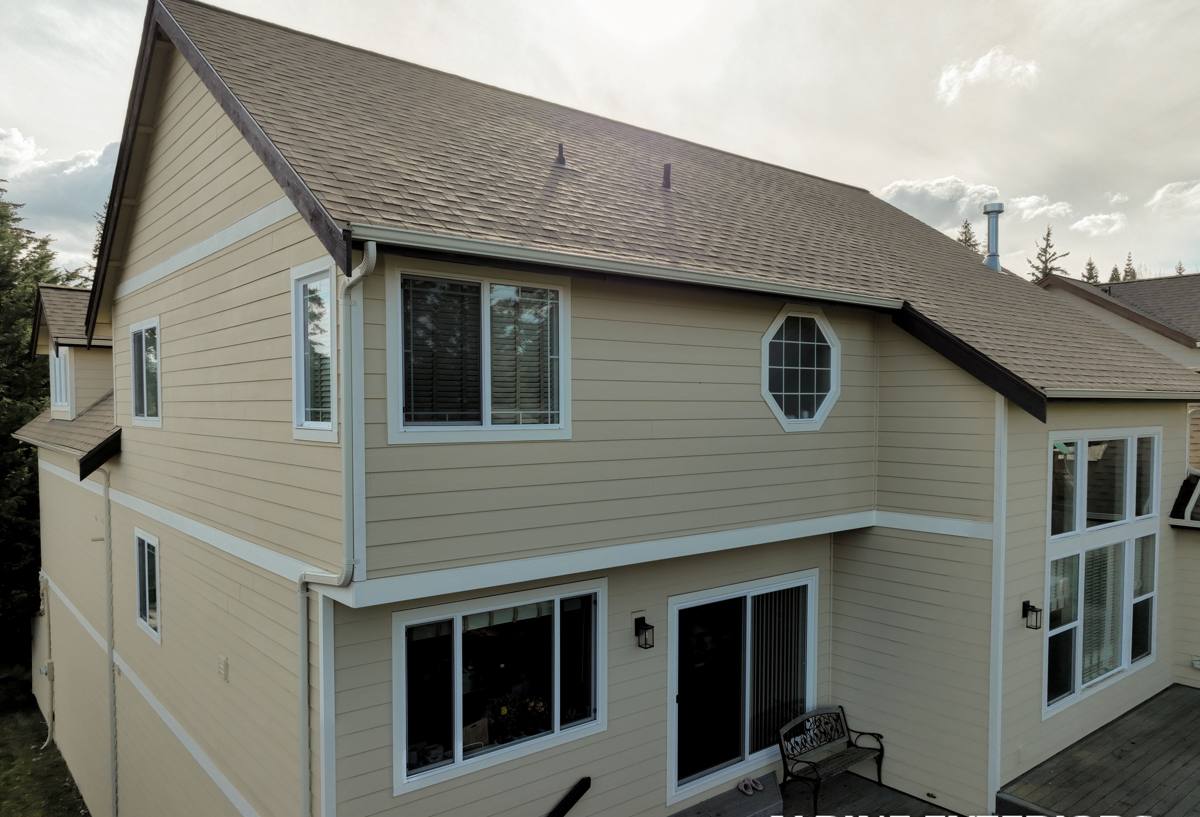
Signs a Fairhaven Home Actually Needs Siding Replacement
Not every siding problem calls for a full replacement, but several signs mean patching or repainting is just delaying the inevitable:
- Soft or spongy spots when you press on the siding, especially near the bottom courses, window sills, or anywhere two walls meet
- Persistent moss or algae staining that returns within a season or two of cleaning
- Paint that's bubbling, peeling, or failing faster than it should between repaints
- Visible warping, cupping, or separation at panel seams
- Rust streaks running down from nail heads or metal trim pieces
- Interior signs — musty smell, discoloration on interior walls near exterior corners, or unexplained humidity in a room
If you're seeing more than one of these at once, it's usually a sign that moisture has been getting behind the siding for a while, not just sitting on the surface.
What a Correct Siding Replacement Actually Involves
It Starts Underneath the Siding, Not With It
The siding itself is the least important layer for keeping a Fairhaven home dry — the water-resistive barrier and flashing details underneath do the real work. A proper replacement means removing the old siding down to the sheathing, inspecting for rot or hidden damage, repairing anything compromised, and installing a new weather-resistive barrier with correctly lapped and sealed seams. Flashing at every window, door, deck ledger, and roof-to-wall transition has to shed water outward and downward — this is where most real-world water intrusion happens, not through the siding panels themselves.
Fastening and Clearances Matter More Here Than in Drier Climates
In a climate with this much sustained moisture, fastener corrosion resistance and proper siding clearance off grade, decks, and roof lines aren't optional details — they're what determines whether the job lasts 10 years or 40. Correct nailing patterns, proper caulking at penetrations (and knowing where NOT to caulk, since some joints need to breathe), and adequate ground and roof clearance all reduce the chances of trapped moisture behind the wall.
Why We Install Only James Hardie Fiber Cement
We've made a deliberate choice to install James Hardie fiber cement exclusively — we don't install vinyl, LP SmartSide, primed wood, cedar, or other fiber cement brands. That's not a marketing position, it's a practical one built around this exact climate. Fiber cement is non-combustible and dimensionally stable, so it doesn't expand, contract, warp, or rot the way wood-based products can when they're exposed to years of driving rain and damp shade. Hardie's ColorPlus factory finish is baked on under controlled conditions, which holds up better against salt air and UV than field-applied paint, and it comes with a strong transferable warranty. Hardie also engineers specific product lines (their HZ5 line, for example) for wetter Pacific climates, which matters more here than in a dry region where almost any siding performs adequately. We're happy to walk through the honest trade-offs of other products if you're weighing options — but it's why what goes up on the wall, every time, is Hardie.
How Our Process Works, Start to Finish
- On-site assessment: We look at the actual condition of your existing siding and sheathing, not just the surface — this tells us whether it's a straightforward re-side or whether there's hidden rot to address first.
- Written estimate: A clear scope covering tear-off, sheathing repair (if needed), water-resistive barrier, flashing, Hardie product and profile selection, and finish color.
- Tear-off and inspection: Old siding comes off, sheathing gets inspected and repaired where necessary — this step is where problems that caused the original failure get fixed, not covered up.
- Water management installed correctly: New barrier, properly lapped and sealed flashing at every penetration and transition.
- Hardie installation to manufacturer spec: Correct fastening schedule, clearances, and joint treatment.
- Final walkthrough: We go over the finished work with you before calling the job done.
Comparing Siding Options for a Climate Like This
Every siding material has honest strengths and weaknesses. Here's how the common options stack up specifically against Fairhaven's salt air, rain, and moss exposure:
| Material | Moisture Resistance | Salt Air Durability | Maintenance Burden |
|---|---|---|---|
| James Hardie fiber cement | Excellent — dimensionally stable, won't rot | Strong; factory finish resists fading/chalking | Low — occasional wash, repaint on a much longer cycle |
| Vinyl | Sheds water but can trap moisture behind it if installed loose | Can become brittle and discolor over time | Low upfront, but limited repair options if damaged |
| LP SmartSide / engineered wood | Good if sealed edges stay intact; vulnerable if cut edges are exposed | Moderate — depends heavily on caulking and maintenance | Moderate — edge sealing needs monitoring |
| Cedar / primed wood | Naturally moisture-tolerant but still organic material | Requires regular refinishing to hold up | High — repainting/staining on a short cycle |
Cost Factors for a Fairhaven Siding Replacement
Every home is different, but the biggest drivers of cost on a job like this are consistent:
| Factor | Why It Affects Cost |
|---|---|
| Sheathing condition | Hidden rot found during tear-off adds repair scope before new siding can go up |
| Home size and wall complexity | More corners, dormers, and trim details mean more labor and material cuts |
| Siding profile and finish | Lap width, texture, and ColorPlus color selection affect material pricing |
| Access | Steep grades, tight side yards, or multi-story walls affect scaffolding and labor time |
| Trim and flashing scope | Full flashing replacement at windows and rooflines adds time but is essential for longevity |
We don't quote broad "per square foot" numbers before seeing the actual home, because sheathing condition alone can swing a project significantly — but we'll always explain what's driving your specific number.
What to Ask Any Contractor Working on Your Fairhaven Home
- Do you inspect and repair sheathing before installing new siding, or just cover what's there?
- What water-resistive barrier and flashing details do you use, and can you explain why?
- Are you a certified/factory-trained installer for the siding product you're recommending?
- What's actually covered under the manufacturer's warranty versus your workmanship warranty?
- Have you worked in this specific climate — salt air, high rainfall, shaded moss-prone areas — before?
- Can you walk me through your fastening schedule and clearance standards for this product?
Why It Matters to Hire a Crew That Already Works This Area
Siding installation quality depends heavily on judgment calls that generic training doesn't cover — how much clearance to leave off a deck ledger in a climate that stays damp for months, where extra flashing attention is worth the time even when it's not strictly required, which wall orientations in this area collect the most moss and need different maintenance guidance. A crew that regularly works Fairhaven and the surrounding Whatcom County area has already seen how local conditions play out over years, not just at installation. That local pattern recognition is the difference between a job that looks right on installation day and one that's still performing correctly a decade later.
Caring for Your Siding After Installation
Fiber cement siding installed correctly is genuinely low-maintenance, but "low" isn't "none." A periodic gentle wash removes the salt residue and organic buildup that Fairhaven's air and shade encourage, well before it can etch into the finish or feed moss growth. Keep an eye on caulking at penetrations and touch up any nicks in the finish promptly — small exposed spots are easy to address early and much harder to ignore later. Gutters and downspouts that are cleared and functioning also do more to protect your siding's bottom courses than most homeowners realize, since overflow and splashback are a common source of localized water damage.
If your Fairhaven home's siding is showing signs of wear, or you're just planning ahead, we're glad to take a look and give you a straightforward, no-pressure estimate — no hard sell, just an honest read on what your home actually needs.