 Sudden Valley Siding
 Siding Installation Built for Bellingham's Weather
Installing siding in Bellingham isn't the same job as installing it somewhere inland and dry. Homes here sit close enough to Bellingham Bay and the Salish Sea to take on steady marine air, they catch rain that drives sideways as much as it falls straight down, and on shaded or north-facing walls the moss and mildew season can run most of the year. A siding installation that doesn't account for all three of those conditions from the first day of tear-off can look fine for a season or two and then start failing quietly behind the wall, long before anything shows on the surface.
This page focuses specifically on what a siding installation job in Bellingham needs to get right, not a general overview of siding as a category. We install James Hardie fiber cement siding, and we do it with an eye toward this town's specific mix of bay exposure, wind-driven rain, and persistent dampness. What follows is what we actually look at, plan for, and execute when we install siding on a Bellingham home.
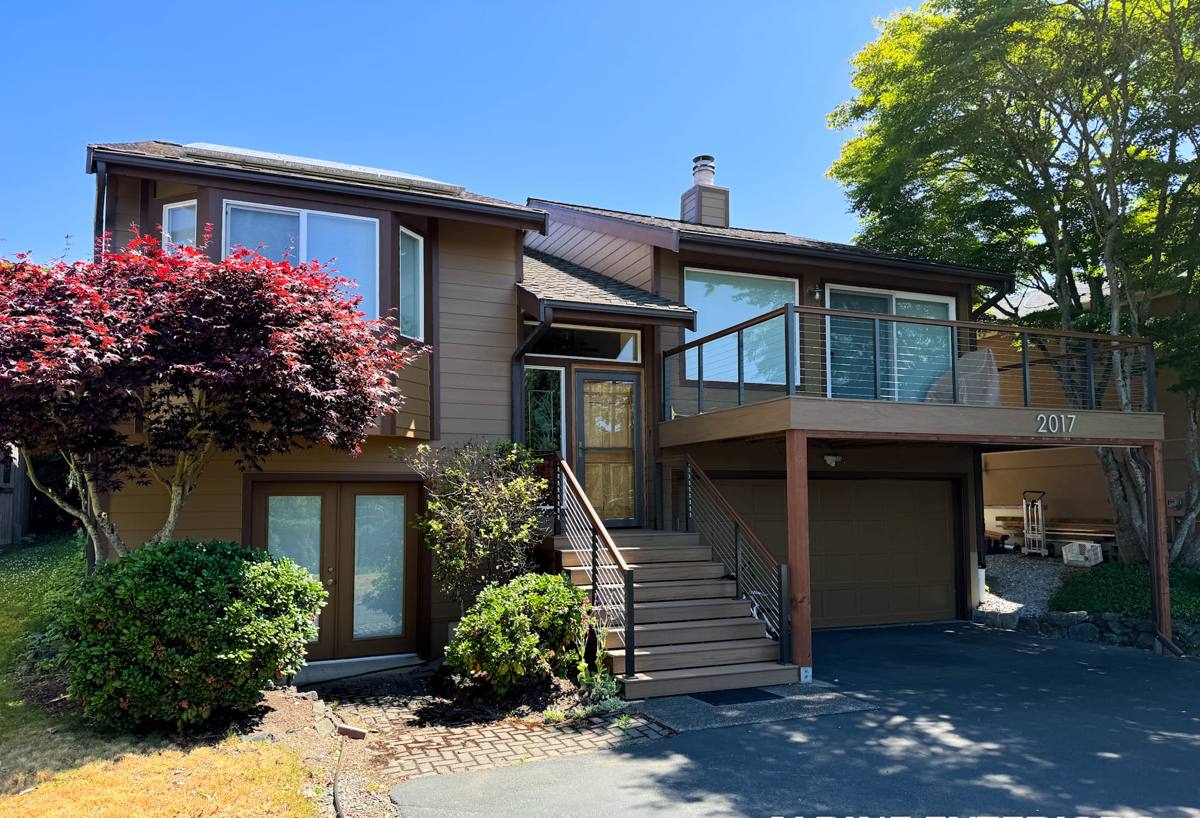
What Bellingham's Climate Asks of an Installation Crew
Salt Air and Sustained Moisture
Bay-adjacent air carries a low, constant level of salt and moisture that works on fasteners, flashing metal, and any exposed seam over years, not days. An installation crew that treats this like a dry-climate job, using standard fastener spacing and skipping extra attention at penetrations, is setting up problems that won't surface until well after the job is done and paid for.
Wind-Driven Rain
Rain in Bellingham rarely falls straight down for long. Wind off the water pushes it sideways into lap joints, trim seams, and anywhere a wall is penetrated for a vent, light fixture, or hose bib. Installation details that would hold up fine in a calmer climate can let water in here specifically because the water is arriving at an angle a simpler installation approach doesn't plan for.
A Long Moss and Mildew Season
Mild temperatures and consistent dampness mean moss and mildew growth can persist across most of the calendar year on shaded walls, especially where tree cover keeps a wall from ever fully drying. An installation with tight, well-sealed joints and correct clearance from grade and roofline gives moss less to hold onto than an installation with sloppy gaps or trapped moisture behind the panel.
Why the Installation Starts With James Hardie
We install one siding system in Bellingham: James Hardie fiber cement. That's a deliberate standard, not a default. Fiber cement has a non-combustible core, which matters for household safety and can matter for insurance. Hardie's ColorPlus finish is cured onto the board at the factory under controlled conditions, so it resists fading and moisture intrusion far longer than paint applied on site. The HZ5 product line is engineered for regions with heavy sustained moisture and freeze-thaw cycling, which is a closer match to coastal Whatcom County than a generic national siding spec. Fiber cement also holds its shape through repeated wet-season moisture cycles instead of swelling, cupping, or warping the way some engineered wood products can, and Hardie backs the material with one of the stronger transferable warranties in the industry when it's installed to spec.
We don't install LP SmartSide, vinyl siding, Cemplank, Allura, primed spruce, or cedar. Those products have real uses and other contractors handle them well. Our decision came from what we've consistently seen on tear-offs and repair calls in this specific climate: a single system we trust completely, installed correctly every time, serves homeowners better here than a menu of options with trade-offs we'd have to explain away down the road.
What a Correct Installation Actually Involves
The material is only half the equation. A Hardie installation performs the way it's engineered to only when the details underneath and around it are handled right. That includes:
- House wrap and flashing installed as one continuous water-management system, not as separate steps done in isolation
- Correct fastener type, spacing, and depth, since over- or under-driven fasteners are one of the most common causes of early siding failure
- Proper clearance from grade, roofline, and decks so the bottom edge of the siding isn't sitting in standing moisture
- Lapped and sealed joints at every seam, corner, and trim intersection, sized to shed wind-driven rain rather than just vertical rainfall
- Careful flashing at every penetration, including vents, light fixtures, hose bibs, and anywhere trim meets a window or door
Rushed installation is one of the most common reasons a good product develops a bad reputation. We treat install detail with the same seriousness as the material choice, because a Bellingham home doesn't get a second chance to stay dry through its first real winter storm.
Our Installation Process
1. Walk-Through and Assessment
We start by walking the actual property, not pricing off square footage alone. That means checking existing siding condition, wall orientation relative to prevailing wind and rain, trim and roofline details, and any early signs of trapped moisture behind the current wall assembly.
2. Tear-Off and Substrate Check
Old siding comes off and we look at what's underneath before anything new goes up. This is where hidden rot, soft sheathing, or water damage from years of trapped moisture gets found and dealt with, rather than sealed over and left to keep spreading.
3. Water Management Layer
House wrap and flashing go in as a coordinated system, with extra attention at every penetration and joint that wind-driven rain is likely to reach. This layer is what actually keeps a wall dry long-term, more than the siding itself.
4. Hanging the Siding
James Hardie boards go up with correct fastening patterns, proper clearances, and lapped, sealed joints. Trim, corners, and transitions get the same attention as the field of the wall, since those are the spots most likely to leak first.
5. Final Walk-Through
We walk the finished job with you, point out what was done and why, and answer questions about care and what to expect over the coming seasons.
Installation Cost Factors in Bellingham
| Factor | What It Affects | Why It Matters Here |
|---|---|---|
| Home size and wall complexity | Total material and labor | Bellingham's older hillside homes often have more dormers, trim, and roofline intersections where wind-driven rain works its way in |
| Tear-off vs. overlay | Labor scope and substrate access | A full tear-off exposes hidden moisture damage that's common under decades-old siding in this climate |
| Substrate condition | Repair costs before new siding goes on | Years of trapped moisture behind failing siding can rot sheathing and framing before it's visible from outside |
| Flashing and trim detail | Installation labor time | Bay-facing walls and wind-driven rain make careful flashing work non-negotiable, not optional |
| Site access and terrain | Labor time and equipment needs | Sloped hillside lots and mature tree cover common around Bellingham can add staging and setup time |
Real numbers depend on the specific house, which is why we walk the property before quoting instead of pricing off a generic estimate.
Signs Your Bellingham Home's Siding Needs a New Installation
- Moss or dark staining that returns quickly after cleaning, especially on shaded or north-facing walls
- Soft or spongy siding near the base of the wall or around window and door trim
- Peeling paint, bubbling, or visible warping on siding boards
- Cracked, chipped, or missing sections after storms or wind events
- Visible gaps at seams, corners, or trim joints where water can track in
- Rising heating bills that may point to a wall assembly that's no longer sealing properly
Why a Local Installation Crew Matters
A crew that installs siding on this stretch of Whatcom County regularly knows how salt air, wind-driven rain, and moss actually behave on real houses over a full year, not just how a product performs on a spec sheet. That experience shows up in specific decisions on install day: which wall orientations stay wet longest, where extra flashing attention actually pays off, and which shortcuts a crew from outside the area might not know to avoid. Bellingham's mix of hillside terrain, bay exposure, and a wide range of housing ages means every installation is a little different, and a crew that's done this work here repeatedly plans for that instead of applying one generic approach to every job.
If your Bellingham home needs a new siding installation, or you'd like an honest opinion on whether your current siding is holding up the way it should, we're glad to take a look. Reach out using the form below to schedule a free, no-pressure estimate.