 Sudden Valley Siding
 Why Composite Decking Makes Sense for Homes Near Sudden Valley and Barkley
A deck around Sudden Valley or in the Barkley area of Whatcom County isn't just furniture sitting on the ground — it's an exterior structure that takes on the same weather that wears down siding, trim, and roofing across this part of the county. Marine-influenced air moving through the region, rain that arrives sideways as often as it falls straight down, and a moss season that can run most of the year on shaded surfaces all put real stress on outdoor lumber. A lot of that stress is invisible until it isn't — a board that looks fine in July can be soft at the joist line by the following spring.
Composite decking was built to handle that kind of punishment better than solid wood does, but "composite" covers a wide range of quality, and a board that's rated for a dry inland climate doesn't always perform the same way here. This page is about what a Barkley-area or Sudden Valley home actually needs from a composite deck, what goes into a build that's done correctly for this climate, and how our process works from first look to finished deck.
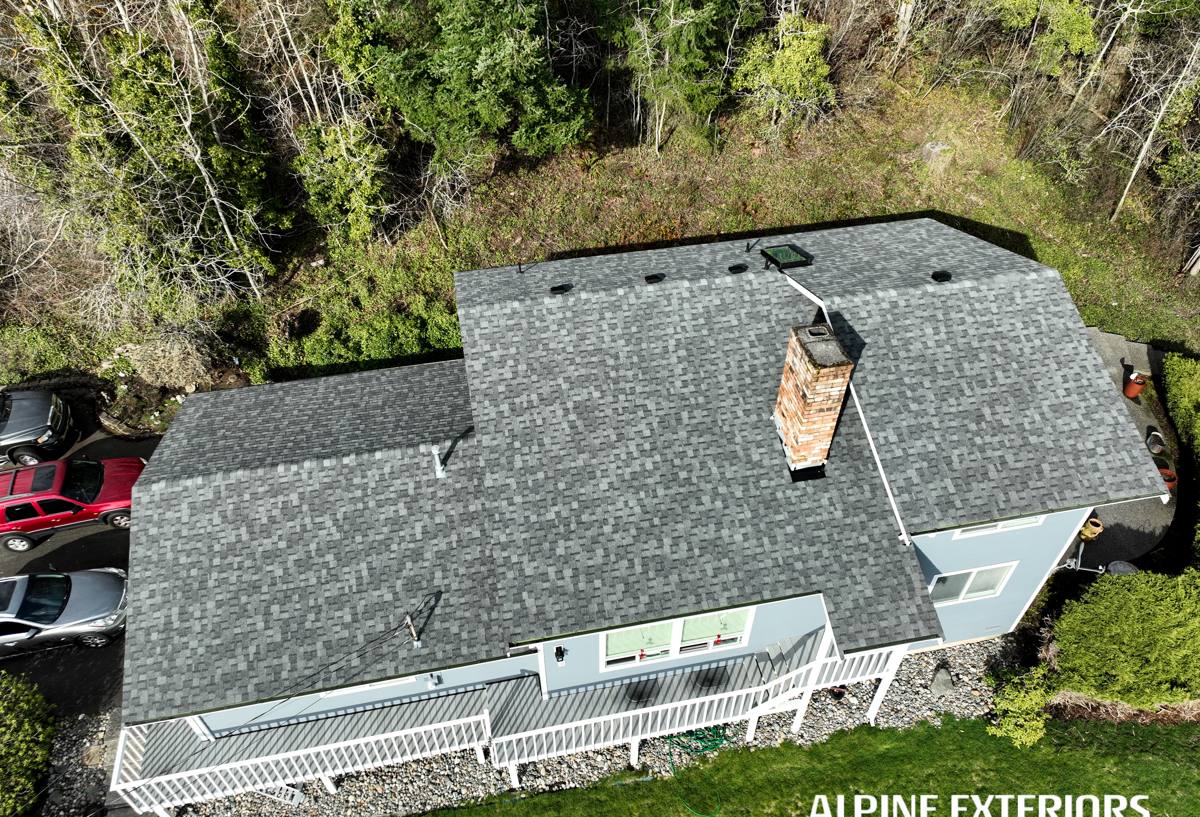
What Whatcom County Weather Actually Does to a Deck
Marine Air and Fastener Corrosion
Whatcom County sits close enough to Bellingham Bay and the broader Puget Sound that salt-tinged marine air moves through the region regularly, not just right on the waterfront. On a deck, that air works on the metal long before it works on the boards — screws, joist hangers, and railing hardware are the first things to show corrosion, usually as rust streaking down a board or a fastener that's lost some of its grip. It's slow and easy to miss, which is exactly why fastener grade matters more here than a lot of homeowners assume.
Driving Rain and Trapped Moisture
Storms in this part of the Pacific Northwest tend to come in with wind behind them, pushing rain under railings, into ledger connections, and between boards rather than just falling straight down and running off. A deck built without enough gap spacing, without proper flashing where it meets the house, or without drainage planned into the substructure will hold water in places it shouldn't — and trapped moisture underneath a deck is where rot and structural problems actually start, long before anything looks wrong on the surface.
A Long Moss and Algae Season
Cool temperatures, high humidity, and heavy tree cover around Lake Whatcom and the surrounding hills give moss and algae a long growing window on shaded, low-airflow surfaces — decks under trees or on the north side of a house are especially prone to it. On composite boards, moss and surface grime are mostly a cleaning issue rather than a structural one, but on wood decking, the constant dampness moss holds against the surface accelerates rot underneath it.
What "Composite Decking" Actually Means
Capped vs. Uncapped
Capped composite boards have a plastic shell bonded around a wood-plastic composite core, and that shell is what keeps moisture, stains, and UV out of the core material. Uncapped composite is the older generation of the product — the wood-plastic blend is exposed on all sides, so it absorbs moisture, fades faster, and is more prone to mold and surface wear in a wet climate. Given how much rain and humidity this area gets, we install capped composite as a standard, not an upgrade option.
Where PVC Fits In
Some manufacturers also make fully cellular PVC decking, with no wood fiber in it at all. PVC won't absorb moisture the way any wood-composite blend can, which makes it a strong option for a shaded, damp deck near tree cover, though it costs more and can flex differently underfoot than composite. We'll talk through whether capped composite or PVC is the better fit for a specific deck based on sun exposure, budget, and how the space gets used.
Wood, Composite, and PVC — How They Actually Compare Here
| Material | How It Handles This Climate | Maintenance | Typical Lifespan Here |
|---|---|---|---|
| Pressure-treated wood | Absorbs moisture readily; needs sealing to resist rot and moss staining | Annual cleaning, periodic sealing or staining | 10–15 years before major boards need replacing |
| Cedar | Naturally rot-resistant but still needs finish upkeep in wet, shaded areas | Regular cleaning and refinishing | 15–20 years with consistent maintenance |
| Capped composite | Resists moisture absorption and moss staining well; color holds up under UV | Occasional washing, no sealing or staining | 25–30 years, often longer |
| Cellular PVC | Essentially immune to moisture absorption; best for consistently damp, shaded spots | Occasional washing | Comparable to or longer than composite |
Composite and PVC cost more upfront than wood, but the difference shows up most clearly in what a homeowner has to do every year to keep the deck looking and performing the way it should — and in how many of those boards need replacing at year twelve versus year twenty-five.
What a Correct Composite Deck Build Involves Here
The visible boards get most of the attention, but the substructure and the connections you can't see afterward are what actually determine whether a deck holds up through wet Whatcom County winters. A build done right for this area includes:
- A ledger board attachment that's properly flashed against the house's siding or sheathing, so water can't work its way behind the deck and into the wall assembly
- Joists and framing sized and spaced for the actual board and use case, not just built to the minimum
- Corrosion-resistant fasteners and hardware rated for exterior, moisture-exposed use — not standard interior-grade screws
- Proper gap spacing between boards for drainage and airflow, which also reduces where moss and debris can collect
- Adequate ventilation underneath the deck surface so trapped humidity doesn't sit against the framing
- Hidden fastening systems where the product allows it, for a cleaner surface with fewer exposed screw heads to corrode or loosen over time
Our Process, Start to Finish
Assessment and Estimate
We look at the site — sun and shade exposure, tree cover, how close the deck sits to grade, and whether it's attached to the house or freestanding — and walk through material options with actual pricing, not a rough guess. If there's an existing deck, we'll check the substructure while we're there, since a new set of composite boards on a compromised frame just delays the real problem.
Tear-Out and Substructure Work
If we're replacing an existing deck, old boards and any damaged framing come out before anything new goes in. This is also where ledger flashing, joist condition, and drainage get corrected if they weren't right the first time.
Installation
Framing goes in first, built to handle the load and spacing the chosen decking calls for, followed by the composite or PVC boards themselves, railings, and any stairs. We keep gap spacing and fastening consistent throughout, since uneven spacing is one of the more common shortcuts that shows up as drainage and moss problems within a few years.
Final Walkthrough
We walk the finished deck with the homeowner, check railing security, board fastening, and drainage, and go over basic care so the deck performs the way it's supposed to for the long haul.
Why a Crew That Already Works Barkley and Sudden Valley Matters
Deck problems specific to this area — moss buildup under tree canopy, ledger connections that need to hold up against driving rain, framing that has to handle a genuinely wet climate for months at a time — aren't universal problems every deck crew has hands-on experience with. Working regularly in and around Barkley and Sudden Valley means we've seen how decks in this specific stretch of Whatcom County actually age, not just how a manufacturer's spec sheet says they should perform.
We also handle siding, roofing, and windows, which matters more than it might seem for a deck project — a ledger board attaches directly to the house's wall assembly, and getting that connection wrong is one of the more common ways water ends up inside a wall rather than just on top of a deck board. Most deck projects in unincorporated Whatcom County also require a building permit, particularly if the deck is elevated or attached to the house, and we handle that process as part of the job.
Keeping a Composite Deck Looking Good in This Climate
Composite decking is genuinely low-maintenance compared to wood, but "low-maintenance" doesn't mean "no maintenance" — especially under the tree cover and humidity common around here. A simple seasonal routine keeps a composite deck performing the way it's supposed to:
- Sweep off leaves, needles, and debris regularly, especially in fall — trapped organic matter is what feeds moss and algae growth on any surface, composite included
- Wash the deck with a mild soap and water at least once or twice a year, more often in shaded areas prone to green buildup
- Keep gutters and downspouts clear so runoff isn't dumping directly onto or under the deck
- Check railing posts and stair connections periodically for looseness, since these take the most stress and are the first thing to loosen if fasteners start corroding
- Avoid pressure-washing at close range or high pressure, which can damage the cap layer on composite boards over time
If a deck project is on your mind — whether it's a new build, a replacement for an aging wood deck, or you're just trying to figure out what's realistic for your budget — we're happy to walk the site and put together a free, no-pressure estimate. There's a form below to get that started.